

Key Takeaways
Why Your Sleep Environment Matters More Than You Think
Most people troubleshoot poor sleep by adjusting their schedule or cutting back on caffeine - and those are worthwhile steps. But the physical space where you sleep exerts a powerful influence on sleep quality that often goes unexamined. Research in sleep science consistently shows that environmental factors shape how quickly you fall asleep, how long you stay asleep, and how deeply your body recovers overnight.
The bedroom conditions most linked to sleep disruption - temperature, light, sound, and visual clutter - rarely cause dramatic, obvious problems. Instead, they quietly degrade sleep architecture over weeks and months. For a deeper look at how environmental factors alter the biology of sleep, see how environmental factors alter sleep physiology. Understanding the specific mistakes tied to each factor is the first step toward fixing them.
This article provides general health information and is not a substitute for personalized medical advice. If you have persistent sleep difficulties, consult a qualified healthcare professional.
Common Bedroom Mistakes That Undermine Sleep
The following errors are among the most well-documented environmental contributors to poor sleep. Recognizing them in your own space is actionable - most require no special equipment or major expense to address.
Keeping the room too warm. Many people sleep in bedrooms that are warmer than their body needs for optimal sleep.
Why it happens: Thermostat habits tend to prioritize daytime comfort, and people often don't realize that the body needs to drop its core temperature to initiate and maintain deep sleep.
Exposing yourself to artificial light - especially blue-spectrum light - close to bedtime, including light from screens and overhead LEDs.
Why it happens: Modern lighting and device use are deeply embedded in evening routines, and the melatonin-suppressing effects of light aren't visible or immediately felt, making the connection easy to miss.
Tolerating ambient noise - traffic, a partner's snoring, HVAC sounds - without taking steps to reduce or mask it.
Why it happens: People often adapt consciously to noise they can't immediately fix, but the brain continues processing sound during sleep, triggering brief arousals that fragment sleep stages even without full waking.
Using the bedroom for work, eating, or extended screen time, blurring the mental association between bed and sleep.
Why it happens: Remote work and small living spaces have made bedroom multi-tasking common, but the brain learns contextual cues - a workspace triggers alertness, not sleepiness.
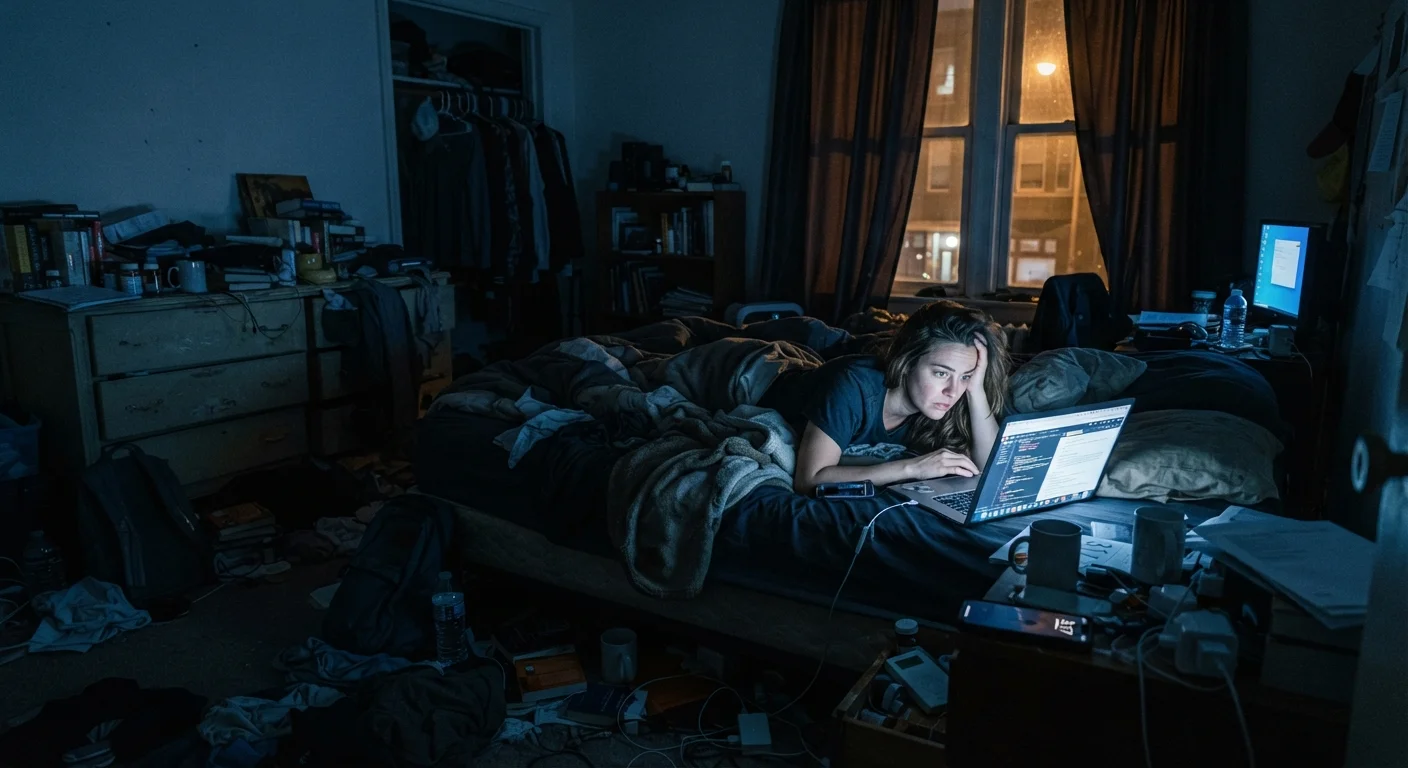
Allowing visual clutter - laundry piles, scattered items, unfinished tasks in plain view - to accumulate in the sleep space.
Why it happens: Clutter tends to build gradually and feels less urgent than other sleep hygiene factors, but research suggests that visual disorder elevates pre-sleep cognitive arousal, making it harder to mentally disengage.
~30%
Adults reporting insufficient sleep regularly
The CDC has reported that roughly 1 in 3 American adults do not regularly get the recommended 7 or more hours of sleep per night.
90 min
Melatonin delay from evening bright light
Research published in the Journal of Clinical Endocrinology & Metabolism found that exposure to room light before bedtime suppressed melatonin onset by approximately 90 minutes compared to dim light conditions.
1°C
Core body temp drop needed to initiate sleep
Sleep physiology research indicates the body needs to lower its core temperature by roughly 1°C to reliably trigger sleep onset, underscoring the role of a cool bedroom.
Once you've identified which mistakes apply to your bedroom, a structured audit can accelerate your progress. The bedroom environment checklist for deeper sleep walks through each factor systematically.
The Bigger Picture: Habits and Health Connect to Environment
Environmental fixes work best when paired with consistent behavioral habits. A cool, dark, quiet room can't fully compensate for late-night screen scrolling or irregular sleep timing. For an honest look at the routines that chip away at sleep over time, habits that quietly erode sleep quality is a useful companion read.
It's also worth understanding what's at stake beyond feeling tired. Chronic sleep disruption has downstream effects on energy metabolism, appetite regulation, and emotional resilience. sleep deprivation's effect on energy balance and how sleep debt erodes emotional resilience both put the stakes in concrete terms. Better sleep habits - starting with your bedroom - are one of the more evidence-supported investments you can make in daily wellbeing. Visit the Better Sleep Habits hub for practical routines you can build on.