

Key Takeaways
Why Macronutrient Proportions Matter
Every meal you eat is made up of three macronutrients: carbohydrates, protein, and fat. Each one plays a different role - carbohydrates supply the body's preferred energy source, protein supports tissue repair and satiety, and dietary fats facilitate hormone production and the absorption of fat-soluble vitamins. When any of the three is consistently under-represented, your energy, hunger, and overall nutrition can suffer.
If you're new to thinking about macros, the Macronutrients for Everyday Americans: A Starter Guide is a useful foundation before working through the steps below. For a deeper look at what the research says about specific ratios, see our article on macronutrient ratios and the science behind them.
The goal of this guide is practical: you'll learn a repeatable, visual method for building meals that cover your macronutrient bases - no food scale or app required.
What you will need
Step-by-Step: Assembling a Balanced Meal
Follow the steps below using any standard dinner plate as your guide. This approach adapts to virtually any cuisine, dietary preference, or budget.
Anchor Your Plate with Non-Starchy Vegetables
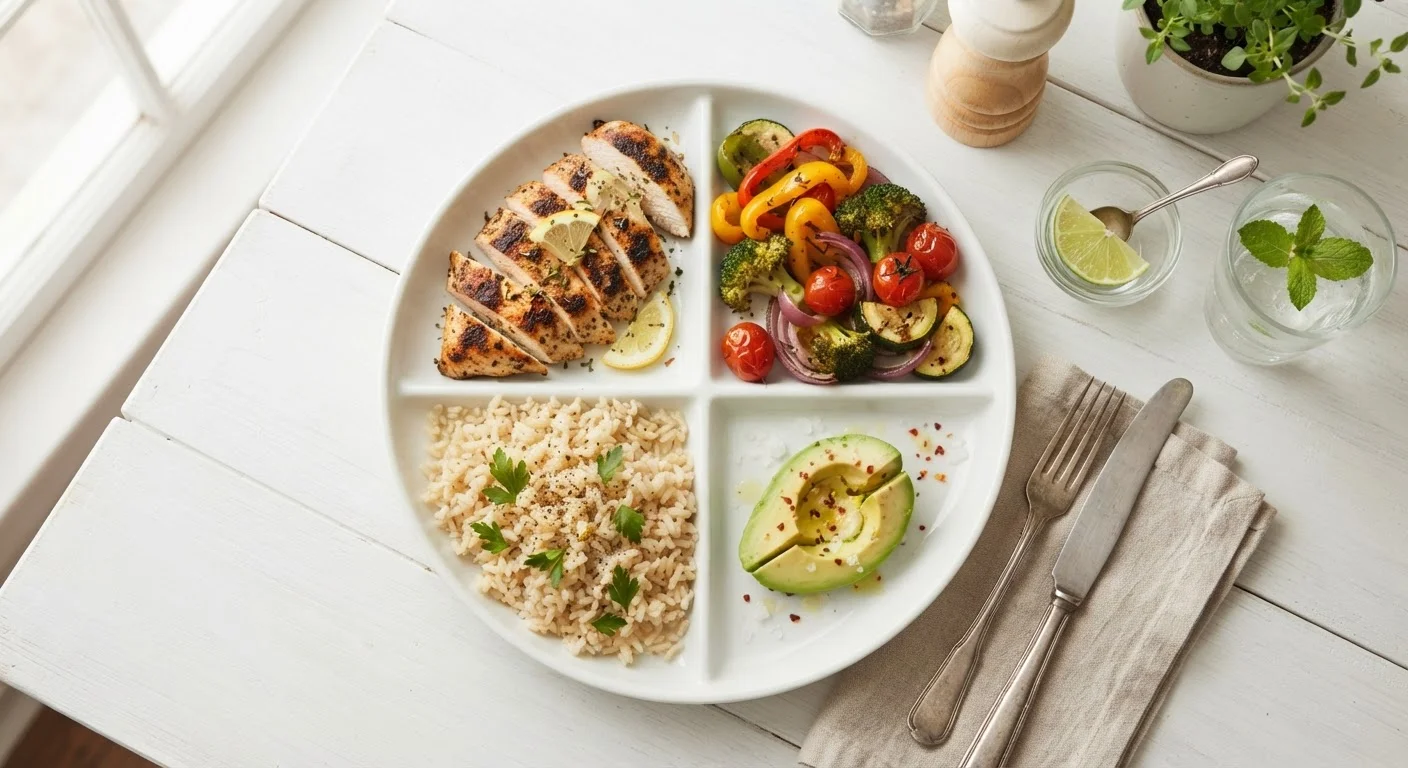
Fill roughly half your plate with non-starchy vegetables: leafy greens, broccoli, cauliflower, bell peppers, zucchini, tomatoes, cucumbers, or similar options. These foods are low in calories but high in fiber, water, and micronutrients, which supports satiety and overall diet quality. Variety in color generally signals variety in nutrients.
Add a Quality Protein Source
Dedicate roughly one quarter of your plate to a protein-rich food. Options include: poultry, fish, eggs, lean beef, tofu, tempeh, legumes (beans, lentils, chickpeas), or low-fat dairy such as cottage cheese or Greek yogurt. Protein slows digestion, supports muscle maintenance, and helps regulate hunger hormones.
A portion roughly the size and thickness of your palm is a useful visual guide for most animal proteins. For plant-based proteins like lentils or beans, a half-cup serving provides a comparable protein contribution alongside carbohydrate energy.
Choose a Complex Carbohydrate
Fill the remaining quarter of your plate with a complex, fiber-rich carbohydrate: whole grains such as brown rice, quinoa, farro, or oats; starchy vegetables like sweet potato or corn; or whole-grain bread and pasta. These options release glucose more gradually than refined carbs, providing steadier energy and contributing to fiber intake.
A cupped hand is a reasonable portion visual for cooked grains. Starchy vegetables like sweet potato can fill this section of the plate in the same way.
Include a Small Portion of Healthy Fat
Add a modest amount of unsaturated fat to complete the macronutrient profile. Good sources include: a drizzle of olive oil, a quarter of an avocado, a small handful of nuts or seeds, or a tablespoon of nut butter. Fats are calorie-dense, so portions are smaller - roughly a thumb-sized amount is a useful visual for oils or nut butters.
Healthy fats are not an optional extra: they help absorb fat-soluble vitamins (A, D, E, and K) and contribute to meal satisfaction.
Review and Adjust for Balance
Before eating, take a quick look at your assembled plate. Ask: Does it have color and variety in the vegetable section? Is there a recognizable protein source? Is the grain or starchy vegetable portion roughly the same size as the protein? Is there a small amount of healthy fat present? If yes across all four, you've built a balanced meal.
This review takes seconds and trains your eye over time - reducing reliance on measuring tools while keeping proportions reasonably consistent. For a calorie-free version of this thinking, the balanced plate without counting calories guide offers a complementary framework.
This article is for general informational and educational purposes only and is not a substitute for personalized medical or dietary advice. Consult a qualified healthcare professional or registered dietitian for guidance specific to your health needs, conditions, or goals.
Practical Tips for Staying Consistent
Building balanced meals is most effective when it becomes a habit rather than a calculation. A few strategies that help:
- Batch your proteins and grains. Cooking a larger portion of chicken, lentils, or brown rice at the start of the week makes it faster to assemble balanced meals on busy nights. The Meal Prep Fundamentals guide covers how to make this work for different schedules.
- Stock your kitchen intentionally. Your environment shapes your choices before hunger even sets in. See how kitchen setup influences eating habits for simple rearrangements that make balanced choices easier by default.
- Read labels with macros in mind. When buying packaged foods, the nutrition label macronutrient guide shows you how to quickly assess whether a product fits your plate proportions.
- Complement macros with micronutrients. Once you're comfortable with the macronutrient framework, building a micronutrient-rich plate helps you layer in vitamins and minerals without extra tracking effort.
One Meal Doesn't Define Your Diet
Nutritional balance is best measured across the full day - or even the week - rather than at a single meal. If breakfast was light on protein or dinner was heavier on carbs than usual, the next meal is an opportunity to recalibrate. This flexible mindset is more sustainable than striving for a perfect plate every time.