

Key Takeaways
Start here
What Is Meal Prepping?
Next
The Main Approaches to Meal Prep
Then
Potential Benefits - and Real Limitations
When you're ready
How to Start Small and Build a Routine
What Is Meal Prepping?
Meal prepping - short for meal preparation - simply means doing some or all of your cooking ahead of time so that eating well during a busy week requires less effort in the moment. At its core, the practice trades one longer cooking session for several shorter (or zero) cooking moments on weekdays.
The concept is not new. Home cooks have long batch-cooked soups, grains, and proteins over weekends. What has changed is the recognition by nutrition researchers and dietitians that structured food planning is a genuinely useful strategy - not a rigid rule - for supporting consistent, balanced eating habits.
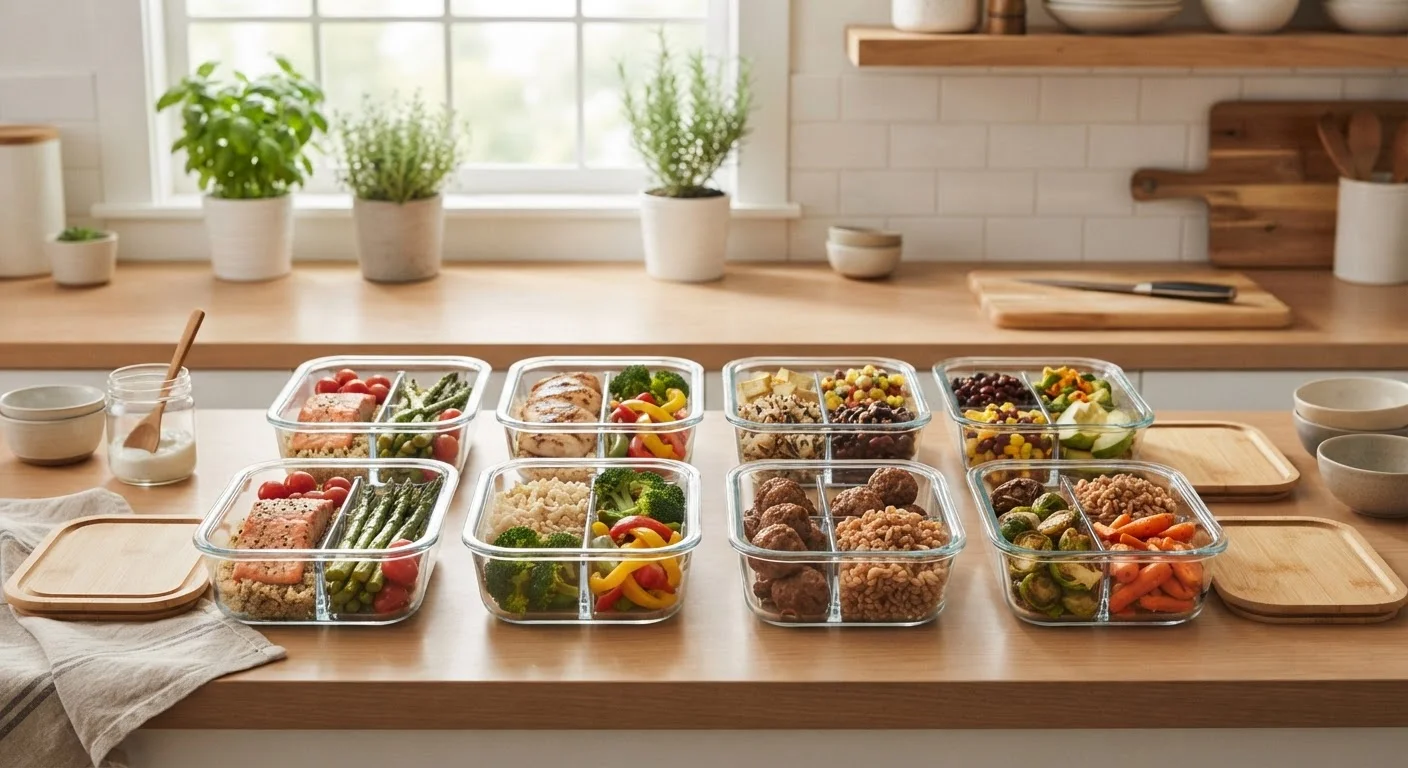
Meal prepping looks different in every household. Some people prep complete portioned meals. Others wash and chop vegetables, cook a pot of grains, and leave the rest flexible. Both approaches count.
The Main Approaches to Meal Prep
Understanding the different styles can help you pick one that fits your actual schedule and preferences rather than copying a method that works for someone else.
- Full meal portioning: You cook and assemble complete meals - proteins, vegetables, and grains - divided into individual containers. Grab-and-go convenience is highest here, but variety during the week is lowest.
- Ingredient or component prep: You cook individual building blocks separately and combine them at mealtime. A batch of roasted vegetables, cooked brown rice, and grilled chicken can become a grain bowl, a wrap, or a stir-fry depending on the day. This approach pairs well with the ideas in our guide to building balanced meals using macronutrient proportions.
- Partial or mise en place prep: You focus only on the time-consuming steps - peeling, chopping, marinating - without fully cooking anything. This shortens weeknight cooking rather than eliminating it.
Many people blend these approaches, prepping some complete meals (lunches) while keeping dinners flexible.
Potential Benefits - and Real Limitations
Research published in nutrition and public health journals has found associations between meal planning and higher diet quality scores, greater variety in food intake, and reduced food waste. Planning tends to shift purchasing and cooking toward whole foods rather than processed convenience options, though this depends heavily on what a person chooses to prepare.
Practically, frequent meal preppers often report spending less on takeout and experiencing fewer stressful last-minute food decisions - sometimes called decision fatigue - during the week.
Foods That Hold Up Best Over Several Days
Grains like brown rice, farro, and quinoa store very well refrigerated for four to five days. Roasted root vegetables, hard-boiled eggs, and legumes like chickpeas or lentils also hold their texture and flavor reliably. Delicate greens and dressings are best kept separate and added just before eating to avoid sogginess.
That said, meal prep is not a universal solution. It requires upfront time, adequate refrigerator or freezer space, and enough cooking confidence to work efficiently. For people with unpredictable schedules, certain food textures that degrade over days, or households with very different preferences, rigid prep can create more friction than it resolves. The goal is to find what helps you eat consistently well - not to match a social media standard of perfectly arranged containers.
If you're newer to thinking about the nutritional composition of what you're prepping, our starter guide to macronutrients for everyday Americans offers a practical foundation.
How to Start Small and Build a Routine
If you've never prepped before, starting with one component or one meal type is more sustainable than overhauling your entire week at once. Here's a simple entry point:
- Pick one prep day that reliably has an hour of free time - Sunday afternoons are common, but any day works.
- Choose two or three staple ingredients you eat frequently: a whole grain like oats or brown rice, a protein source, and one or two vegetables.
- Cook in batches and store in labeled, airtight containers. Note the date so you can track freshness easily.
- Assess at the end of the week - did you actually use what you prepped? Adjust quantities and choices accordingly.
Consistency matters more than volume. A routine that preps five simple ingredients reliably outperforms an ambitious plan that collapses by Wednesday. Over time, your prep sessions will become more efficient as you identify which foods store well, which combinations you enjoy, and how much food your household actually needs.
This article is for general informational and educational purposes only and is not a substitute for professional medical or dietary advice. If you have specific health conditions or nutritional needs, please consult a qualified healthcare provider or registered dietitian.