

Key Takeaways
Body Composition
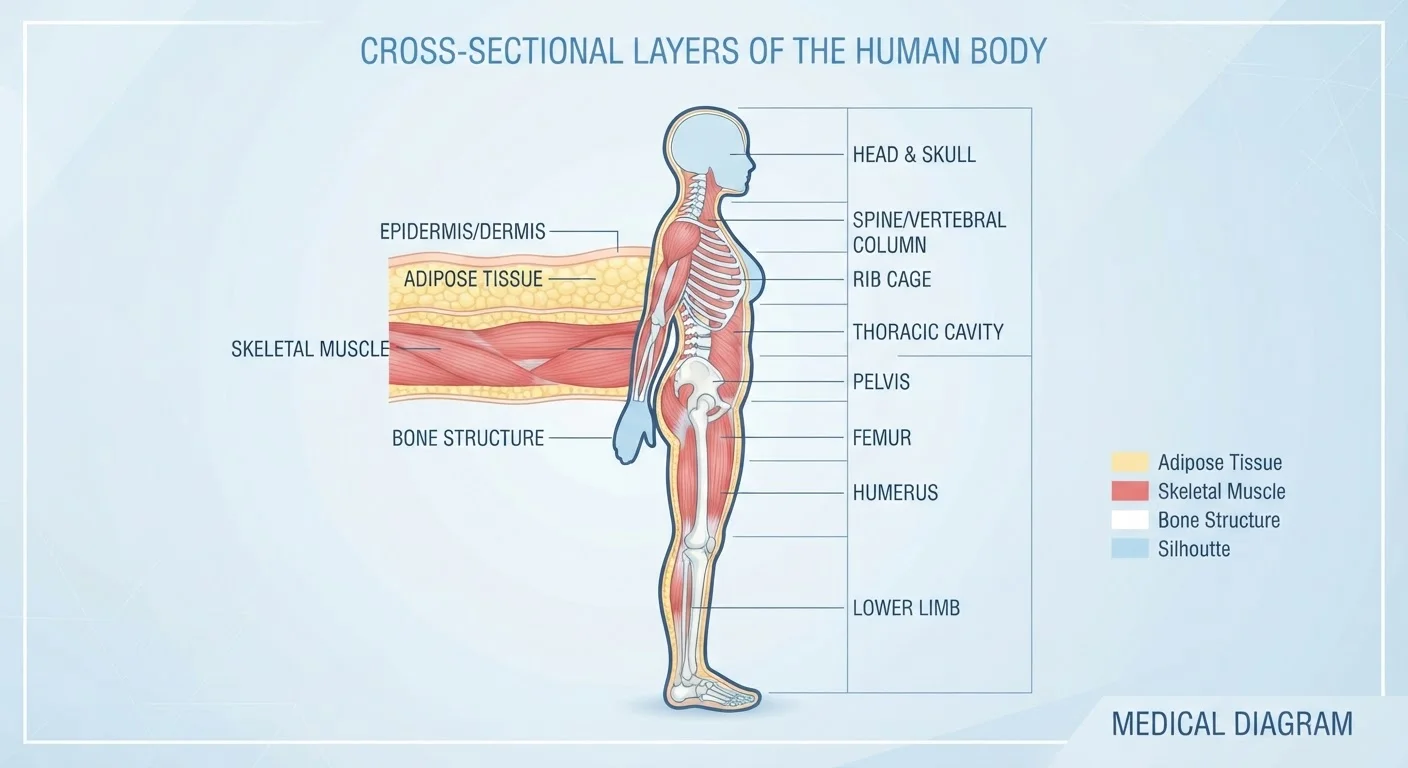
Body composition refers to the proportions of fat, muscle, bone, and water that make up your total body weight. Unlike a scale reading, it tells you what your body is actually made of. Two people can weigh exactly the same while having very different health profiles depending on these proportions.
Clinically, body composition is often expressed as fat mass versus fat-free mass (FFM), where FFM includes muscle, bone, organs, and body water. More detailed models separate these into three or four distinct compartments.
Why the Scale Only Tells Part of the Story
Step on a scale and you get one number: total body weight. That number bundles together fat tissue, skeletal muscle, bone mineral, organs, and water into a single figure that reveals almost nothing about the individual components. This is why body composition differs fundamentally from body weight as a health measure.
Consider two adults who both weigh 170 pounds. One may carry a high proportion of visceral fat (fat stored around internal organs) with relatively little muscle mass. The other may have well-developed skeletal muscle, lower fat stores, and denser bones. Their metabolic profiles, cardiovascular risk factors, and functional capacity can differ substantially - yet the scale treats them identically.
Understanding what your body is actually made of shifts the conversation from a single number to a more nuanced, actionable set of data points.
~30%
Average skeletal muscle share of adult body weight
Skeletal muscle typically accounts for roughly 30-40% of total body mass in healthy adults, according to established physiology literature, though this varies by sex, age, and activity level.
1-2% per year
Rate of muscle mass loss after age 30 without resistance training
Research published in journals including the American Journal of Clinical Nutrition suggests adults can lose muscle at this rate beginning in their thirties if no strength-preserving activity is undertaken.
2x
Greater fracture risk associated with low bone mineral density
The National Osteoporosis Foundation notes that low bone density (osteopenia) can more than double fracture risk compared to individuals with normal bone mineral density.
The Main Components and What They Signal
Body composition is typically discussed in terms of three or four primary components. Each carries distinct health implications.
Fat Mass
Fat tissue is not inert. It plays active roles in hormone production, insulation, and energy storage. The concern from a health standpoint is less about total fat and more about where fat is distributed. Visceral adipose tissue - fat surrounding the abdominal organs - is associated with greater metabolic risk than subcutaneous fat (the kind directly under the skin). Carrying too little body fat also carries risks, including hormonal disruption and impaired immune function.
Skeletal Muscle Mass
Muscle is the body's most metabolically active tissue. Greater skeletal muscle mass is associated with higher resting energy expenditure, better insulin sensitivity, and improved glucose regulation. As people age, gradual muscle loss - a process called sarcopenia - is linked to reduced mobility, increased fall risk, and greater dependence on care. Resistance exercise and adequate dietary protein are the primary evidence-based tools for maintaining muscle mass across the lifespan. Protein's role extends well beyond muscle building, supporting enzymes, hormones, and cellular repair as well.
Bone Mineral Content
Bone is a living tissue that is continuously remodeled throughout life. Bone mineral density (BMD) peaks in early adulthood and declines with age, particularly after menopause in women. Low BMD increases the risk of fractures and osteoporosis. Because bone is invisible on a standard scale, it remains the most overlooked component of body composition.
How Body Composition Is Assessed
Several methods exist for measuring body composition, each with different levels of accuracy, accessibility, and cost. Common approaches include dual-energy X-ray absorptiometry (DEXA), bioelectrical impedance analysis (BIA), hydrostatic (underwater) weighing, and skinfold caliper measurements. Each method has meaningful strengths and limitations that affect how results should be interpreted.
DEXA scanning is widely regarded as one of the most precise clinical tools, providing separate readouts for fat mass, lean mass, and bone mineral density by body region. If you've received a DEXA report and found it difficult to interpret, a plain-language breakdown of the key measurements can help clarify what the numbers mean in practice.
No single method is perfect for all people or situations. Hydration status, recent exercise, and meal timing can all influence results from methods like BIA. Consistency in testing conditions matters more than the absolute number when tracking changes over time.
Body Composition as Data, Not a Verdict
One risk of focusing on body composition metrics is interpreting them as a moral judgment rather than health information. Numbers describing fat percentage or lean mass do not determine a person's value, discipline, or worthiness. Engaging with these metrics in a body-neutral framework means treating them as data points to inform decisions - not scores to optimize at all costs.
“Body composition is one of the most informative windows we have into metabolic health - but it's a tool for understanding, not a number to be judged by.”
— Dr. Steven Heymsfield, Professor and body composition researcher, Pennington Biomedical Research Center
Body composition metrics are most useful when reviewed alongside other health indicators - bloodwork, blood pressure, functional fitness, energy levels, and sleep quality - and interpreted in conversation with a qualified healthcare provider. Context matters enormously. Age, genetics, hormonal status, and lifestyle all shape what a given composition profile means for an individual.
For a comprehensive overview of how all components interact, see the full picture on body composition.
This article is for general informational and educational purposes only and is not a substitute for professional medical advice, diagnosis, or treatment. Always consult a qualified healthcare provider with questions about your personal health.