

Key Takeaways
Bone Mineral Density (BMD)
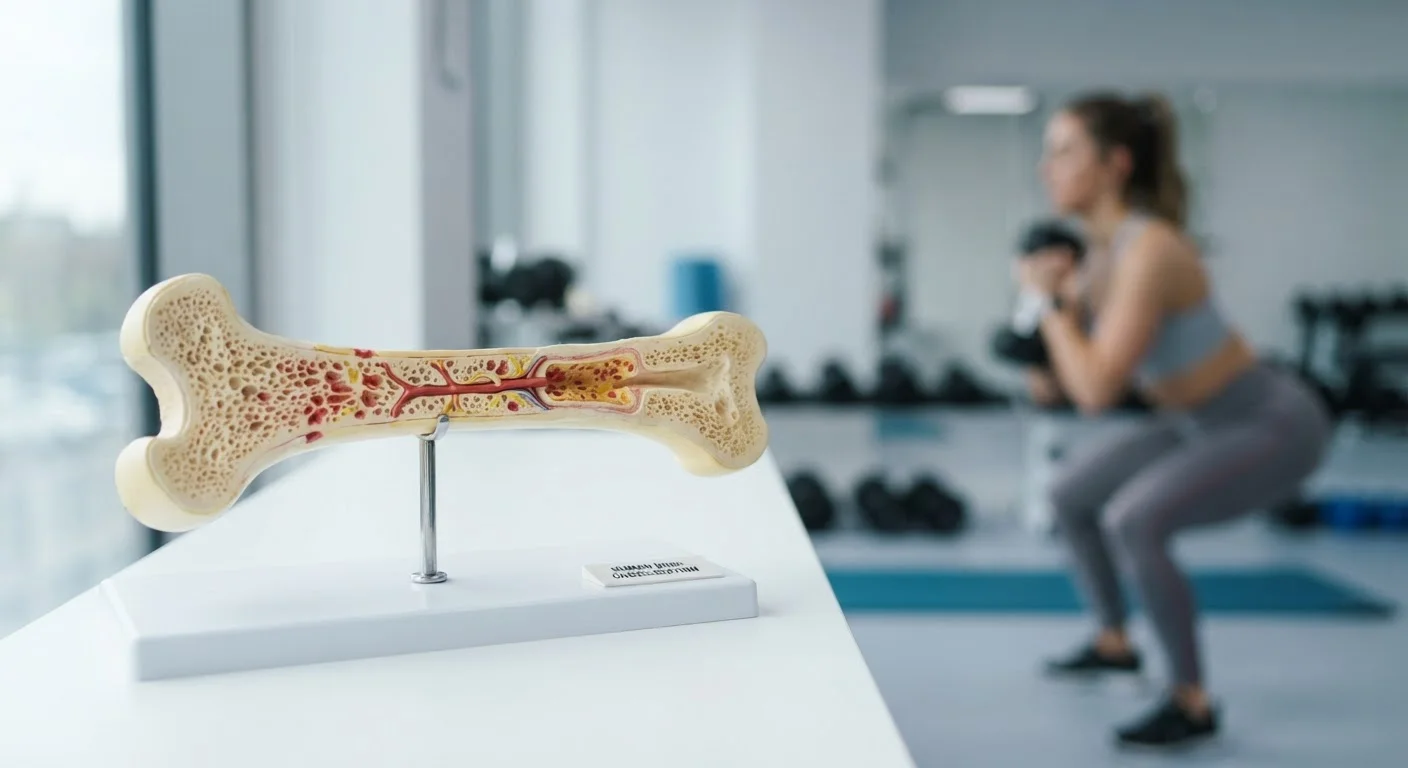
Bone mineral density refers to the amount of mineral content - primarily calcium and phosphorus - packed into a given area of bone tissue. It is the primary indicator of bone strength and structural integrity. Higher BMD generally means stronger bones that are more resistant to fracture. As a component of body composition, bone mass contributes to overall body weight and influences how other tissues function.
BMD is typically expressed in grams per square centimeter (g/cm²) and measured via dual-energy X-ray absorptiometry (DXA). Results are compared against a young-adult reference population using a standardized T-score scale.
The Forgotten Fourth Component
Most conversations about body composition begin and end with fat and muscle. These are the components people can see, feel, and measure at home - and they dominate wellness media accordingly. But body composition has more layers. As our full-picture breakdown of body composition explains, fat, muscle, bone, and water each play a distinct physiological role. Bone mass, in particular, is consistently underrepresented in popular health discussions despite being a stable, measurable, and clinically meaningful marker.
Bone tissue is living, dynamic material. It undergoes continuous remodeling - old bone is broken down by cells called osteoclasts, and new bone is deposited by osteoblasts. The balance between these two processes determines whether bone density is increasing, stable, or declining at any given life stage. This is not a passive background process. It responds to nutrition, hormonal signals, mechanical loading, and more.
For anyone trying to understand their health data in a more complete way, bone density deserves a place in the conversation. It is not about achieving a particular number - it is about understanding one more piece of the physiological picture. See how body composition fits into a broader, judgment-free framework in our piece on body composition and body-neutral health.
How Bone Density Is Measured
The clinical standard for measuring bone mineral density is dual-energy X-ray absorptiometry, commonly abbreviated as DXA (sometimes written DEXA). The test uses two low-dose X-ray beams at different energy levels to distinguish bone tissue from soft tissue. It is non-invasive, takes roughly 10 to 30 minutes, and exposes the patient to a very small amount of radiation - far less than a standard chest X-ray.
DXA results are typically reported for the lumbar spine and the hip, two regions particularly susceptible to fracture-related complications. The output is a T-score, which compares an individual's bone density against a reference population of healthy young adults at peak bone mass. A Z-score is also sometimes provided, comparing density to age- and sex-matched peers - this is often more informative for younger individuals.
~10 million
Americans estimated to have osteoporosis
According to the National Osteoporosis Foundation, approximately 10 million Americans have osteoporosis, with millions more at risk due to low bone mass.
~50%
Women over 50 expected to experience an osteoporosis-related fracture
Estimates from major bone health organizations suggest roughly one in two women over age 50 will experience a fracture related to low bone density during their lifetime.
Late 20s-30s
Age range when peak bone mass is typically reached
Research consistently shows that the skeleton reaches its maximum density by the late third decade of life, after which preservation becomes the primary goal.
Other measurement approaches exist - including quantitative ultrasound and peripheral DXA for screening purposes - but whole-body DXA remains the most comprehensive tool. It can also estimate lean mass and fat mass in the same scan, making it one of the more complete body composition assessment tools available in clinical settings.
It is worth noting that consumer-grade body composition scales that claim to estimate bone mass use bioelectrical impedance analysis (BIA), a method with significant limitations for bone specifically. BIA is useful for tracking trends in fat and muscle but is not validated as a reliable bone density tool.
What Influences Bone Density
Bone density is shaped by a combination of factors that operate across an entire lifetime - some modifiable, some not.
- Age: Bone density peaks in the late 20s to early 30s and declines gradually thereafter. The trajectory after peak is largely about how well density is preserved.
- Sex and hormones: Estrogen plays a key role in slowing bone resorption. The accelerated bone loss many women experience after menopause is directly tied to declining estrogen levels. Testosterone also supports bone maintenance in men, though at a different pace.
- Genetics: Family history is one of the strongest predictors of peak bone mass and fracture risk. Individuals with a parent who experienced a hip fracture have a meaningfully elevated risk themselves.
- Nutrition: Calcium and vitamin D are the two nutrients most directly tied to bone health, though the picture is more nuanced than simply drinking more milk. Our article on calcium and bone health explores this in detail.
- Physical activity: Weight-bearing and resistance exercise stimulate bone formation. Activities that load the skeleton - walking, running, jumping, and lifting - are consistently associated with higher bone density. Balance training, which reduces fall risk, is a related and often overlooked protective factor; see our piece on the case for balance training.
- Medications and medical conditions: Long-term use of corticosteroids, certain anticonvulsants, and other medications can reduce bone density. Conditions affecting hormone levels, nutrient absorption, or kidney function also carry bone implications.
Why It Matters for Body Composition - and Long-Term Health
Bone mass typically represents around 3-5% of total body weight in adults, a proportion that seems small but carries outsized functional importance. Unlike fat mass, which can fluctuate considerably with diet and activity, bone mass changes slowly. This stability makes it easy to overlook - but it also means that significant bone loss is often silent until a fracture occurs.
Understanding bone density as a body composition component reframes how people think about weight-bearing activity and nutrition. It shifts the motivation from purely aesthetic goals toward functional ones: building and preserving the structural tissue that supports movement, absorbs impact, and houses bone marrow responsible for blood cell production.
For those new to body composition as a concept, our starter guide to body composition provides useful grounding. And for readers who want to understand how bone density fits alongside other markers like weight and BMI, our overview of body composition versus body weight adds important context.
Bone density is not a standalone number to optimize in isolation. It is one thread in a larger physiological fabric - and recognizing it as such is a more complete way to think about long-term health.
This article is for general informational purposes only and does not constitute medical advice. Consult a qualified healthcare professional for guidance on bone health, screening, or any personal health concerns.