

Key Takeaways
Why Calcium Matters - and Where the Myths Come From
Calcium is the most abundant mineral in the human body, with roughly 99% of it stored in bones and teeth. The remaining 1% circulates in blood and tissue, where it quietly enables muscle contractions - including heartbeats - nerve signaling, and hormone secretion. Given those roles, getting adequate calcium throughout life genuinely matters.
The persistent link between calcium and milk isn't baseless; the U.S. dairy industry spent decades promoting it, and milk is genuinely a reliable, bioavailable calcium source. But that marketing history helped create an oversimplified picture: calcium equals dairy, and more dairy means stronger bones. The actual nutrition science is more layered and more interesting than that.
Myth
You need to drink milk every day to get enough calcium.
Fact
Many non-dairy foods - including leafy greens, tofu, canned fish with bones, and fortified plant milks - provide meaningful amounts of calcium.
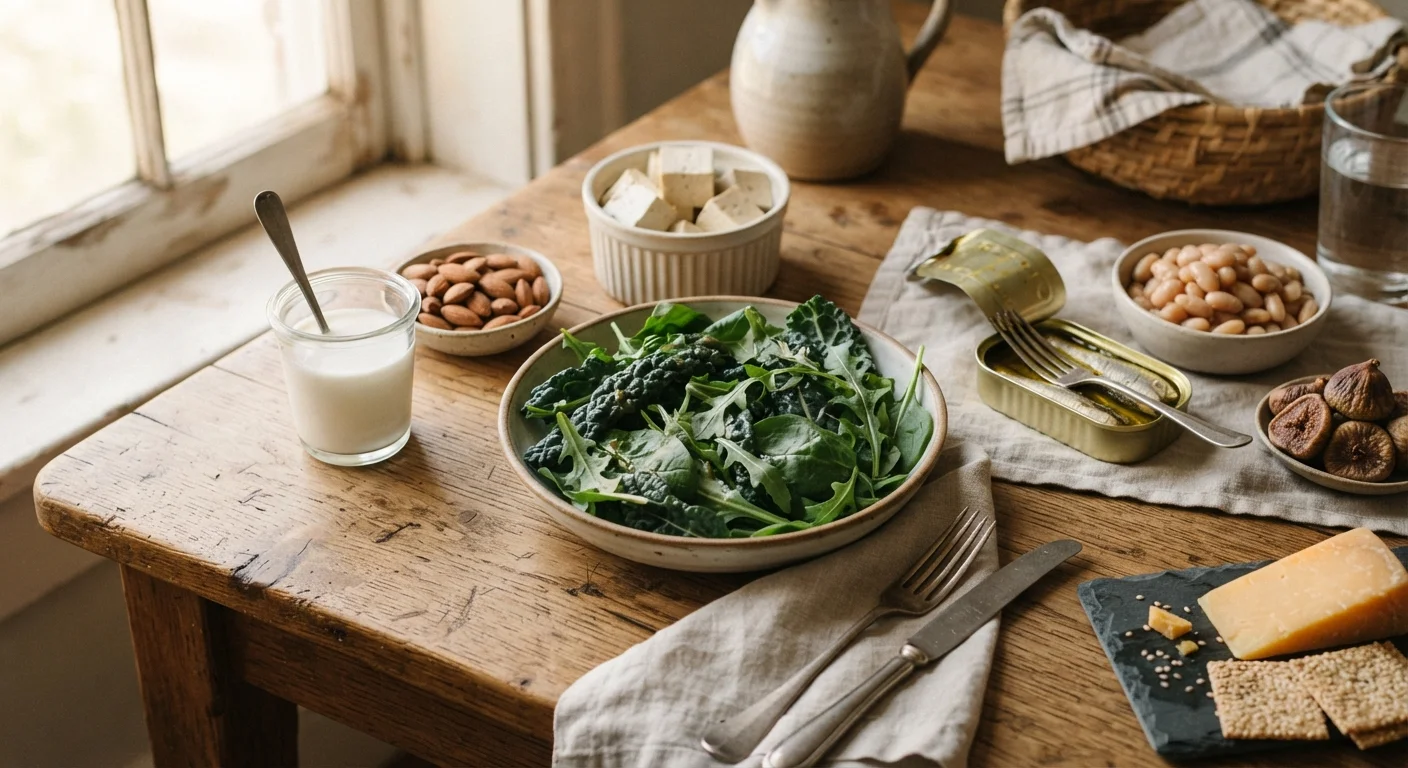
Milk is a convenient calcium source, but it is far from the only one. Cooked collard greens, bok choy, kale, and broccoli all contain well-absorbed calcium. Firm tofu made with calcium sulfate, canned sardines and salmon (eaten with their soft bones), white beans, and almonds are additional solid options. Fortified plant-based milks such as soy, oat, and almond beverages are specifically designed to match cow's milk calcium levels. If dairy works for you, great - but it is not a nutritional requirement for meeting your calcium needs.
Myth
Taking more calcium is always better for your bones.
Fact
Calcium intake above recommended levels does not proportionally strengthen bones and may carry risks including kidney stones and cardiovascular concerns.
The body regulates how much calcium it absorbs based on what it actually needs. Consuming calcium well beyond the recommended daily amount does not translate into denser, stronger bones. Research has linked very high calcium supplement intakes - particularly from supplements rather than food - to a modestly elevated risk of kidney stones and, in some studies, cardiovascular events. Food-based calcium generally poses fewer risks than high-dose supplementation. Staying within established recommended intakes is the evidence-backed approach.
Myth
Calcium alone is what protects your bones from fractures.
Fact
Bone strength depends on vitamin D, magnesium, vitamin K2, protein, and regular weight-bearing physical activity, not just calcium intake.
Think of bone as a living tissue shaped by many inputs. Vitamin D is indispensable - without adequate vitamin D, the gut simply cannot absorb calcium efficiently. Magnesium and vitamin K2 help direct calcium into bone rather than soft tissues. Dietary protein also plays a supporting structural role in bone matrix formation. On top of nutrition, weight-bearing exercise - walking, jogging, resistance training - signals the body to build and maintain bone density. You can read more about how bone mass factors into your overall health in our article on bone density's role in body composition.
Myth
Spinach is one of the best vegetable sources of calcium.
Fact
Spinach is high in oxalates, which bind calcium and sharply reduce how much the body actually absorbs.
Spinach contains a decent amount of calcium on paper, but it also contains oxalic acid, an antinutrient that binds calcium and blocks most of it from being absorbed. Studies show calcium absorption from spinach is only around 5%, compared to roughly 30% from milk and around 50-60% from low-oxalate greens like bok choy and kale. This doesn't mean spinach is a poor food - it offers many nutrients - but it should not be counted on as a primary calcium source. Choosing low-oxalate greens makes a meaningful practical difference.
Myth
Osteoporosis is inevitable with age, especially if you didn't drink enough milk as a child.
Fact
Bone loss in older age is influenced by many modifiable factors; building and maintaining bone density is a lifelong, multifactorial process.
While childhood and adolescence are critical windows for building peak bone mass, the story doesn't end there. Adults can slow bone loss through consistent physical activity, adequate nutrient intake, avoiding smoking, limiting excess alcohol, and managing underlying health conditions. Childhood dairy intake matters, but framing osteoporosis as the inevitable consequence of a milk-free childhood is an oversimplification. Body composition metrics, including bone density measurements, give a more complete and actionable picture of long-term skeletal health than any single childhood dietary habit.
Practical Ways to Meet Your Calcium Needs
Most adults need approximately 1,000 mg of calcium daily, rising to around 1,200 mg for women over 50 and adults over 70, per guidelines from the National Institutes of Health. Getting there through food is achievable across a wide range of eating patterns.
~5%
Calcium absorbed from spinach
Research shows oxalates in spinach block the vast majority of its calcium, compared to roughly 30% absorbed from milk.
1,200 mg
Daily calcium goal for adults 50+
The National Institutes of Health recommends higher calcium intake for older women and adults over 70 to support bone maintenance.
99%
Of body calcium stored in bones and teeth
The skeleton serves as the body's calcium reservoir, releasing it into the bloodstream as needed for critical physiological functions.
A practical approach is to spread calcium intake across meals rather than relying on one large serving. Your intestines absorb calcium more efficiently in smaller doses - roughly 500 mg or less at a time. Pairing calcium-rich foods with adequate vitamin D (from sunlight, fatty fish, fortified foods, or supplementation as needed) closes the loop on absorption.
If you are considering calcium supplements, talk with a healthcare provider first. They can assess whether supplementation is appropriate for your individual circumstances and help you avoid overshooting safe intake thresholds.
This article is for informational purposes only and does not constitute medical or nutritional advice. Consult a qualified healthcare professional for guidance tailored to your individual health needs.