

Key Takeaways
Start here
What Body Composition Actually Means
Build your knowledge
The Four Main Components
See why it matters
Why It Matters More Than the Scale
Explore measurement
How Body Composition Is Measured
Understand influences
What Actually Influences Your Composition
Apply it wisely
Using This Information Without Obsessing Over Numbers
What Body Composition Actually Means
When most people think about their body in health terms, they think about weight - the number on the scale. But that number alone can't tell you much about what's actually happening inside your body. That's where body composition comes in.
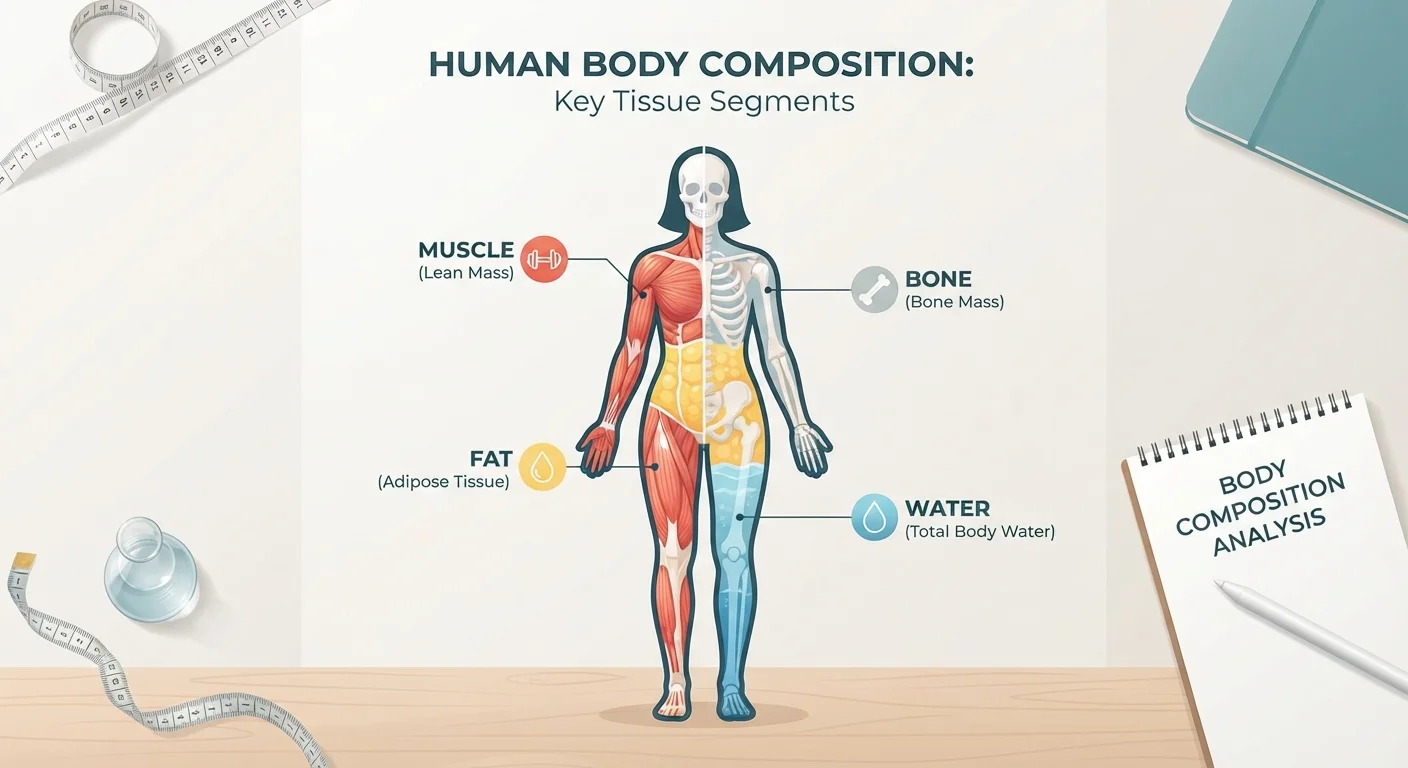
Body composition refers to the breakdown of your body into its major tissue types: fat mass, muscle mass, bone mass, and body water. Rather than treating your body as a single, undifferentiated mass, body composition gives you a more nuanced picture of what that mass consists of.
This distinction matters because two people can weigh exactly the same and have entirely different health profiles. As explored in more detail in our article body composition vs. body weight, a scale reading simply cannot capture that complexity.
Body composition
The proportion of different tissues - fat, muscle, bone, and water - that make up total body weight. It provides more detail than weight alone.
Fat mass
The total weight of all fat tissue in the body, including both essential fat (needed for normal function) and storage fat.
Lean mass
Everything in the body that is not fat - primarily muscle, bone, organs, and water. Sometimes called fat-free mass.
BMI (Body Mass Index)
A simple ratio of weight to height used as a population-level screening tool. It does not measure body composition directly.
DEXA scan
A type of low-dose X-ray imaging used to measure bone density, fat mass, and lean mass with high accuracy.
Bioelectrical impedance
A method of estimating body composition by passing a small electrical current through the body and measuring resistance, which varies between tissue types.
The Four Main Components
Body composition is typically broken down into four broad categories:
- Fat mass: Includes both essential fat - the fat your body needs to function (found in the brain, nerves, and organs) - and storage fat, which accumulates in adipose tissue. Not all fat is harmful; some is physiologically necessary.
- Skeletal muscle mass: The muscle tissue attached to your skeleton that enables movement. Muscle is metabolically active, meaning it burns energy even at rest. For a deeper look at how this connects to energy use, see our guide to metabolism.
- Bone mass: The mineral density and overall weight of your skeletal structure. Bone health is influenced by nutrition - particularly calcium and vitamin D - and physical activity.
- Body water: Water is the largest single component of the human body by weight, present in blood, cells, and tissues. Hydration status can shift body composition readings on some measurement tools.
For a comprehensive breakdown of how these components interact, the full picture on body composition covers each in depth.
Why It Matters More Than the Scale
Body weight responds to many short-term variables - hydration, food volume, time of day - that have nothing to do with actual tissue changes. Body composition, by contrast, tracks the types of tissue that have genuine relevance to metabolic and physical health.
Research consistently links higher amounts of visceral fat (fat stored around internal organs) with increased risk of certain metabolic conditions, while adequate muscle mass is associated with better functional outcomes as people age. Neither of these relationships shows up clearly on a standard bathroom scale.
This doesn't mean body composition is the definitive measure of health - it's one useful data point among many, including blood markers, cardiovascular fitness, sleep quality, and more.
How Body Composition Is Measured
Several methods exist for estimating body composition, each with different levels of accuracy, accessibility, and cost:
- DEXA (Dual-Energy X-ray Absorptiometry): Considered a gold-standard clinical tool. It produces detailed segmental data on fat, lean mass, and bone density. Typically available through medical or sports-medicine settings.
- Hydrostatic (underwater) weighing: Estimates body density by comparing weight on land to weight submerged in water. Accurate but logistically demanding.
- Bioelectrical impedance analysis (BIA): Found in many consumer smart scales and handheld devices. Convenient but sensitive to hydration, food intake, and other variables that can skew results.
- Skinfold calipers: A trained practitioner uses calipers to measure subcutaneous fat at specific sites. Accuracy depends heavily on technique and the equations used.
- BMI: Not a body composition measure, but widely used as a screening proxy. It provides no information about fat distribution or muscle mass.
No Measurement Method Is Perfectly Precise
Every body composition measurement tool - from consumer scales to clinical scans - carries a margin of error. Factors like hydration, recent meals, and timing of day can shift readings on some devices. Avoid drawing firm conclusions from a single data point, especially with lower-cost consumer tools.
What Actually Influences Your Composition
Body composition is shaped by a combination of factors, some modifiable and some not:
- Genetics: Predispose individuals to certain fat distribution patterns and muscle-building capacity.
- Age: Muscle mass tends to decline with age (a process called sarcopenia), while fat mass may increase, even without changes in body weight.
- Biological sex: Differences in hormones influence where fat is stored and how readily muscle develops.
- Physical activity: Resistance training is particularly effective at building and preserving muscle. The physical activity guidelines for adults offer a practical breakdown of recommended movement types.
- Nutrition: Protein intake supports muscle synthesis; overall dietary patterns affect fat storage and metabolic health. Our macronutrients starter guide is a useful companion resource.
Think of Body Composition as Context
Instead of chasing a specific number, consider using body composition data the way you'd use any other health metric - as one piece of a larger picture. Trends over time are generally more meaningful than a single snapshot reading. Discuss any results with a qualified healthcare professional to understand what they mean for your individual situation.
Using This Information Without Obsessing Over Numbers
Body composition data is genuinely useful health information - but it can also become a source of unnecessary anxiety if treated as a daily scorecard. The goal is informed awareness, not fixation.
If you choose to track body composition, consider doing so infrequently and with consistent conditions (same time of day, similar hydration). Look for gradual trends rather than reacting to single readings, which can fluctuate for entirely benign reasons.
For a thoughtful framework on engaging with these metrics without tying them to self-worth, see our article on body composition in a body-neutral framework.
Body Composition Is Not a Moral Judgment
Numbers from a body composition assessment are health data - nothing more. They do not define personal worth, discipline, or attractiveness. If engaging with these metrics feels distressing or triggers unhelpful thoughts about food or your body, it's worth discussing that with a qualified mental health professional.
This article is for general informational and educational purposes only and is not a substitute for professional medical advice. Consult a qualified healthcare provider before making changes to your health practices or if you have questions about your individual health status.