

Key Takeaways
Meaningfully reduces fall risk in older adults
Multiple clinical trials and meta-analyses support balance and strength training as effective fall-prevention strategies, particularly for adults over 65. The CDC lists exercise programs targeting balance as a recommended intervention.
Improves joint stability at knees, ankles, and hips
Proprioceptive training strengthens the small stabilizing muscles surrounding major joints, which helps reduce injury risk during both sport and everyday movement like stair climbing or uneven terrain.
Requires minimal equipment and little extra time
Most balance exercises need only your bodyweight, and even two to three minutes added to an existing routine can produce meaningful adaptation over weeks of consistent practice.
Supports rehabilitation after lower-limb injuries
Balance retraining is a standard component of physical therapy following ankle sprains and knee surgeries, because injury disrupts the neural pathways that govern joint position sense.
Complements other exercise modalities seamlessly
Balance challenges can be layered onto strength, yoga, or everyday activity without replacing those modalities - making it one of the most flexible additions to a routine.
Progress is subtle and hard to measure
Unlike lifting heavier weights or running faster, improvements in balance are difficult to quantify without testing, which can reduce motivation to stick with it over time.
Low immediate perceived effort reduces engagement
Many balance exercises feel too simple at first, leading people to underestimate their value and deprioritize them in favor of more visibly demanding activities.
Not suitable without modification for some populations
People with inner-ear disorders, severe joint instability, or certain neurological conditions may find standard balance exercises unsafe or uncomfortable and require professional guidance.
Cannot replace strength, cardio, or flexibility training
Balance training fills a specific neuromuscular role but does not meaningfully develop cardiovascular fitness, muscular hypertrophy, or tissue flexibility on its own.
Our Verdict
Balance training occupies a small footprint in most fitness routines, but it addresses a genuine gap that cardio, strength, and flexibility work leave open. The evidence supporting it - particularly for fall prevention and joint stability - is solid, and the barrier to entry is low. Its main downside is motivational: progress is subtle and results take patience.
Balance training is especially valuable for adults over 50, people recovering from lower-limb injuries, athletes in court or field sports, and anyone who has noticed wobbliness, tripping, or instability in everyday movement.
What Balance Training Actually Does
Balance training is the category of exercise most likely to be cut from a routine - or never added in the first place. It lacks the calorie-burn credibility of cardio, the visible payoff of strength work, and the feel-good release of stretching. But what it does for your body is genuinely distinct from all three.
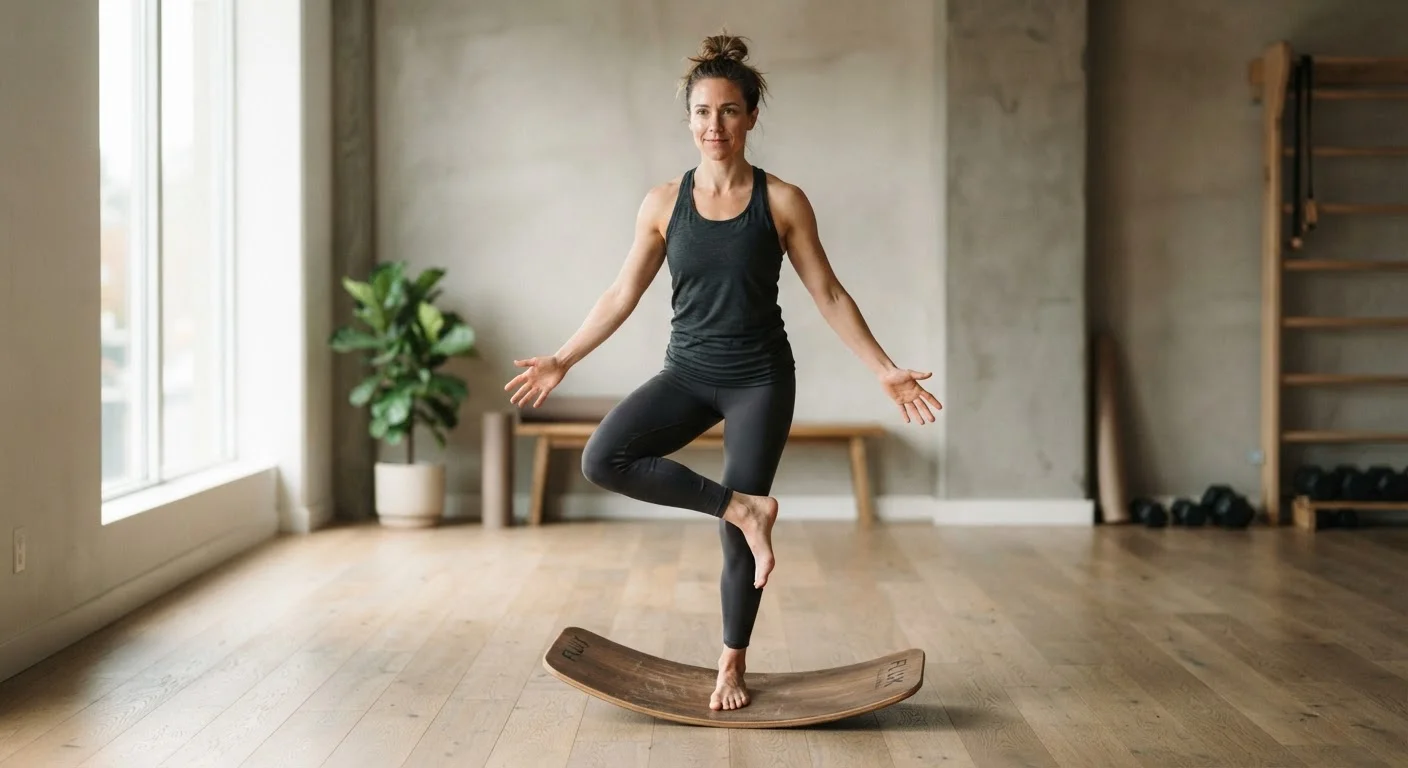
At its core, balance training targets your neuromuscular system - the communication loop between your nervous system and your muscles. When you stand on one leg, step on uneven ground, or hold a single-leg position, your brain has to rapidly process sensory input from your feet, joints, and inner ear, then send corrective signals to dozens of small stabilizing muscles. That process is called proprioception (your body's sense of its own position in space), and it's trainable.
Common balance exercises include single-leg stands, tandem stance (heel-to-toe), standing on an unstable surface like a foam pad, and movements that shift your center of gravity - such as a single-leg deadlift or lateral step-up. For a broader look at how balance fits alongside other exercise types, see what each exercise type actually does.
The Real Case For Including It
The most well-supported argument for balance training is fall prevention. Falls are the leading cause of injury-related emergency department visits among adults 65 and older, according to the Centers for Disease Control and Prevention (CDC). Research consistently shows that structured balance and strength training can reduce fall rates in older adults - a meaningful outcome with lasting quality-of-life implications.
Meaningfully reduces fall risk in older adults
Multiple clinical trials and meta-analyses support balance and strength training as effective fall-prevention strategies, particularly for adults over 65. The CDC lists exercise programs targeting balance as a recommended intervention.
Improves joint stability at knees, ankles, and hips
Proprioceptive training strengthens the small stabilizing muscles surrounding major joints, which helps reduce injury risk during both sport and everyday movement like stair climbing or uneven terrain.
Requires minimal equipment and little extra time
Most balance exercises need only your bodyweight, and even two to three minutes added to an existing routine can produce meaningful adaptation over weeks of consistent practice.
Supports rehabilitation after lower-limb injuries
Balance retraining is a standard component of physical therapy following ankle sprains and knee surgeries, because injury disrupts the neural pathways that govern joint position sense.
Complements other exercise modalities seamlessly
Balance challenges can be layered onto strength, yoga, or everyday activity without replacing those modalities - making it one of the most flexible additions to a routine.
Beyond fall prevention, better balance translates into more stable knees, ankles, and hips during everyday movement. Athletes benefit from reduced injury risk on the field or court. And for anyone returning from a sprained ankle or knee surgery, retraining proprioception is often a core component of physical rehabilitation - precisely because injury disrupts those neural pathways.
#1
Cause of injury-related ER visits in adults 65+
According to the CDC, falls are the leading cause of injury-related emergency department visits and injury deaths among older American adults.
~23%
Reduction in fall rate with exercise programs
A Cochrane Review of exercise interventions found that programs including balance training reduced fall rates by approximately 23% in community-dwelling older adults.
Balance training also pairs well with other modalities. A single-leg stance during a dumbbell curl adds a stability challenge to a strength move. Yoga and tai chi both incorporate balance as a central element. If you're building a routine from scratch, balance work is easy to fold in without adding significant time.
Why Most People Skip It - and the Real Limitations
Despite its benefits, balance training is chronically underrepresented in fitness routines. The reasons are partly psychological, partly structural.
Progress is subtle and hard to measure
Unlike lifting heavier weights or running faster, improvements in balance are difficult to quantify without testing, which can reduce motivation to stick with it over time.
Low immediate perceived effort reduces engagement
Many balance exercises feel too simple at first, leading people to underestimate their value and deprioritize them in favor of more visibly demanding activities.
Not suitable without modification for some populations
People with inner-ear disorders, severe joint instability, or certain neurological conditions may find standard balance exercises unsafe or uncomfortable and require professional guidance.
Cannot replace strength, cardio, or flexibility training
Balance training fills a specific neuromuscular role but does not meaningfully develop cardiovascular fitness, muscular hypertrophy, or tissue flexibility on its own.
Progress in balance is subtle. You don't see muscles grow or numbers climb the way you do with strength training. Early sessions can feel either embarrassingly easy or frustratingly awkward - neither experience tends to keep people coming back. Unlike cardio, there's no clear metric most people track.
There are also genuine practical limitations. People with certain neurological conditions, inner-ear disorders, or severe joint instability may find standard balance exercises uncomfortable or unsafe without modification. If you have a diagnosed balance disorder or have experienced unexplained dizziness, consult a healthcare provider or licensed physical therapist before starting any balance program. This is especially important for older adults or those managing chronic conditions.
When to Consult a Professional First
If you experience unexplained dizziness, frequent stumbling, a diagnosed vestibular disorder, or are recovering from surgery, check with your doctor or a licensed physical therapist before starting balance exercises. They can identify appropriate modifications and progressions tailored to your situation. This applies especially to adults managing osteoporosis, Parkinson's disease, or other conditions that affect movement control.
It's also worth noting that balance training alone won't address every aspect of functional fitness. As explored in why doing only one type of exercise falls short, each modality fills a different role - balance is a complement, not a replacement, for cardio or strength work.
How to Actually Use Balance Training
The good news: balance training requires minimal equipment and almost no dedicated session time. Here are practical ways to incorporate it:
- Brush your teeth on one leg. A genuine zero-equipment starting point that builds single-leg stability daily.
- Add a balance challenge to existing moves. Perform a bicep curl or shoulder press while standing on one foot to train stability alongside strength.
- Include a dedicated balance block. Two to three minutes of single-leg holds or tandem-stance work at the end of a strength session is enough to drive adaptation over time.
- Try tai chi or yoga. Both are evidence-backed for improving balance, especially in older adults, and many find them more engaging than isolated balance drills.
For a complete picture of where balance fits within the full spectrum of physical activity, explore the full reference guide to exercise types. And if you're curious how physical fitness intersects with body composition, bone density's often-overlooked role is worth understanding alongside balance health.
This article is for general informational purposes only and does not constitute medical advice. If you have an existing health condition, injury, or balance disorder, speak with a qualified healthcare professional before beginning any new exercise program.