

Key Takeaways
Kitchen Environment Design
Kitchen environment design refers to the deliberate arrangement of your kitchen space - what's visible, accessible, and convenient - in ways that influence your food choices. Research in behavioral nutrition shows that the physical layout of your eating environment shapes decisions before conscious thought kicks in. In other words, what you reach for first is often determined by what's easiest to reach.
This concept draws from the field of 'choice architecture,' a behavioral science framework showing that the way options are presented significantly affects which options people select, independent of stated preferences.
Why Your Environment Eats for You
Most of us like to think our food choices are deliberate - the product of careful consideration and personal values. But behavioral nutrition research tells a different story. A meaningful portion of what you eat on any given day is determined not by conscious intent, but by environmental cues: what you can see, what's within arm's reach, and what requires the least effort to access.
This is sometimes called the default effect. When a decision is low-stakes and recurring - like what to grab when you open the refrigerator - the brain tends to take the path of least resistance. Your kitchen setup quietly scripts those paths dozens of times a day. Understanding this isn't about blame; it's about recognizing a powerful, underused lever for building better habits.
For a deeper look at why food habits are so persistent in the first place, see the science behind why eating habits are so hard to change.
Start With One Counter Change
You don't have to redesign your entire kitchen at once. Pick one visible surface - your counter or the front shelf of your fridge - and place something you want to eat more of there. Give it two weeks before evaluating whether your habits have shifted. Small, single changes are easier to maintain and easier to assess than sweeping overhauls.
The Visibility Principle: What You See, You Eat
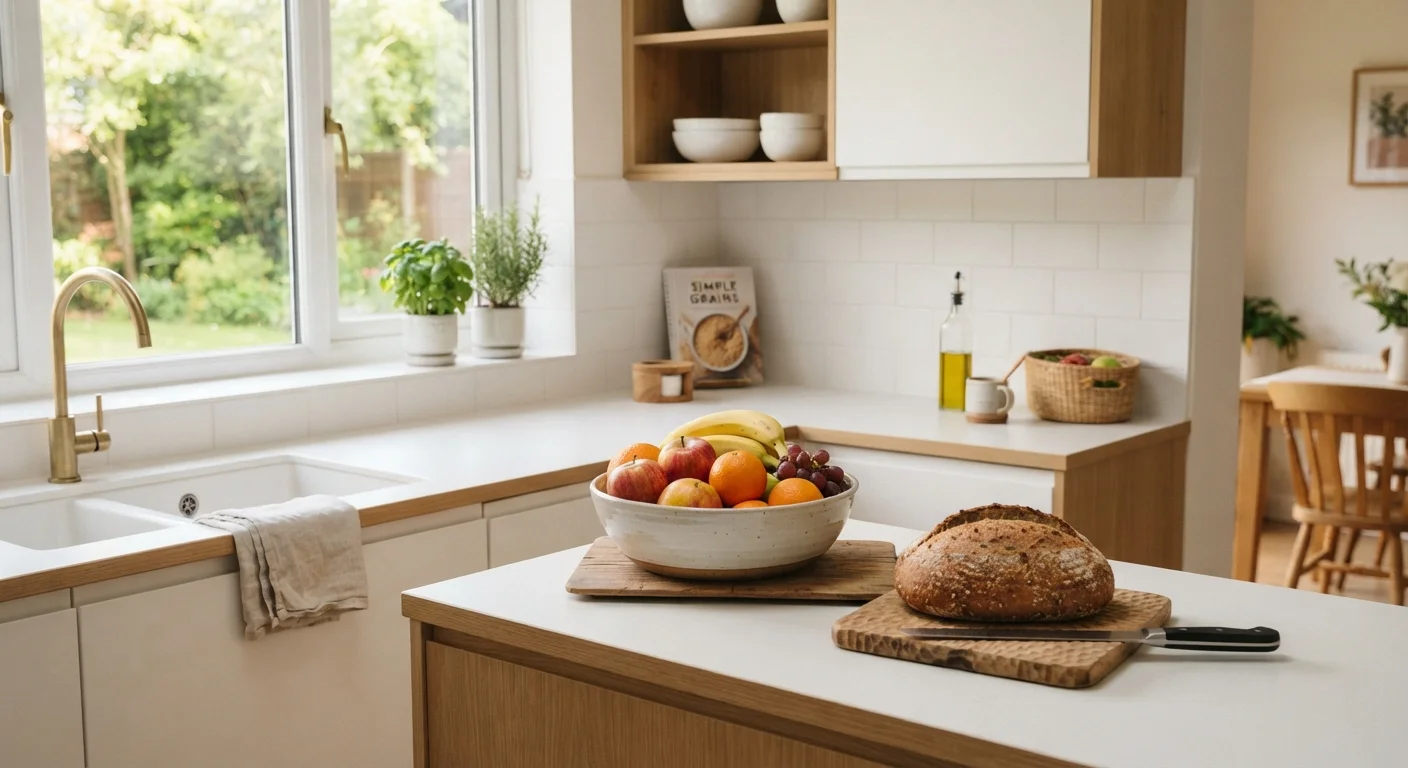
One of the most replicated findings in food environment research is straightforward: visible food gets eaten more. A fruit bowl on the counter tends to get used. Vegetables prepped and stored in a clear container at the front of the refrigerator disappear faster than those buried in the crisper drawer.
The practical implication runs both ways. If you want to eat more of something, make it the first thing you see. If you want to eat less of something, store it in an opaque container toward the back of a shelf. You're not eliminating the option - you're simply adding a small amount of friction that interrupts the automatic grab.
3x
More likely to eat first visible food
Studies in food environment research have found that people are significantly more likely to eat foods that are visible and in their immediate line of sight compared to equally available but less visible options.
~30%
Reduction in snack intake with opaque storage
Research cited in behavioral nutrition literature suggests that storing snack foods in opaque rather than transparent containers can reduce how often and how much people consume them.
This connects directly to how you construct meals overall. When nutritious staples - whole grains, proteins, washed produce - are already prepped and visible, assembling a balanced plate becomes the easier choice. See how to build a balanced meal using macronutrient proportions for a practical framework.
Proximity, Plate Size, and the Serving Environment
Beyond visibility, proximity matters. Keeping a water pitcher on the counter encourages more water intake throughout the day. Leaving a bread basket in arm's reach during dinner is associated with eating more bread - not because anyone decided to, but because it's simply there.
Plate and bowl size also play a role. Research in portion psychology suggests that larger vessels lead to larger servings, even when people are actively trying to moderate intake. This isn't a character flaw; it's a predictable visual bias. Using standard-sized dinnerware - rather than oversized restaurant-style plates - is a low-effort way to work with this tendency rather than against it.
Your serving environment matters at mealtime, too. Placing main dishes on the counter or stove rather than on the dinner table - so that second helpings require getting up - is associated with reduced overall intake compared to family-style serving where everything is within easy reach throughout the meal.
Designing Your Kitchen as a Habit Tool
Rethinking your kitchen doesn't require a renovation. A few targeted adjustments can meaningfully shift your daily defaults:
- Counter space: Reserve it for items you want to eat more of - fruit, a cutting board ready for vegetables, a kettle if you want to drink more tea or warm water.
- Refrigerator front row: Stock it with prepped ingredients and ready-to-eat produce. Move less-used items behind them.
- Pantry: Store snacks you want to limit in less convenient spots. Place whole-food staples at eye level.
- Serving dishes: Keep them off the table during meals when possible.
These adjustments work because they reduce the mental effort required to make a nourishing choice. They complement - rather than replace - other approaches to eating well. Whether you prefer a structured meal plan or a more flexible intuitive approach, your environment can support either path. Explore intuitive eating vs. structured meal planning to find what fits your lifestyle.
If you want to evaluate whether your current habits are working for you, a weekly eating habits self-check offers a practical, judgment-free starting point.
This article is for general informational and educational purposes only. It is not a substitute for professional medical or dietary advice. If you have specific health concerns or conditions, please consult a qualified healthcare provider or registered dietitian.