

Key Takeaways
Habit Loop
A habit loop is the three-part cycle - cue, routine, and reward - that governs automatic behaviors, including what and when we eat. When a behavior is repeated consistently in the same context, the brain begins to automate it, requiring less conscious decision-making. Over time, these loops become deeply encoded, which is why eating patterns can feel almost involuntary.
Habit formation is associated with a shift in neural processing from the prefrontal cortex (deliberate decision-making) to the basal ganglia (automatic behavior), making established habits resistant to change even when motivation is high.
Your Brain on Habit: Why Food Choices Go on Autopilot
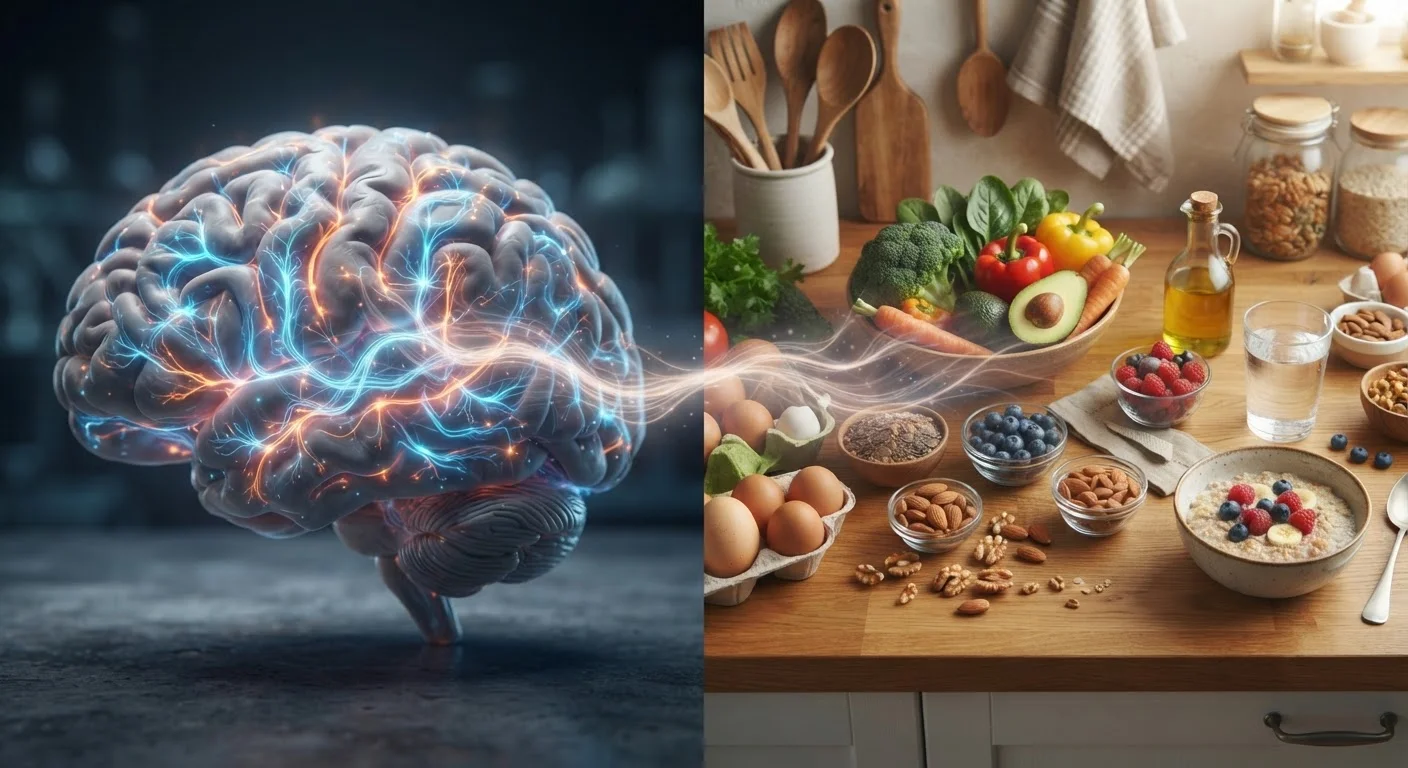
Every time you reach for a snack at 3 p.m. or default to the same breakfast without thinking, your brain is running a script it has run hundreds of times before. This is the habit loop in action: a cue (the afternoon slump), a routine (grabbing chips or a cookie), and a reward (a brief energy lift or emotional comfort). The more the loop repeats, the more the basal ganglia - a brain region associated with automatic behavior - takes over, reducing the role of conscious decision-making.
This neurological handoff is efficient by design. The brain automates repetitive behaviors to conserve cognitive resources. The downside? Once a food habit is encoded, it operates largely below the level of deliberate thought, which is why knowing what you should eat doesn't automatically translate into eating that way.
Understanding this mechanism is not about assigning blame - it's about recognizing that difficulty changing eating behaviors is a feature of how human brains work, not a character flaw.
Dopamine, Reward, and Why Certain Foods Hook Us
The brain's reward system - centered on the neurotransmitter dopamine - plays a central role in food behavior. Eating foods that are high in sugar, fat, or salt tends to produce a dopamine release that signals pleasure and reinforces the behavior. This is an evolutionary mechanism: the brain is wired to seek calorie-dense foods because scarcity was historically a survival threat.
In modern food environments, this system can work against us. Highly processed foods are often engineered to maximize palatability, producing reward signals that make them difficult to moderate. The brain begins to associate specific cues - a particular time of day, a stressful moment, the sight of a familiar package - with the expectation of that reward. Anticipation alone can trigger cravings before a single bite is taken.
“The problem with changing eating habits isn't a lack of knowledge about what to eat - it's that the cue-routine-reward loop operates below the level of conscious intention, and that loop doesn't care about your goals.”
— Wendy Wood, Research psychologist and habit science author, University of Southern California
This doesn't mean healthy foods can't become rewarding over time - they can. But it does explain why displacing an established food habit requires more than good intentions. The existing reward pathway is already well-worn.
Decision Fatigue and the Environmental Pull on Food Choices
By the time most people reach dinner, they've already made hundreds of decisions throughout the day. Research on decision fatigue - the deterioration of decision quality after prolonged decision-making - suggests that cognitive resources for self-control are finite. Food choices made later in the day are often more automatic and less aligned with longer-term goals, not because people stop caring, but because the mental resources required for deliberate choice have been depleted.
Environment compounds this effect. Behavioral nutrition research consistently shows that food placement, visibility, and accessibility influence what people eat, often before a conscious decision is made. A fruit bowl on the counter versus chips in a cabinet can meaningfully shift snacking patterns. This is why your kitchen layout matters more than you might expect - the environment does a significant portion of the decision-making for you.
Structuring the food environment proactively - making nutritious options more visible and accessible, and reducing friction around healthier choices - is one of the most evidence-supported strategies for improving dietary patterns without relying solely on willpower.
What Research Actually Says About Changing Food Habits
Behavioral science offers a more realistic picture of habit change than popular culture does. Dramatic, all-or-nothing dietary overhauls tend to fail not because people lack motivation, but because abrupt change disrupts existing cue-routine-reward loops without providing adequate replacements. Motivation also tends to peak early and diminish over time, making habits built on enthusiasm alone fragile.
More durable approaches work with the brain's existing architecture rather than against it. This includes identifying and modifying cues, substituting routines while preserving rewards, and repeating new behaviors consistently enough for automation to take hold. Research on which dietary changes tend to last points to specificity and repetition as key drivers - vague intentions produce vague results.
Small, incremental adjustments - sometimes called micro-habits - lower the activation energy required to start a new behavior and reduce the likelihood of abandonment. The same principle applies across health domains; micro-habit approaches show similar effectiveness for sustaining daily movement.
For readers interested in the broader behavioral picture, habits that support long-term weight stability offers additional evidence-based patterns worth exploring.
This article is for general informational and educational purposes only and is not a substitute for professional medical or dietary advice. Consult a qualified healthcare provider or registered dietitian before making significant changes to your diet, especially if you have an existing health condition.