

Key Takeaways
Why Micronutrients Matter (Without the Overwhelm)
Micronutrients - vitamins and minerals - are the behind-the-scenes operators of your body. Unlike macronutrients (carbohydrates, proteins, and fats), which supply energy, micronutrients regulate everything from immune defense and bone density to nerve signaling and red blood cell production. You need them in smaller amounts, but their absence is felt acutely.
The good news: you don't need a spreadsheet. Most people who eat a reasonably varied diet are already getting a meaningful range of micronutrients. The goal isn't perfection - it's building consistent habits that naturally stack nutritional variety into your meals. If you're also learning to think about macronutrients, the starter guide to macronutrients offers a useful foundation to pair with this approach.
The Color-Variety Rule: Your Simplest Micronutrient Strategy
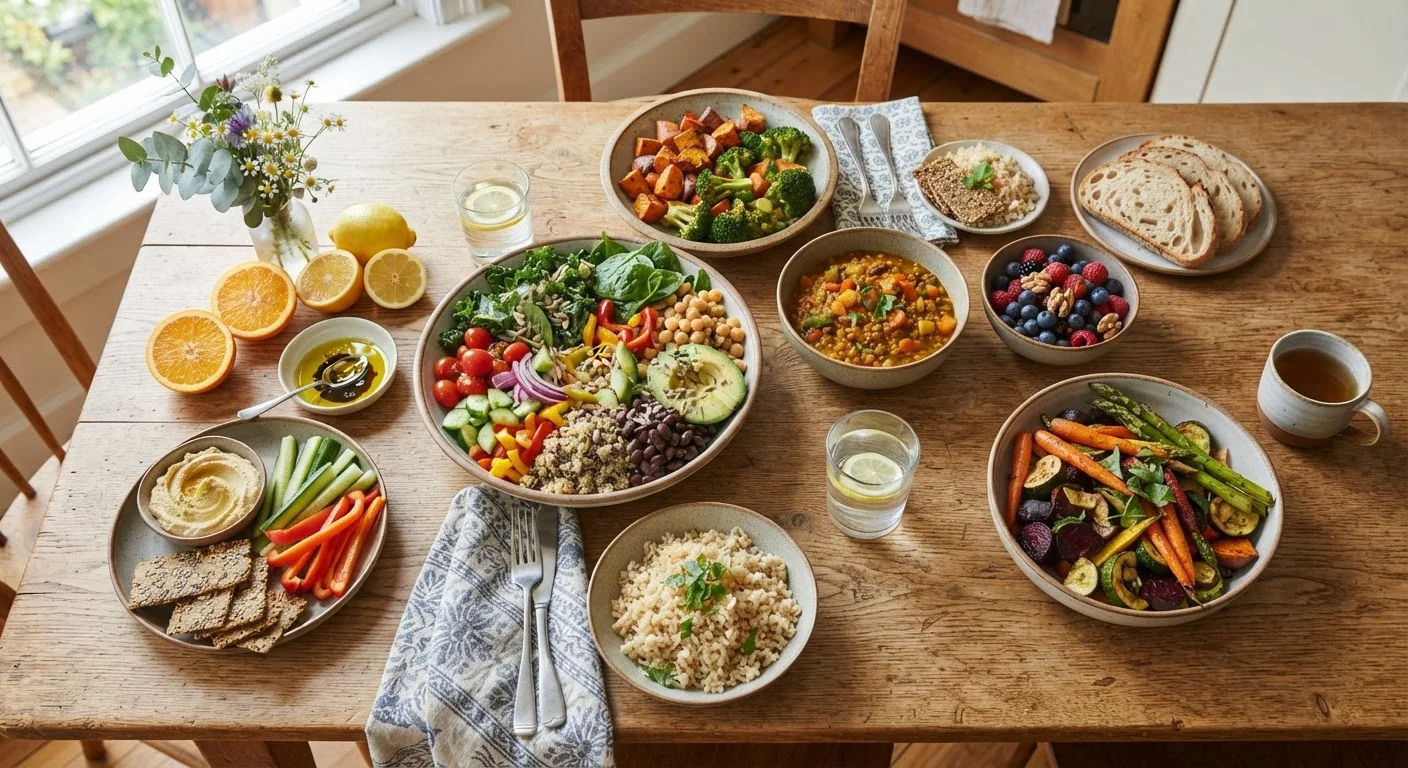
Plant pigments aren't just decorative - they signal distinct clusters of vitamins and minerals. Orange and yellow vegetables like sweet potatoes and carrots are rich in beta-carotene (a precursor to vitamin A). Dark leafy greens such as spinach and kale deliver folate, vitamin K, magnesium, and iron. Red produce like tomatoes and red bell peppers offer vitamin C and lycopene. Purple and blue foods, including blueberries and eggplant, contribute anthocyanins and manganese.
A practical habit: aim for at least three different colors on your plate at each main meal. This isn't a rigid rule - it's a visual shortcut that naturally diversifies your nutrient intake without any counting. Pair this with the plate method framework for a structure that handles both proportions and variety.
Smart Food Pairings That Unlock More Nutrition
How you combine foods at a meal can dramatically affect how much of a nutrient your body actually absorbs - a concept called bioavailability. Some pairings enhance absorption; others can reduce it if you're not thoughtful.
Iron + Vitamin C: Non-heme iron (the form found in plant foods like lentils, spinach, and fortified cereals) is absorbed far more efficiently when eaten alongside a vitamin C source. Squeezing lemon on a lentil salad or adding bell pepper to a spinach stir-fry are easy wins. For more detail on how supplement timing can interfere with this process, see supplement timing pitfalls.
Fat-soluble vitamins + healthy fats: Vitamins A, D, E, and K require dietary fat to be absorbed. A drizzle of olive oil on roasted vegetables or half an avocado alongside a salad isn't indulgent - it's nutritionally strategic.
Calcium + Vitamin D: Calcium absorption depends on adequate vitamin D. Fatty fish, egg yolks, and fortified dairy or plant milks can help bridge both needs in one meal.
Preserve Nutrients From Kitchen to Table
Micronutrients can be fragile. Water-soluble vitamins like vitamin C and several B vitamins are particularly vulnerable to heat, light, and prolonged cooking in water. A few simple kitchen habits protect what's already in your food:
- Steam or roast instead of boiling vegetables when possible - boiling leaches water-soluble vitamins into the cooking water.
- Store produce correctly - many vegetables retain more nutrients when refrigerated promptly rather than left at room temperature.
- Don't over-peel - much of the fiber, potassium, and B vitamins in potatoes, carrots, and zucchini sit close to the skin.
- Use cooking water - if you do boil vegetables or legumes, consider using that liquid in soups or sauces to recover some of the leached minerals.
These habits require no tracking - just a small shift in how you handle food from fridge to plate. They pair naturally with learning to build balanced meals using macronutrient proportions.
Reliable Everyday Foods That Cover a Lot of Ground
Rather than chasing individual nutrients, build meals around foods that naturally deliver a broad micronutrient profile. These are sometimes called nutritional workhorses:
- Eggs
- Deliver riboflavin (B2), B12, vitamin D, selenium, and choline in a compact, affordable package.
- Legumes (beans, lentils, chickpeas)
- Provide folate, iron, magnesium, potassium, and zinc - all in one ingredient.
- Nuts and seeds
- A small handful of pumpkin seeds, almonds, or sunflower seeds supplies vitamin E, magnesium, and zinc.
- Dark leafy greens
- Spinach, kale, and Swiss chard offer vitamins A, C, K, folate, calcium, and iron simultaneously.
- Whole grains
- Brown rice, oats, and quinoa contribute B vitamins, magnesium, phosphorus, and selenium in forms not found in refined grains.
When these foods appear regularly across your weekly meals, you build a natural micronutrient safety net. You can also check food labels to assess nutrient density - see how to read a nutrition label through a macronutrient lens for label-reading strategies that apply equally to vitamins and minerals listed in the % Daily Value column.
This article is for general informational and educational purposes only and is not a substitute for personalized medical or dietary advice. Individuals with specific health conditions, those who are pregnant, breastfeeding, or caring for young children, and older adults should consult a qualified healthcare professional or registered dietitian for guidance tailored to their needs.