

Key Takeaways
Why Proportions Work Better Than Pure Counting for Most People
Calorie counting can be a useful tool, but it has real limits. It requires precise measurements, reliable nutrition data, and sustained mental effort - all of which can erode motivation and, in some cases, lead to an unhealthy preoccupation with numbers. Research in behavioral nutrition suggests that food environment design and visual cues often predict eating patterns more reliably than deliberate tracking alone.
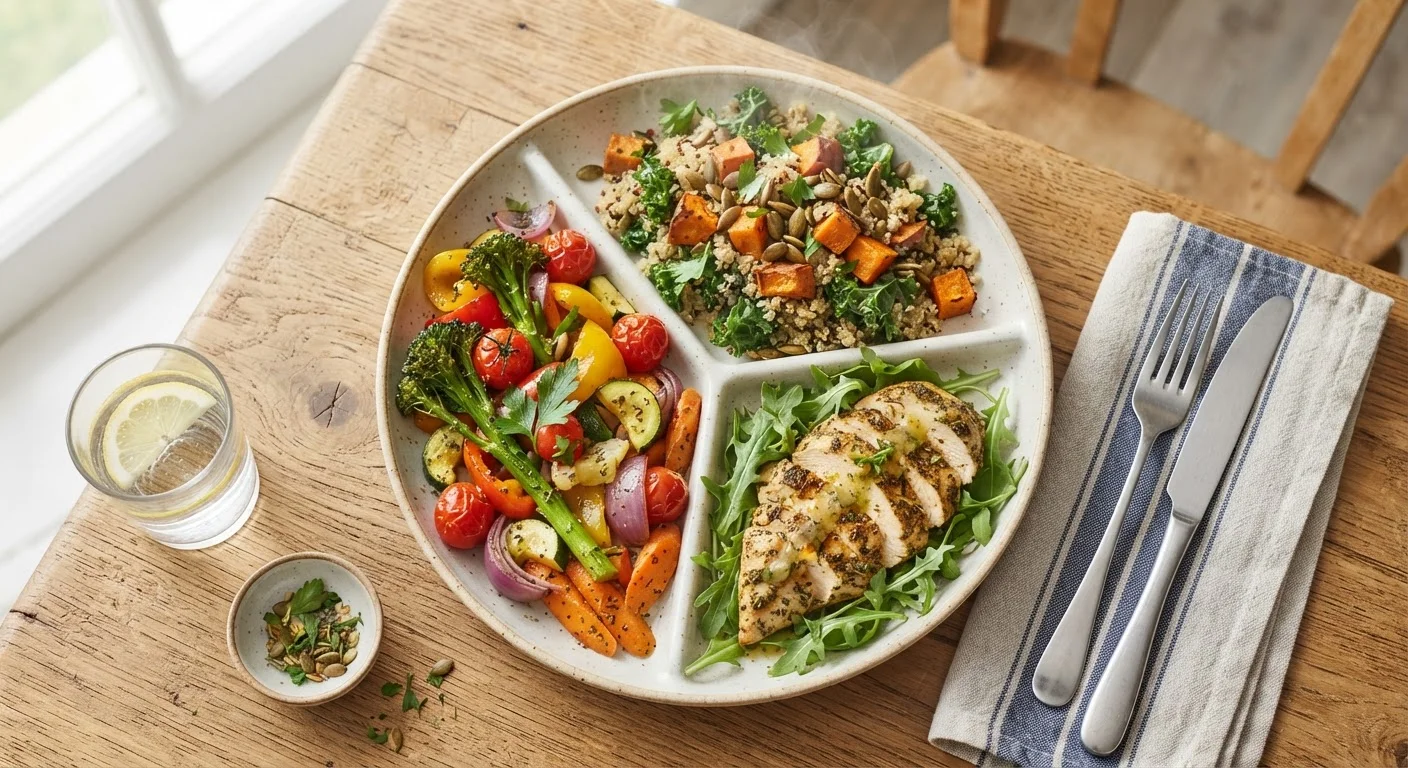
Proportional frameworks - most notably the plate method - sidestep these obstacles by replacing arithmetic with spatial awareness. When you can see that vegetables fill half your plate, you get meaningful nutritional guidance without opening an app. This approach aligns with the USDA's MyPlate guidelines, which were developed to make federal dietary recommendations more actionable for everyday Americans.
For a deeper look at how macronutrient ratios interact with overall health, see our guide to macronutrient ratios. If you're curious how this compares to calorie-label reading, reading nutrition labels with weight awareness offers complementary context.
What You'll Need Before You Start
The beauty of the plate method is that it requires minimal equipment. Before working through the steps below, make sure you have the basics in place.
What you will need
Once those elements are ready, building a balanced plate becomes a repeatable, low-friction habit rather than a one-time experiment.
How to Build a Balanced Plate, Step by Step
Follow these steps at any meal - breakfast, lunch, or dinner - adapting the food choices to what's available and what you enjoy. The goal is a consistent structure, not rigid perfection.
Fill half your plate with non-starchy vegetables
Non-starchy vegetables - leafy greens, broccoli, peppers, carrots, zucchini, tomatoes, cucumbers - should occupy the largest section of your plate. They deliver fiber, vitamins, minerals, and water content that support satiety and overall health, typically with a low caloric density.
Aim for variety in color across the week. Different pigments generally signal different phytonutrients, so rotating your vegetable choices broadens your nutritional coverage without requiring you to track individual nutrients.
Dedicate one quarter of your plate to lean protein
Protein supports muscle maintenance, satiety, and a range of metabolic functions. For roughly one quarter of your plate, choose a protein source such as poultry, fish, eggs, legumes, tofu, tempeh, or low-fat dairy.
Preparation method matters. Grilling, baking, steaming, or sautéing with minimal added fat generally preserves protein quality better than heavy frying. Legumes like lentils and chickpeas do double duty - they contribute both protein and fiber.
Fill the remaining quarter with whole grains or starchy vegetables
The final quarter of your plate accommodates energy-dense carbohydrate sources. Whole grains - brown rice, quinoa, whole-wheat bread or pasta, oats, barley - are preferable to refined counterparts because they retain fiber and additional micronutrients. Starchy vegetables like sweet potatoes, corn, or peas also fit well here.
Portion awareness is still useful in this section, not because carbohydrates are harmful, but because this is where calorie density tends to be highest relative to volume.
Add a small, intentional portion of healthy fat
Dietary fat is essential for absorbing fat-soluble vitamins (A, D, E, and K) and for overall cell function. A modest addition - a drizzle of olive oil, a few slices of avocado, a small handful of nuts or seeds - rounds out the nutritional profile of the meal without requiring a separate section of the plate.
This step is about inclusion, not restriction. Fat is not a food group to fear; it's one to moderate in portion and choose wisely in type, favoring unsaturated sources over heavily processed trans fats.
Choose a low-sugar beverage to accompany the meal
Beverages can add significant calories and sugar without contributing meaningfully to satiety. Water, sparkling water, unsweetened tea, or black coffee are the most nutritionally neutral choices. Low-fat or plant-based milk adds protein and micronutrients if that fits your nutritional goals.
Sugar-sweetened beverages - sodas, sweetened juices, energy drinks - are worth limiting not because they are forbidden, but because they contribute calories without the fiber, protein, or micronutrients that solid foods offer.
Apply the Same Logic to Mixed Dishes
Soups, stews, and grain bowls don't come on a divided plate, but the proportional principle still applies. As you assemble or order a mixed dish, mentally check whether vegetables are the dominant ingredient, protein is present, and grains or starches play a supporting role. A quick visual scan before eating reinforces the habit without requiring measurement.
Not every meal needs to be a sit-down plate. Bowls, wraps, and stir-fries all lend themselves to the same proportional logic - visualize the components and adjust accordingly.
For a visual, macronutrient-centered take on the same concept, see building a balanced meal using macronutrient proportions. If you'd also like to cover vitamins and minerals without obsessive tracking, building a micronutrient-rich plate without counting every milligram is a natural next read.
Making It Stick: Sustainability Over Perfection
A balanced plate is a habit, not a strict daily audit. Occasional meals that don't fit the template - holiday dinners, social events, busy weeknights - do not undermine long-term progress. What matters is the overall pattern across days and weeks, not plate-level precision at every sitting.
If you find yourself oscillating between rigid tracking and abandoning structure altogether, you may benefit from exploring different approaches. Our article comparing intuitive eating vs. structured meal planning examines both philosophies to help you find what fits your lifestyle.
Those managing body weight as a broader goal can also find balanced, sustainable strategies in our weight management hub.
This article is for general informational and educational purposes only and is not a substitute for professional medical or dietary advice. Individual nutritional needs vary. If you have a health condition, are pregnant, or have specific dietary concerns, please consult a registered dietitian or qualified healthcare provider before making significant changes to your eating habits.