

Key Takeaways
The Stress Response
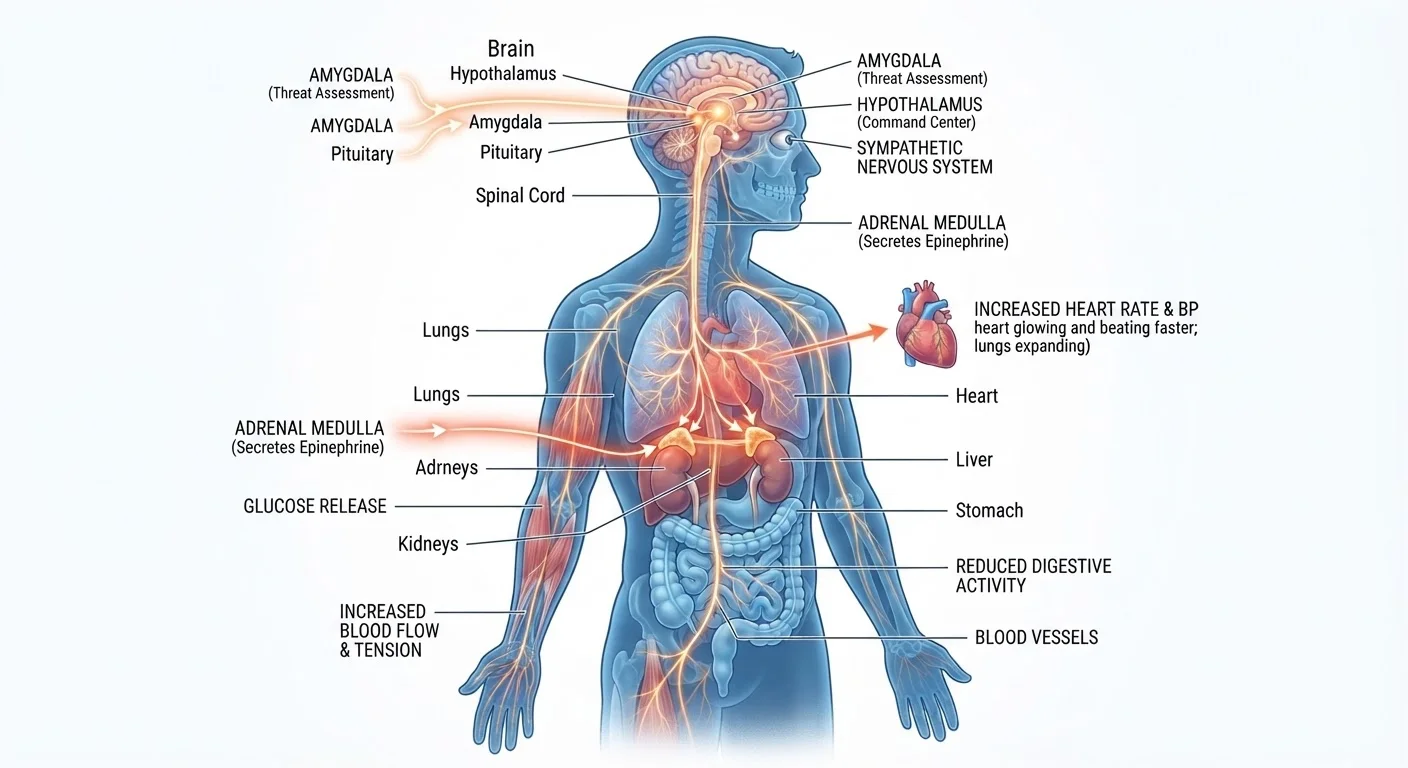
The stress response is your body's automatic, built-in reaction to a perceived threat or challenge. It triggers a rapid series of physical changes - including a faster heartbeat, heightened alertness, and a surge of hormones - designed to help you act quickly. This system is often called the "fight-or-flight" response because it originally evolved to help humans either confront or escape danger.
The response is orchestrated primarily by the hypothalamic-pituitary-adrenal (HPA) axis and the sympathetic branch of the autonomic nervous system, leading to the release of catecholamines (epinephrine and norepinephrine) and glucocorticoids (chiefly cortisol).
The Alarm System: How the Brain Initiates the Response
When your brain detects a threat - real or perceived - a small almond-shaped structure called the amygdala fires an alert. It signals the hypothalamus, which acts like a command center, activating the sympathetic nervous system within milliseconds. This triggers the adrenal glands, sitting atop your kidneys, to flood the bloodstream with epinephrine (adrenaline).
The immediate effects are hard to miss: heart rate surges to pump more blood to muscles, breathing quickens to pull in extra oxygen, pupils dilate to sharpen vision, and digestion slows because it's not a priority during a crisis. Your body is, in essence, redirecting its resources toward immediate survival.
This entire cascade happens faster than conscious thought. By the time you're aware of feeling anxious or alert, your body has already been preparing for action for several seconds.
The Hormone Surge: Cortisol's Slower, Sustained Role
While adrenaline drives the initial spike, a second hormonal wave follows seconds to minutes later through the hypothalamic-pituitary-adrenal (HPA) axis. The hypothalamus signals the pituitary gland, which in turn tells the adrenal cortex to release cortisol.
Cortisol's job is to sustain the energy mobilization that adrenaline started. It raises blood glucose by prompting the liver to release stored sugar, temporarily suppresses non-essential functions like the immune response, and keeps the brain on high alert. Once the stressor passes, cortisol levels are supposed to fall - a process the hippocampus (involved in memory and learning) helps regulate through a feedback loop.
77%
Adults reporting physical symptoms of stress
According to the American Psychological Association's Stress in America survey, a large majority of U.S. adults report experiencing physical symptoms they attribute to stress.
2-3×
Elevated cortisol during acute stress
Research studies measuring salivary and blood cortisol show levels can rise two to three times above baseline during a significant stressor, then gradually return to normal in healthy individuals.
20-60 min
Typical cortisol recovery window
In controlled lab studies, cortisol levels after an acute psychological stressor generally return toward baseline within 20-60 minutes when the perceived threat is resolved.
Understanding this two-phase process matters because it explains why stress can linger. A quick adrenaline burst fades in minutes, but elevated cortisol can persist for hours if the psychological stressor isn't resolved.
What Chronic Activation Actually Does to Your Health
The stress response evolved for short, intense threats - not the low-grade, persistent pressures of modern life like financial worry, relationship strain, or overloaded work schedules. When the system stays partially switched on for weeks or months, the toll accumulates.
- Cardiovascular system: Repeated blood pressure spikes and elevated heart rate are associated with increased long-term cardiovascular risk, according to research published by institutions including the American Heart Association.
- Immune function: Cortisol is anti-inflammatory in acute doses, but chronically elevated levels can impair the immune system's ability to respond effectively to pathogens.
- Sleep: A hyperactivated stress system disrupts the transition into restorative sleep stages, which in turn reduces the body's ability to recover and regulate cortisol the following day - a reinforcing cycle.
- Mood and cognition: Prolonged HPA activation is associated with changes in brain regions involved in mood regulation and memory consolidation.
For a deeper look at these mechanisms, the science behind your stress response article offers a complementary perspective on the research.
Restoring Balance: The Parasympathetic Counterforce
The parasympathetic nervous system - sometimes described as "rest-and-digest" - is the body's natural brake on the stress response. When it takes over, heart rate slows, digestion resumes, muscles relax, and cortisol production winds down. The goal isn't to eliminate the stress response but to ensure the recovery is as reliable as the activation.
Evidence-based approaches that support parasympathetic activation include slow, diaphragmatic breathing (which directly stimulates the vagus nerve), regular physical activity, and consistent sleep. The Mindfulness & Rest hub covers how practices like meditation and structured rest routines can support this recovery process.
Exercise deserves particular mention: research consistently shows that regular moderate-intensity aerobic activity helps recalibrate the HPA axis over time, making the stress response more proportionate and recovery faster. See how exercise affects the stress response for the specifics on timing, type, and intensity.
The Stress & Anxiety hub provides additional practical strategies for managing everyday stressors within these physiological realities.
This article is for general informational and educational purposes only and does not constitute medical advice. If you are experiencing persistent stress, anxiety, or physical symptoms you believe may be stress-related, please consult a qualified healthcare professional.