

Key Takeaways
Why Anxious Minds Need a Deliberate Transition
For many people, anxiety doesn't peak during the day - it peaks the moment the distractions of a busy schedule fall away. The quiet of evening can feel like an unwelcome invitation for racing thoughts, worst-case rehearsals, and unresolved worries to surface.
This happens for a neurologically grounded reason. Your autonomic nervous system operates in two broad modes: the sympathetic state (associated with alertness and stress response) and the parasympathetic state (associated with rest and recovery). Anxiety keeps the sympathetic system activated. Without a deliberate transition, your brain may carry that activation straight into your sleep window, undermining both sleep quality and emotional regulation the next day.
A structured wind-down routine works by providing reliable, repeated sensory and behavioral cues that signal safety to your nervous system - essentially training your brain that this sequence of events means it's time to downshift. Research in behavioral sleep medicine supports the role of consistent pre-sleep rituals in reducing presleep arousal, which is one of the primary drivers of anxiety-related sleep disruption.
For a broader look at how a pre-sleep routine supports rest generally, see our step-by-step guide to wind-down routines for sleep. What follows is specifically designed for anxiety - sequencing techniques that address both the physical and cognitive dimensions of an overactive stress response.
What you will need
Your Step-by-Step Evening Wind-Down
Follow these steps in order beginning 30-45 minutes before your target bedtime. You don't need to execute every step perfectly every night - even completing two or three consistently builds the neurological association between this sequence and rest.
Set a Hard Stop on Screens and Work
At least 30 minutes before bed, close work apps, email, and social media. Blue-spectrum light from screens suppresses melatonin, but more relevant to anxiety is the cognitive stimulation these platforms provide - news, social comparison, and unfinished tasks all keep the stress-response loop active.
Place your phone in another room or enable a focus mode that blocks notifications. This boundary is the foundation everything else builds on.
Lower the Lights and Temperature
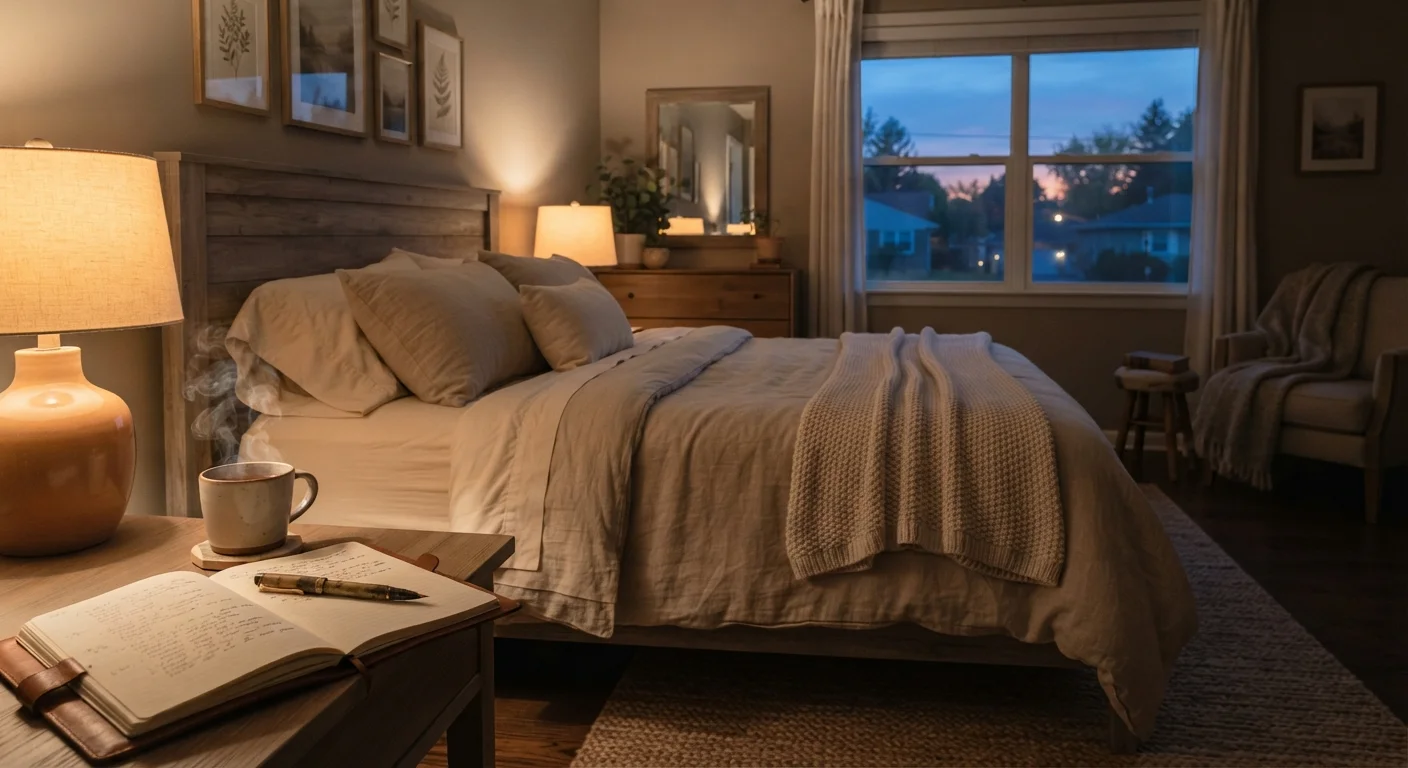
Dim overhead lighting and switch to warm-toned lamps or candlelight. Bright overhead light signals daytime to your circadian system and maintains sympathetic arousal. Simultaneously, lower your thermostat or open a window slightly - a cooler environment (around 65-68°F / 18-20°C is a commonly cited range) supports the core body temperature drop that initiates sleep.
These environmental shifts are physical cues your nervous system can detect without any conscious effort on your part.
Do a Brief Worry Dump on Paper
Set a timer for five minutes and write down every worry, to-do, or unresolved thought that's circling your mind. Don't analyze or problem-solve - just transfer the contents of your working memory onto paper. Research on expressive writing and scheduled worry suggests that externalizing anxious thoughts reduces their intrusive recurrence during sleep.
Close the journal when the timer ends. The act of closing it is symbolic and functional - you're signaling that the thinking portion of the evening is complete.
Practice Physiological Sigh or Box Breathing
Spend 3-5 minutes on a structured breathing exercise. Two evidence-supported options:
- Physiological sigh: Inhale fully through the nose, then take a short second inhale to top off the lungs, then exhale slowly and completely through the mouth. Repeat 3-5 times. This technique rapidly deflates air sacs in the lungs and activates the parasympathetic system.
- Box breathing: Inhale for 4 counts, hold for 4, exhale for 4, hold for 4. Repeat for 4-6 cycles.
Either technique directly reduces physiological arousal by lengthening the exhale relative to the inhale, which stimulates the vagus nerve and slows heart rate.
Engage in a Low-Stimulation Sensory Activity
For the final 10-15 minutes, choose one calming, screen-free activity that anchors attention in the present moment - reducing the mind's tendency to project into future worries. Good options include:
- Reading fiction in print (not news or emotionally charged material)
- Light stretching or restorative yoga poses held for 60-90 seconds each
- Listening to ambient music or nature sounds at low volume
- Drinking a warm caffeine-free beverage slowly and mindfully
The goal is gentle sensory engagement, not accomplishment. This is the "landing pad" of your routine.
Consistency Beats Perfection Every Time
A wind-down routine works through repetition - your brain learns what the sequence predicts. If you miss steps or have an off night, restart the next evening without self-judgment. Even a shortened version (lights down, worry dump, one breathing cycle) keeps the conditioned association intact. For more on building habits that persist, see our guide to routines that actually stick.
Once you've built confidence with the physical steps of this routine, consider adding a brief reflective practice. Our evening mindfulness check-in guide offers a simple end-of-day reflection that pairs well with the journaling step above.
This article is for general informational and educational purposes only and does not constitute medical advice. If anxiety is significantly affecting your daily functioning or sleep, please consult a qualified healthcare professional or licensed mental health provider.