

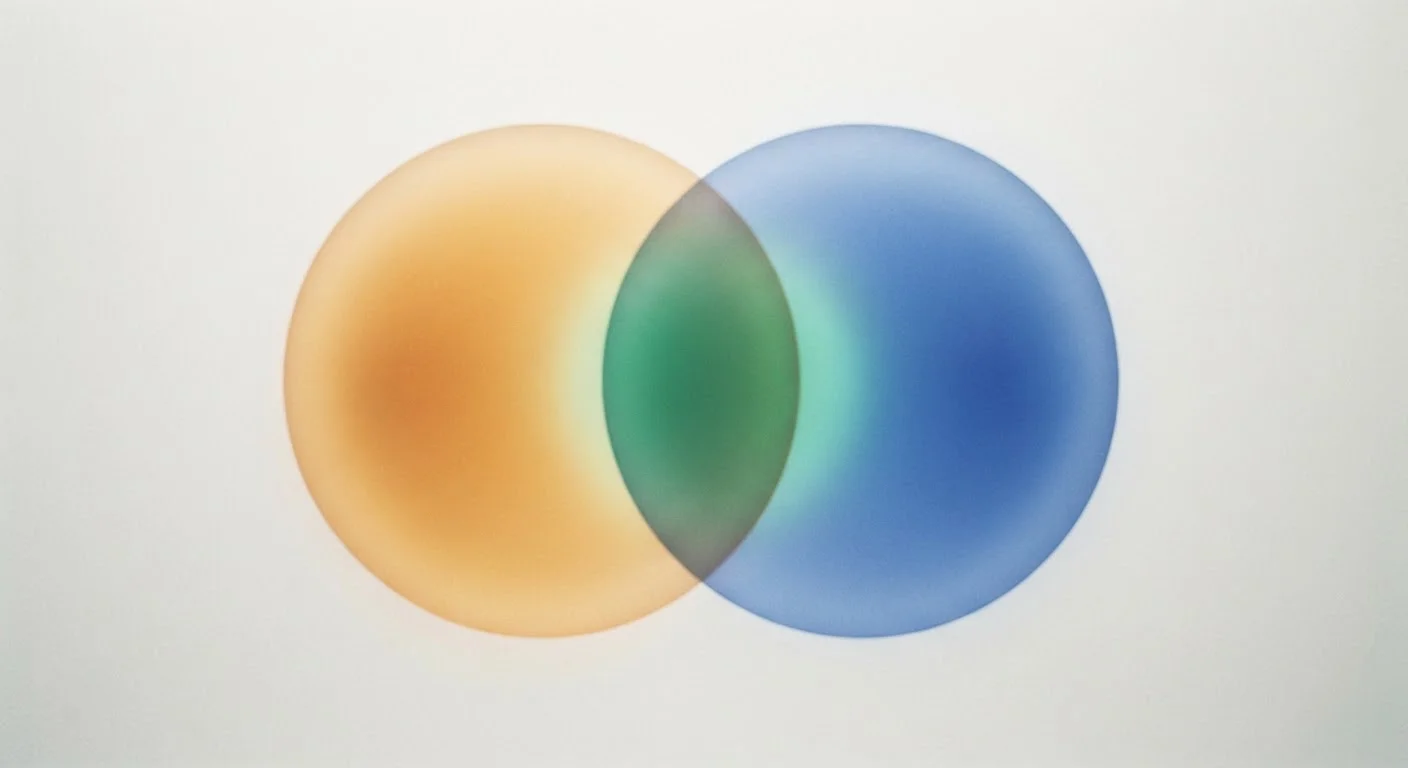
Key Takeaways
Option A
Stress
The body's response to an identifiable external demand.
Best for: Understanding reactions tied to specific, real-world pressures like deadlines, conflicts, or major life changes.
Option B
Anxiety
A persistent internal state that outlasts its trigger - or arrives without one.
Best for: Recognizing worry and apprehension that linger even when circumstances are calm or no clear threat exists.
If your worry is tied to a specific upcoming event or pressure
Stress
What you're experiencing is likely stress. Practical problem-solving, time management, and brief relaxation techniques tend to be most effective here.
If your worry persists after the situation resolves or has no clear trigger
Anxiety
This pattern fits anxiety more closely. Evidence-based approaches like cognitive behavioral techniques or professional support are worth exploring.
If physical symptoms like racing heart or muscle tension are interfering with daily life
Anxiety
Ongoing physical arousal without a clear stressor is a hallmark of anxiety and deserves attention from a qualified healthcare provider.
If you want to build general resilience for everyday pressures
Stress
Learning to regulate your stress response through mindfulness or structured routines can meaningfully reduce the frequency and intensity of daily stress.
Why the Overlap Is So Confusing
Your heart speeds up. Your chest feels tight. Your mind races through worst-case scenarios. Whether you're facing a work deadline or lying awake with nameless dread, the physical experience can feel identical. That similarity is exactly why stress and anxiety are so often conflated - and why the distinction matters more than most people realize.
Both states activate the body's autonomic nervous system, triggering what's commonly called the fight-or-flight response. Stress hormones like cortisol and adrenaline flood the bloodstream, raising heart rate and sharpening attention. The physical symptoms - muscle tension, shallow breathing, difficulty concentrating - can emerge with either experience. But the source and duration of these two states are fundamentally different, and that shapes how you can most effectively respond. For a deeper look at how stress shows up physically in ways people often overlook, see Physical Symptoms of Stress People Often Miss.
What Sets Stress Apart
Stress is a response to an external demand - a real, identifiable stressor in your environment. A looming project deadline, a difficult conversation with a family member, an unexpected bill: these are stressors. Your nervous system mobilizes resources to help you meet the challenge. When the stressor is resolved or removed, the stress response typically subsides.
This doesn't mean stress is harmless. Short-term stress can be motivating, but when stressors accumulate or never fully resolve, the physiological toll builds. Acute Stress vs. Chronic Stress is worth understanding here - the body handles a one-time crisis very differently than it handles months of low-grade pressure.
| Criterion | Stress | Anxiety |
|---|---|---|
| Primary trigger | External stressor (identifiable) | Internal or anticipated threat |
| Duration | Resolves when stressor is gone | Persists beyond or without trigger |
| Time orientation | Present-focused | Future-focused |
| Physical symptoms | Tension, fatigue, irritability | Racing heart, restlessness, dread |
| Adaptive function | Motivates problem-solving | Can become disproportionate to threat |
| Clinical classification | Not a diagnosable disorder | Can meet criteria for anxiety disorders |
| Helpful approaches | Problem-solving, relaxation techniques | CBT, mindfulness, professional support |
What Makes Anxiety Different
Anxiety, by contrast, is characterized by persistent worry or apprehension that exists even in the absence of an immediate external threat - or that continues long after the triggering situation has passed. The mind generates its own alarm signal, often focused on anticipated future harm: What if something goes wrong? What if I can't handle it?
This future-orientation is one of anxiety's defining features. Where stress says "there is a problem," anxiety says "there might be a problem." Clinically, anxiety disorders - including generalized anxiety disorder, social anxiety disorder, and panic disorder - are recognized medical conditions that go beyond ordinary nervousness. They involve patterns of thought and physiological arousal that are disproportionate to the actual level of threat and that interfere with daily functioning. If you recognize this pattern in yourself, the article Why Avoiding Stress Triggers Often Makes Anxiety Worse explains why the instinct to steer clear of discomfort can deepen the problem over time.
Choosing a Response That Fits
Once you can identify which experience you're having, your coping strategies can become more targeted. For stress rooted in a concrete situation, practical problem-solving often helps: breaking a task into smaller steps, communicating clearly in a conflict, or building a buffer into your schedule. Relaxation techniques - slow breathing, progressive muscle relaxation, brief walks - can reduce physiological arousal in the moment.
For anxiety, especially when it's persistent or difficult to link to a specific cause, techniques that address patterns of thinking tend to be more effective. Cognitive behavioral therapy (CBT) is one of the most well-researched approaches, helping people examine and reframe unhelpful thought patterns. Mindfulness practices can also be valuable - they train attention back to the present rather than the imagined future. If you're curious how those two options compare, Mindfulness vs. Meditation for Stress Relief breaks down the differences and how each fits different lifestyles.
It's also important to acknowledge: stress and anxiety can coexist, and chronic stress can contribute to the development of anxiety over time. If either experience feels overwhelming or is affecting your sleep, relationships, or work, speaking with a mental health professional is a meaningful and worthwhile step - not a last resort.
This article is for general informational and educational purposes only and is not a substitute for professional medical or mental health advice, diagnosis, or treatment. If you are experiencing significant distress, please consult a qualified healthcare provider.