

Key Takeaways
Why Time Is the Real Barrier - and What Actually Helps
When surveys ask Americans why they don't eat as well as they'd like, time consistently ranks near the top of the list. The perception that healthy eating requires elaborate cooking, expensive ingredients, or significant daily effort keeps many people stuck in patterns they'd prefer to change.
The reality is more encouraging: most evidence-informed strategies for eating well are about reducing friction, not adding effort. Shifting a small amount of time from reactive, last-minute food decisions to a bit of upfront planning creates outsized improvements in what ends up on the plate. This article lays out five practical habits grounded in nutrition science - not perfection, not restriction, just workable structure.
For broader context on how daily habits shape your energy and wellbeing, see our Daily Routines hub for practical frameworks that complement what you'll find here.
Five Practices That Make Healthy Eating Fit Real Life
The following strategies are designed to work within ordinary American schedules - not around idealized ones. Each builds on a simple principle: make nutritious choices easier than the alternatives.
Dedicate one session per week to batch cooking foundational ingredients.
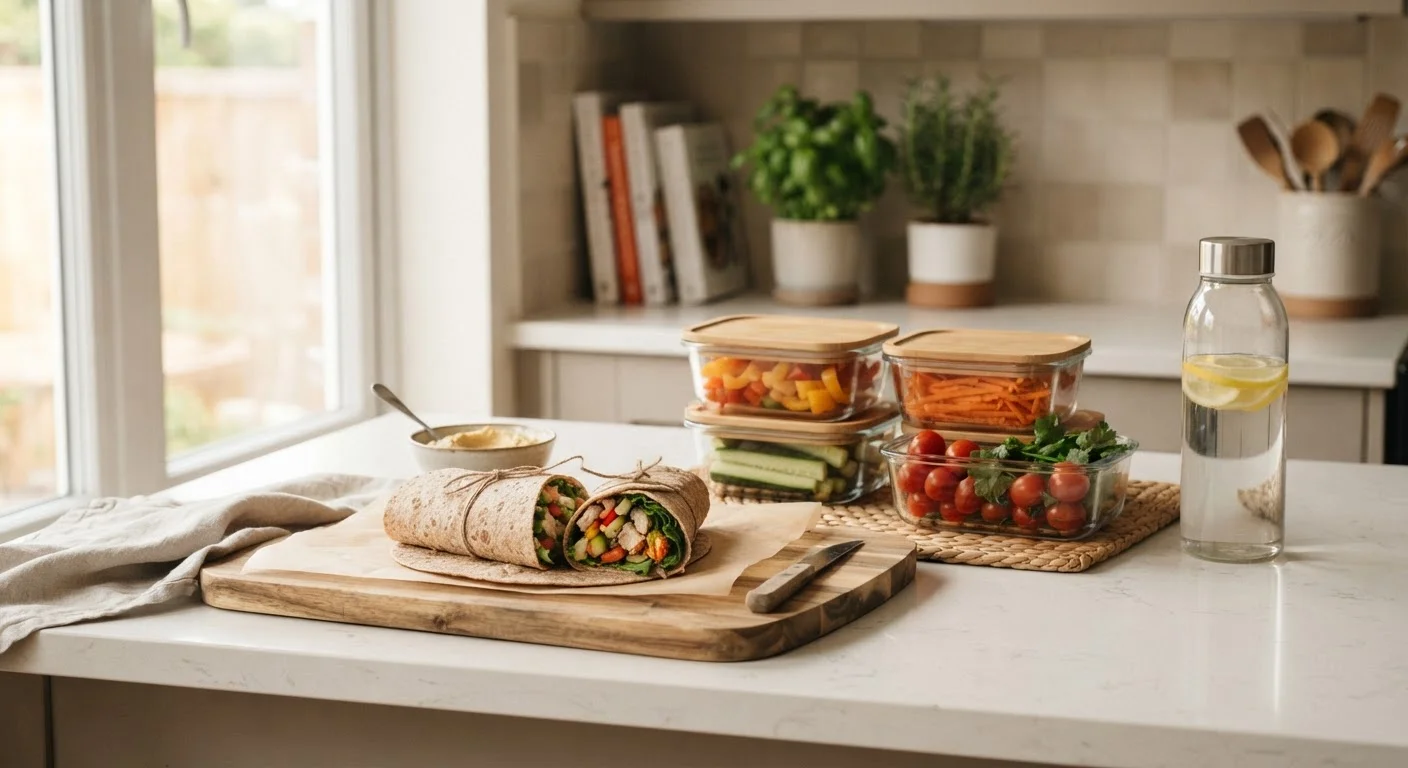
Preparing grains, proteins, and roasted vegetables in bulk removes the daily friction of starting from scratch. Research consistently links meal preparation frequency with higher diet quality and lower fast-food consumption. Having ready components shortens assembly time to minutes rather than a full cooking session.
Stock a rotating set of pantry staples that form the backbone of fast, balanced meals.
A well-stocked pantry acts as nutritional insurance against busy nights. Canned legumes, whole grain pasta, nut butters, canned fish, and frozen vegetables are shelf-stable, nutrient-dense, and quick to prepare. Having these on hand reduces reliance on less nutritious convenience options.
Use simple frameworks rather than elaborate recipes to structure meals.
Complex recipes with many ingredients create planning burden and increase the chance of abandoning healthy intentions. A formula-based approach - such as 'protein + vegetable + whole grain + healthy fat' - lets you vary ingredients freely without needing a recipe each time. This flexibility sustains the habit long-term.
Protect at least one consistent meal time each day as an anchor habit.
Meal timing consistency helps regulate appetite hormones and supports steady energy levels, which in turn reduces impulsive eating decisions later in the day. Even if lunch varies, anchoring breakfast or dinner creates structure the body can anticipate. This connects directly to how routine supports metabolic health.
Reframe 'good enough' meals as a genuine success, not a compromise.
All-or-nothing thinking is one of the most common reasons people abandon healthy eating routines. A meal that is 80% nutritious is far better than skipping or defaulting to a fast-food option. Accepting nutritional imperfection reduces the stress response that anxiety around food choices can trigger.
Consistency in other areas of health, including mindfulness, follows a similar logic. Our article on integrating mindfulness into a busy life explores how small, repeated actions sustain wellbeing habits when schedules are demanding.
This Is General Nutrition Information
The strategies in this article are general education for healthy adults and are not a substitute for personalized medical or dietetic advice. If you have a chronic condition, food allergy, or specific nutritional concern, consult a registered dietitian or your healthcare provider before making significant dietary changes.
Start This Week: Quick Wins You Can Act on Today
Building a durable healthy-eating routine starts with small, specific actions - not a total overhaul. The three quick wins below are low-effort, high-return moves that create momentum without overwhelming your schedule.
Just as structured versus flexible daily schedules each have trade-offs, the right nutrition routine is the one that fits your actual life - not a theoretical version of it. Start with one of these actions, repeat it until it's automatic, then add the next.
This article is for general informational and educational purposes only and does not constitute medical or dietary advice. Always consult a qualified healthcare professional or registered dietitian for guidance tailored to your individual health needs.