

Key Takeaways
Why Nutrition Labels Feel Harder Than They Should
Nutrition labels were designed to inform, but the sheer density of numbers, percentages, and fine print can make a quick grocery decision feel like a pop quiz. The good news: most of what matters fits into a handful of sections, and once you know what each one is actually telling you, the rest of the label becomes background noise.
This guide walks you through a standard U.S. Nutrition Facts label - the format updated by the FDA in 2016 - in the order a shopper would typically encounter it. If you want a deeper dive into how macronutrients appear on labels, see Reading a Nutrition Label Through a Macronutrient Lens for a focused breakdown.
What you will need
Step-by-Step: Decoding Every Section of the Label
Follow these steps in order. Each builds on the previous one, so skipping ahead - especially past serving size - can lead to misreading every number that follows.
Start with serving size - before anything else
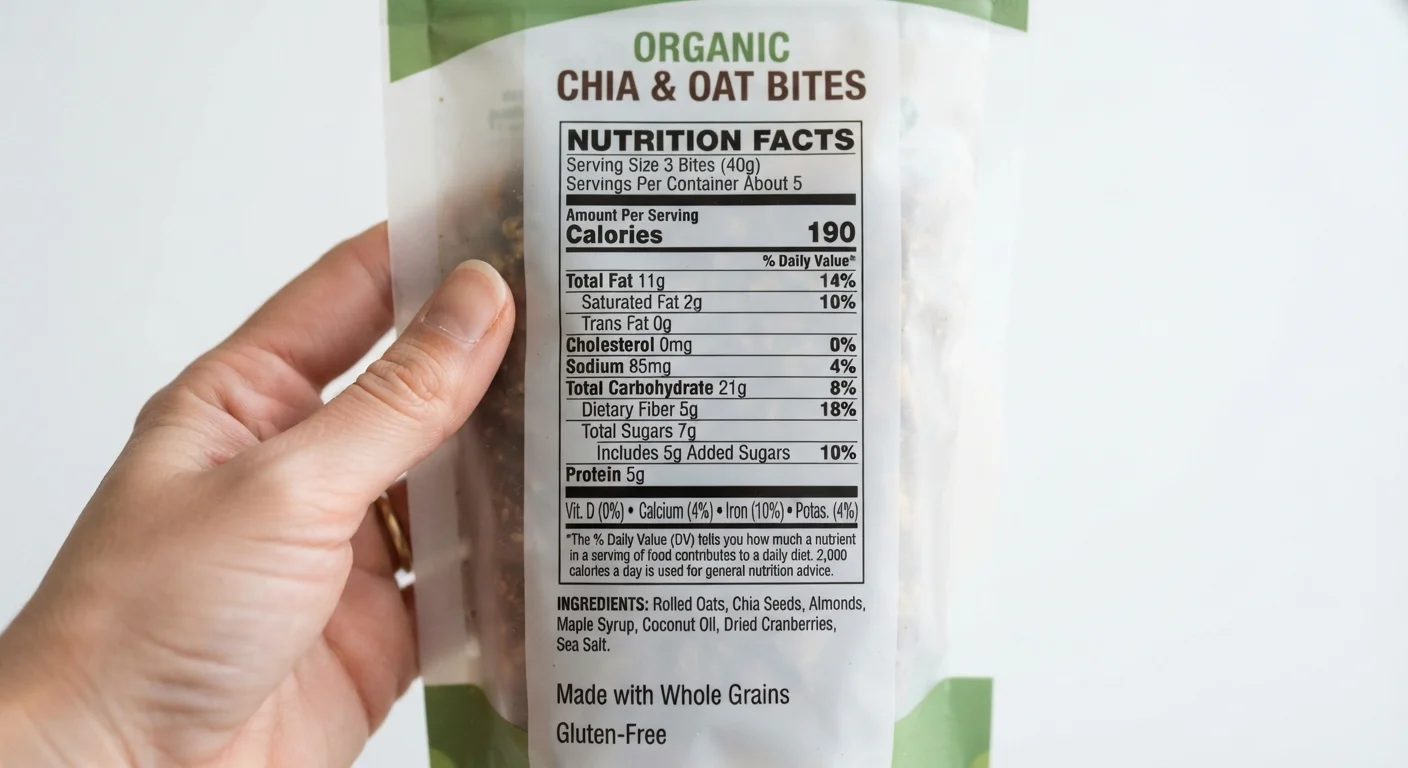
The serving size is printed at the very top of the label, directly under "Nutrition Facts." It tells you the amount all the numbers below refer to - not the whole package. If the label says one serving is 1 cup and the package contains 2.5 cups, every calorie and nutrient figure must be multiplied accordingly if you eat the whole thing.
The 2016 FDA update made serving sizes more realistic by aligning them with what people actually eat. Still, check the "servings per container" line - it is one of the most commonly overlooked figures on any label.
Note the calories per serving
Calories appear in large, bold type directly below the serving size. This figure tells you how much energy one serving provides. Calorie needs vary by individual based on age, sex, activity level, and health status - there is no single target that applies to everyone.
Use calories as one data point, not the whole picture. A food can be low in calories and low in nutrients, or higher in calories and rich in vitamins, minerals, fiber, and protein.
Scan the macronutrient section
Below calories, you'll find total fat, total carbohydrate, and protein - the three macronutrients. Each breaks down further:
- Total fat → saturated fat, trans fat
- Total carbohydrate → dietary fiber, total sugars, added sugars
- Protein (listed as a standalone line)
For a thorough explanation of what these sub-categories mean for your diet, Reading a Nutrition Label Through a Macronutrient Lens covers each in detail. If you want to understand how protein quality factors in, see Complete vs. Incomplete Proteins.
Use %DV to judge amounts quickly
The right-hand column shows Percent Daily Value (%DV) for most nutrients. This percentage is based on a 2,000-calorie reference diet and tells you whether a serving is contributing a little or a lot of a given nutrient to your day.
- 5% DV or less = low in that nutrient
- 20% DV or more = high in that nutrient
Use this as a quick filter: aim for higher %DV for fiber, vitamins, and minerals; look for lower %DV for saturated fat, sodium, and added sugars - unless your individual health context calls for something different.
Read the ingredient list
The ingredient list appears below the Nutrition Facts panel and is ordered by weight - the ingredient present in the greatest amount comes first. A short ingredient list doesn't automatically mean a food is healthier, but scanning the first three to five ingredients gives you a reliable sense of what the product is predominantly made of.
Watch for added sugars listed under various names: high-fructose corn syrup, cane juice, dextrose, maltose, and many others all count. Multiple sugar sources appearing early in the list - or appearing several times - signals a high added-sugar product even if no single form ranks first.
Nutrients Worth Paying Closer Attention To
Once you're comfortable with the structure, a few nutrients deserve extra attention in the context of typical American eating patterns.
- Sodium: Most Americans consume well above the 2,300 mg daily limit recommended in the Dietary Guidelines for Americans. Packaged foods - even ones that don't taste salty - often carry a significant sodium load.
- Saturated fat: Current dietary guidance recommends limiting saturated fat intake. For a detailed look at how different fat types differ, Saturated, Unsaturated, and Trans Fats: A Plain-Language Reference is a useful companion read.
- Added sugars: The updated label separates added sugars from naturally occurring ones - a meaningful distinction, since the body handles them differently in context of overall diet quality.
- Fiber: Consistently under-consumed, dietary fiber supports digestive health and satiety. A %DV of 20% or more per serving is considered high.
Use Labels to Compare, Not to Judge
Nutrition labels are most useful when you use them to compare similar products side by side - same serving size, same category. They're less useful as a pass/fail test for individual foods. Most dietary patterns include a range of foods, and no single item makes or breaks overall nutrition. If you're working on understanding how food choices relate to body composition more broadly, Understanding Body Composition is a helpful starting point.
This article is for general informational and educational purposes only and is not a substitute for professional medical or dietary advice. Consult a registered dietitian or qualified healthcare provider for guidance tailored to your individual health needs.