

Key Takeaways
Macronutrients
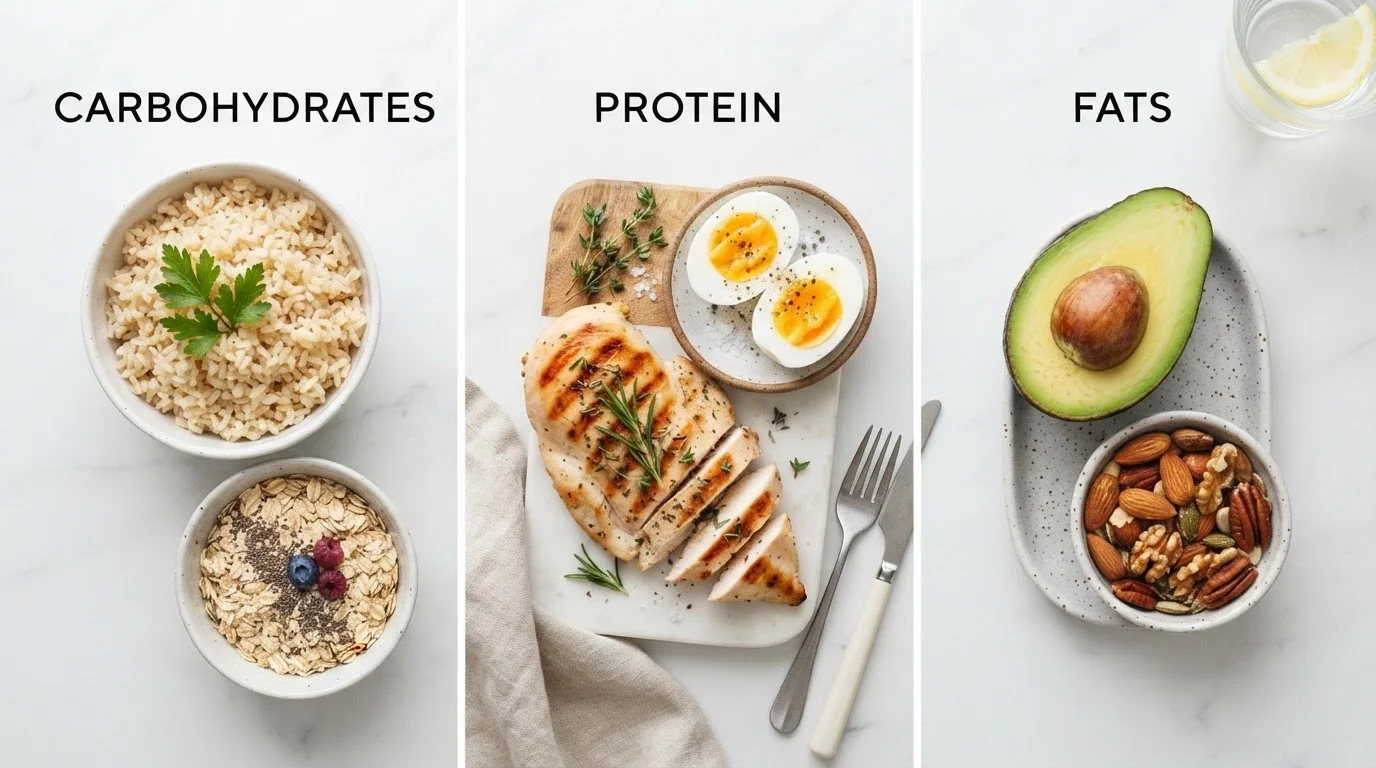
Macronutrients are the three main categories of nutrients your body needs in relatively large amounts to function: carbohydrates, proteins, and fats. Unlike vitamins and minerals, which are needed in trace quantities, macronutrients supply the energy (calories) that powers everything from breathing to exercise. Each macronutrient also carries out specific structural and regulatory roles beyond simply providing fuel.
Carbohydrates and proteins each provide 4 kilocalories per gram; fats provide 9 kilocalories per gram. These values are standardized by the Atwater system used in nutrition labeling.
Why Macronutrients Matter in the First Place
Every time you eat, your body breaks food down into usable components. Macronutrients - carbohydrates, proteins, and fats - are the three that your body requires in the largest amounts and that collectively account for all the calories in your diet. They are not interchangeable: each one performs functions the others cannot fully replace.
Understanding what each macro actually does dissolves a lot of confusion about popular diets, food labels, and conflicting nutrition headlines. It also makes building a balanced plate feel logical rather than arbitrary. For a broader foundation, see our starter guide to macros.
45-65%
Recommended calorie share from carbohydrates
According to the Dietary Guidelines for Americans, carbohydrates should contribute 45-65% of total daily calories for most adults.
10-35%
Recommended calorie share from protein
The Acceptable Macronutrient Distribution Range (AMDR) for protein is 10-35% of daily caloric intake for adults, per the National Academies of Medicine.
20-35%
Recommended calorie share from fat
Current U.S. dietary guidelines place total fat intake at 20-35% of daily calories, with emphasis on unsaturated fat sources.
Carbohydrates: Your Body's Go-To Fuel
Carbohydrates are broken down into glucose, which circulates in the bloodstream and serves as the primary energy source for the brain, red blood cells, and muscles during moderate-to-high-intensity activity. When glucose is abundant, the body stores excess as glycogen in the liver and muscles for later use.
Not all carbohydrates behave the same way. Simple carbohydrates - sugars found in fruit, dairy, and added sweeteners - digest quickly. Complex carbohydrates - starches and fiber in whole grains, legumes, and vegetables - digest more slowly, providing steadier energy and supporting digestive health through their fiber content.
Fiber, technically a carbohydrate, is worth highlighting separately: it feeds beneficial gut bacteria, slows glucose absorption, and contributes to feelings of fullness. Most Americans consume well below the recommended fiber intake, making fiber-rich carbohydrate sources a practical priority for most people.
Proteins: The Building Blocks of Structure and Function
Proteins are made up of chains of amino acids. Of the 20 amino acids the body uses, nine are classified as essential - meaning the body cannot synthesize them and must obtain them from food. Animal-based proteins (meat, poultry, fish, eggs, dairy) typically supply all nine essential amino acids in sufficient quantities. Many plant proteins are lower in one or more essential amino acids, which is why variety matters for those eating primarily plant-based diets.
The body uses protein to build and repair muscle tissue, produce enzymes and hormones, support immune function, and maintain the structural integrity of skin, hair, and connective tissue. Unlike carbohydrates and fat, the body has no dedicated protein storage system - which is why consistent dietary intake across the day is important.
Common protein-rich foods include eggs, Greek yogurt, legumes, tofu, seafood, and lean meats. For guidance on putting these together at meals, see building a balanced meal using macronutrient proportions.
Fats: More Than Just Stored Energy
Dietary fat has a complicated reputation, but it is essential to health. Fats are required for absorbing fat-soluble vitamins (A, D, E, and K) - nutrients that cannot enter the bloodstream without fat present in the digestive tract. To learn how those vitamins specifically work, see the fat-soluble vitamins explained.
Beyond vitamin transport, fats form the structural membrane of every cell in the body, support the production of key hormones (including sex hormones), cushion organs, and provide a dense, long-burning energy source during low-intensity and resting metabolism.
Unsaturated fats - found in olive oil, avocados, nuts, seeds, and fatty fish - are associated with favorable cardiovascular outcomes in nutrition research. Saturated fats, found in fatty animal products and some tropical oils, are generally recommended in moderation by major dietary guidelines. Trans fats, produced through industrial partial hydrogenation, are largely removed from the U.S. food supply following regulatory action.
How the Three Macronutrients Work Together
Macronutrients do not operate in isolation. A meal that combines carbohydrates with protein and fat digests more slowly than one built on carbohydrates alone - blunting rapid swings in blood glucose. Fat enhances the absorption of fat-soluble vitamins delivered by vegetables in the same meal. Protein consumed alongside carbohydrates after physical activity supports muscle recovery while glycogen stores are replenished.
This is why nutrition science generally discourages eliminating entire macronutrient groups. Carbohydrate-free diets can limit fiber, B vitamins, and certain minerals. Very low-fat diets can impair vitamin absorption and hormone balance. Diets inadequate in protein affect tissue repair and immune defense. For a look at what the research says about optimal ratios, see macronutrient ratios and the research.
Macronutrients also interact with the vitamins and minerals your body depends on - making varied, whole-food eating the most reliable way to cover all nutritional bases. Common misunderstandings about how each macro works are examined in macronutrient misconceptions.
This article is for general informational and educational purposes only and is not a substitute for professional medical or dietary advice. Consult a qualified healthcare provider or registered dietitian for guidance tailored to your individual health needs.