

Key Takeaways
Iron Deficiency
Iron deficiency occurs when your body doesn't have enough iron to produce adequate amounts of hemoglobin - the protein in red blood cells that carries oxygen from your lungs to the rest of your body. Without sufficient iron, your cells and tissues receive less oxygen than they need to function well. This can result in a range of symptoms, from low energy and difficulty concentrating to physical signs like pale skin and brittle nails.
Iron deficiency exists on a spectrum: depleted iron stores (low ferritin) can precede iron-deficiency anemia, in which hemoglobin levels fall below clinical thresholds. A healthcare provider uses blood tests - including serum ferritin, hemoglobin, and transferrin saturation - to distinguish between these stages.
Why Iron Matters More Than Most People Realize
Iron is one of those nutrients that quietly powers nearly everything your body does. Its most critical job is helping red blood cells carry oxygen - but it also supports energy metabolism, immune function, and cognitive performance. When iron levels fall short, those processes slow down in ways that can feel vague and easy to dismiss.
Many people chalk up tiredness or trouble focusing to stress, poor sleep, or a busy schedule. And while those explanations are often valid, they can also mask a nutritional gap. Understanding what iron does - and what its absence signals - is the first step toward taking the right action.
For related context on how nutrient gaps show up across your diet, see signs your meals may be short on key nutrients.
Recognizing the Signals: Common Symptoms of Low Iron
Iron deficiency doesn't always announce itself dramatically. Symptoms tend to build gradually, which is part of why they're frequently overlooked. The most commonly reported include:
- Persistent fatigue and low energy - even after adequate sleep
- Difficulty concentrating or brain fog - iron plays a role in neurotransmitter production
- Pale or yellowish skin - reduced hemoglobin can show in skin tone and the inside of the lower eyelids
- Shortness of breath during routine activities
- Brittle nails or hair loss
- Restless legs - an uncomfortable urge to move the legs, often at night
- Unusual cravings for non-food items like ice, dirt, or starch (a condition called pica)
If you notice several of these patterns together, it's worth discussing them with a healthcare provider - not assuming supplements are the answer. Tracking your energy signals over time can help you bring a clearer picture to that conversation.
Symptoms Alone Can't Diagnose Iron Deficiency
Many symptoms associated with low iron - fatigue, difficulty concentrating, shortness of breath - are also common in other conditions, including thyroid disorders, vitamin B12 deficiency, and sleep problems. A blood test measuring ferritin, hemoglobin, and related markers is the only reliable way to confirm iron deficiency. Avoid self-diagnosing or starting high-dose iron supplements without professional guidance, as excess iron can be harmful.
Who Is Most at Risk - and Why
Iron deficiency is the most common nutritional deficiency worldwide, but certain groups face disproportionately higher risk:
- Women of reproductive age lose iron through menstruation each month, raising daily requirements considerably.
- Pregnant individuals have significantly increased iron needs to support fetal development and expanded blood volume.
- Infants and toddlers grow rapidly and may not get enough iron from breast milk or diet alone after six months.
- Frequent blood donors lose iron with each donation.
- People with absorption issues - including those with celiac disease, Crohn's disease, or who have had gastric surgery - may not absorb iron efficiently even when intake is adequate.
- Vegetarians and vegans rely exclusively on non-heme iron (the plant-based form), which the body absorbs less readily.
Risk isn't destiny. Understanding your personal risk profile helps you make more targeted food and lifestyle choices - and know when to ask for a blood test. Iron deficiency sits alongside other common shortfalls like vitamin D deficiency, which is worth understanding separately.
Food-Based Ways to Support Healthy Iron Levels
Iron from food comes in two forms with meaningfully different absorption rates:
- Heme iron
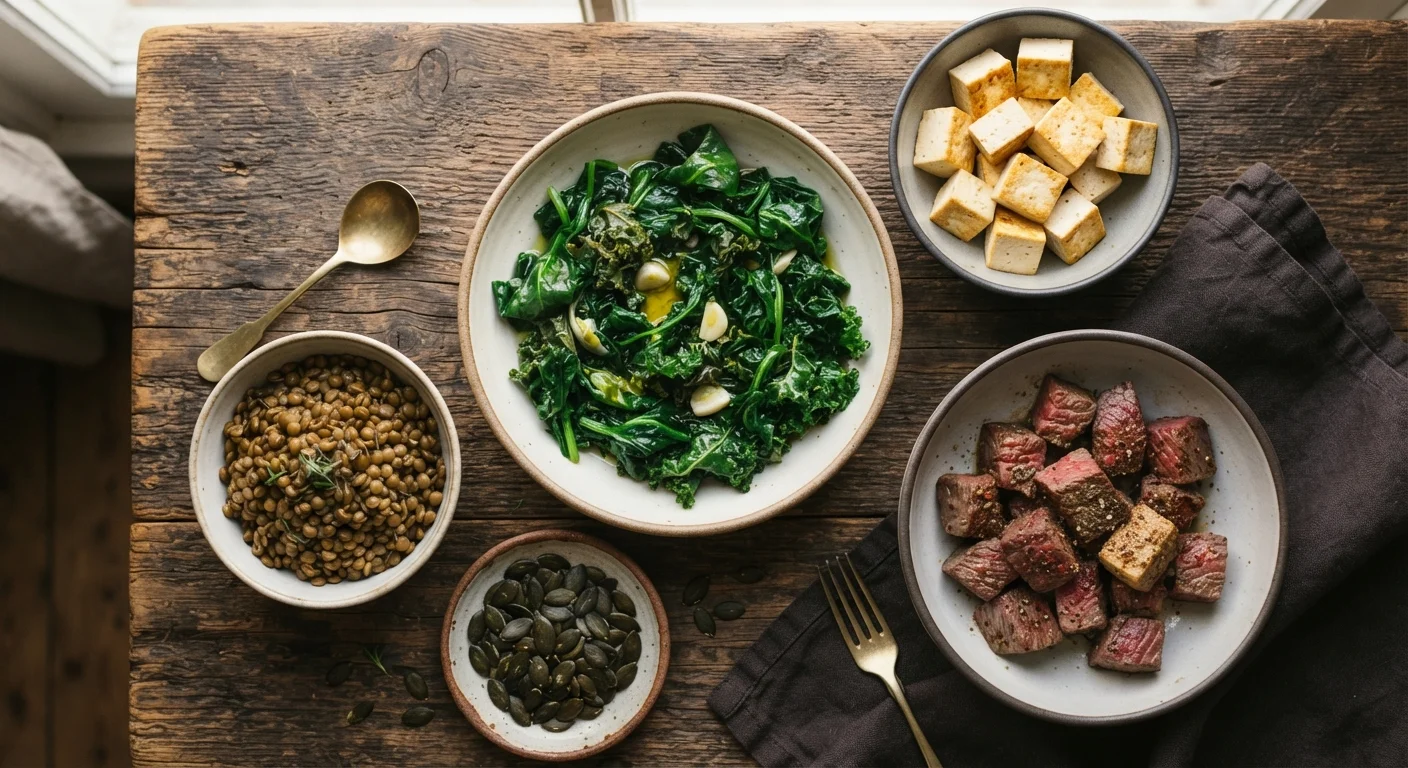
- Found in animal products - red meat, poultry, and seafood. The body absorbs heme iron efficiently, making it one of the most reliable dietary sources.
- Non-heme iron
- Found in plant foods - lentils, beans, tofu, fortified cereals, pumpkin seeds, and dark leafy greens like spinach. Absorption is lower, but intake and pairing strategies can make a meaningful difference.
The single most practical tip for plant-based eaters: pair non-heme iron sources with foods rich in vitamin C. A squeeze of lemon juice over lentil soup, or bell peppers alongside a tofu stir-fry, can noticeably enhance how much iron your body actually absorbs.
On the flip side, certain compounds can inhibit iron absorption when consumed at the same time - particularly calcium (from dairy), tannins in tea and coffee, and phytates in some whole grains and legumes. This doesn't mean avoiding those foods; it simply means spacing them out from your main iron-rich meal when absorption is a priority.
For a broader view of how trace minerals interact with one another and with overall dietary patterns, zinc, selenium, and other trace minerals are worth exploring.
Boost Absorption With a Simple Food Pairing
When building meals around plant-based iron sources like lentils, spinach, or fortified cereals, add a vitamin C-rich food to the same meal. Options include citrus segments, sliced bell peppers, strawberries, or a squeeze of lemon juice. This pairing can meaningfully increase the amount of non-heme iron your body actually absorbs, making your dietary choices work harder for you.
This article is for general informational and educational purposes only and is not a substitute for professional medical advice. If you suspect you have iron deficiency or any other nutritional concern, consult a qualified healthcare provider who can evaluate your individual situation.