

Key Takeaways
Potassium-Sodium Balance
Potassium and sodium are two minerals (electrolytes) that work in opposition inside your body to regulate blood pressure, fluid levels, and how your muscles and nerves function. Getting too much sodium and too little potassium - the pattern typical in the American diet - can push blood pressure higher and strain the cardiovascular system. Keeping these minerals in a healthy ratio is one of the most actionable dietary levers for heart health.
Potassium and sodium are transported across cell membranes by the sodium-potassium pump (Na⁺/K⁺-ATPase), an enzyme critical to maintaining electrical gradients in heart and muscle cells.
Two Minerals, One Critical Partnership
Think of potassium and sodium as a biological seesaw. Sodium, which you consume primarily as salt, draws water into the bloodstream and raises blood volume - temporarily pushing blood pressure up. Potassium acts as the counterweight: it signals the kidneys to release more sodium into the urine and helps relax blood vessel walls, easing the pressure back down.
Neither mineral is the villain. Both are essential. Sodium supports nerve signal transmission and muscle contraction; potassium is equally vital for heart rhythm and cell function. The problem emerges when the balance tilts sharply - as it does for most Americans, who average about 3,400 mg of sodium daily against a potassium intake that frequently falls below 2,500 mg.
Dietary guidelines from agencies such as the American Heart Association recommend limiting sodium to no more than 2,300 mg per day for most adults, with an ideal target of 1,500 mg for those with hypertension. Meeting potassium needs simultaneously is just as important as cutting salt.
~90%
Americans exceeding daily sodium recommendations
According to the CDC, approximately 90% of Americans consume more sodium than the 2,300 mg daily limit recommended by federal dietary guidelines.
< 3%
Adults meeting potassium intake goals
Data from national nutrition surveys suggest fewer than 3% of American adults consume enough potassium to meet the Adequate Intake level set by the National Academies.
5 mmHg
Average blood pressure reduction from DASH diet
Research published in clinical nutrition journals estimates the DASH dietary pattern can reduce systolic blood pressure by approximately 5 mmHg in adults with hypertension.
Where the Imbalance Comes From
The modern American diet creates a near-perfect storm for potassium-sodium imbalance. Ultra-processed and packaged foods - breads, canned soups, deli meats, fast food - account for the majority of dietary sodium. Meanwhile, the foods richest in potassium (fresh produce, legumes, whole grains) are consumed far less than recommended.
This is not purely a matter of individual choice. Processed foods are engineered for convenience and palatability, sodium acts as a preservative, and fresh potassium-rich foods can be more expensive or less accessible for some households. Understanding the structural cause helps frame solutions without blame.
Reading the Nutrition Facts label is one practical tool. Both sodium (in milligrams) and potassium (as a percentage of Daily Value) are listed. Comparing products and choosing lower-sodium options with higher potassium content adds up over time.
Building Potassium Into Everyday Meals
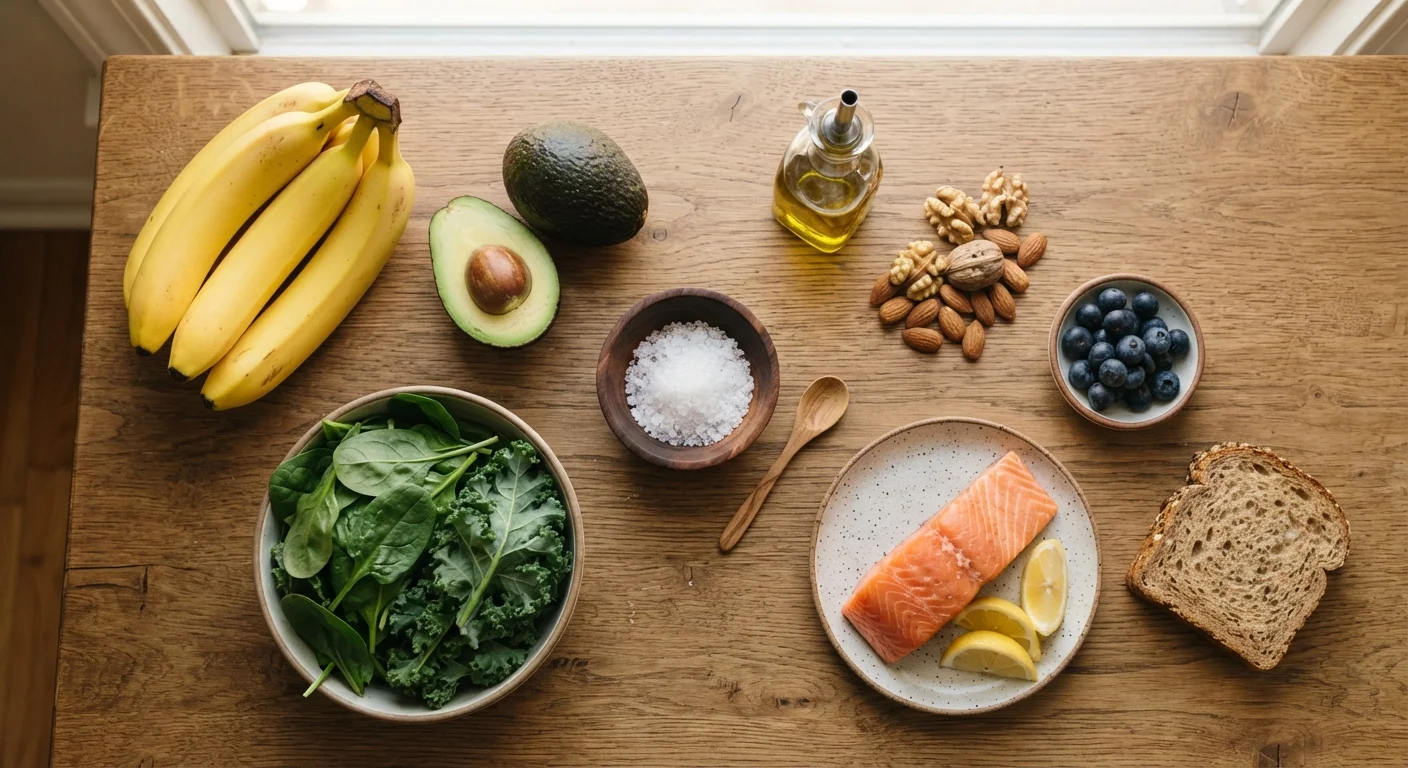
Raising potassium intake does not require specialty supplements or expensive superfoods. Several affordable, widely available foods deliver meaningful amounts:
- Cooked white or sweet potato (with skin): roughly 900-950 mg per medium potato
- White beans or lentils (½ cup cooked): approximately 350-500 mg
- Avocado (½ fruit): around 350 mg
- Banana (medium): about 420 mg
- Spinach (1 cup cooked): approximately 840 mg
- Plain low-fat yogurt (1 cup): roughly 370-580 mg
Aiming to include two to three of these at meals throughout the day builds toward the daily target naturally. Pairing a potassium-rich food with a lower-sodium preparation - for example, a baked potato with herbs rather than salted butter - amplifies the benefit on both sides of the balance.
A Simple Way to Shift the Balance
Try the "herb swap" at cooking time: replace half the salt in a recipe with herbs, citrus zest, or garlic. Then add one potassium-rich ingredient - a handful of spinach, a scoop of beans, or sliced avocado. You reduce sodium and boost potassium in a single step without sacrificing flavor.
Who Should Be Especially Mindful
While the general population benefits from improving the potassium-sodium ratio, some groups need individualized guidance before making major dietary shifts.
People with chronic kidney disease (CKD) may have reduced ability to excrete potassium, creating a risk of hyperkalemia - abnormally high blood potassium - which can affect heart rhythm. For this population, a registered dietitian's input is essential before increasing potassium-rich foods significantly.
Individuals taking ACE inhibitors, ARBs, or potassium-sparing diuretics - common blood pressure medications - should also discuss dietary potassium with their prescribing provider, as these drugs affect how the body handles the mineral.
Older adults, people with diabetes, and those managing heart failure may also have specific sodium and fluid targets that require professional guidance rather than general population recommendations.
This article provides general nutrition education and is not a substitute for personalized medical or dietary advice. If you have a health condition or take medications, consult a qualified healthcare professional before making significant changes to your diet.