

Key Takeaways
Why Technique Matters More Than You Think
Most Americans report brushing at least once a day — yet tooth decay and gum disease remain among the most common chronic conditions in the country. The gap between brushing and effective brushing is largely one of technique. Studies published in dental literature consistently show that the angle, pressure, duration, and sequence of oral hygiene habits determine how much plaque is actually removed.
Plaque — a sticky film of bacteria — accumulates fastest along the gumline and between teeth. Left undisturbed for 24 to 48 hours, it begins to irritate gum tissue and, over time, can harden into tartar that only a dental professional can remove. The goal of daily brushing and flossing is to disrupt that cycle before it progresses.
This matters beyond the mouth. Research links chronic gum inflammation to cardiovascular and metabolic health risks, making oral hygiene one of the higher-value investments in a broader daily hygiene routine.
Sequence Makes a Difference
A study published in the Journal of Periodontology found that flossing before brushing resulted in higher interdental fluoride concentrations compared to brushing first. While both orders are better than skipping either step, this sequencing is a low-effort way to get more from your existing routine.
What You'll Need Before You Start
Getting the technique right starts with having the right tools. Expensive electric brushes are not required — but a few basics matter significantly.
What you will need
Soft-bristled toothbrush
Removes plaque effectively without abrading enamel or irritating gum tissue.
Fluoride toothpaste
Delivers fluoride ions that remineralize enamel and inhibit bacterial acid production.
Dental floss or interdental cleaner
Physically disrupts plaque in the spaces between teeth that a brush cannot reach.
Two-minute timer or electric brush with built-in timer
Helps ensure the full recommended brushing duration is completed each session.
Step-by-Step: Brushing and Flossing the Right Way
Follow these steps in order. The sequence — particularly flossing before brushing — reflects current evidence on maximizing fluoride contact between teeth after flossing loosens debris.
Floss first — before you brush
Break off roughly 18 inches of floss and wind most of it around one middle finger, with a small working section held taut between thumbs and forefingers. Gently guide the floss between each pair of teeth using a zigzag motion — do not snap it into the gums. Curve the floss around each tooth in a C-shape and slide it just under the gumline, moving it up and down to dislodge plaque. Use a clean section of floss for each gap.
Apply a pea-sized amount of fluoride toothpaste
Dispense a pea-sized amount of fluoride toothpaste onto the brush. For children under three, use only a rice-grain-sized smear and consult a pediatric dentist for age-appropriate guidance. More toothpaste does not improve cleaning — excess foam can actually prompt premature rinsing.
Position the brush at a 45-degree angle to the gums
This is the foundation of the modified Bass technique — the most widely recommended brushing method in clinical dentistry. Hold the brush so the bristles point toward the gumline at roughly a 45-degree angle. This directs bristle tips into the sulcus (the shallow groove between the tooth and gum) where plaque accumulates first.
Use short, gentle back-and-forth strokes — one tooth at a time
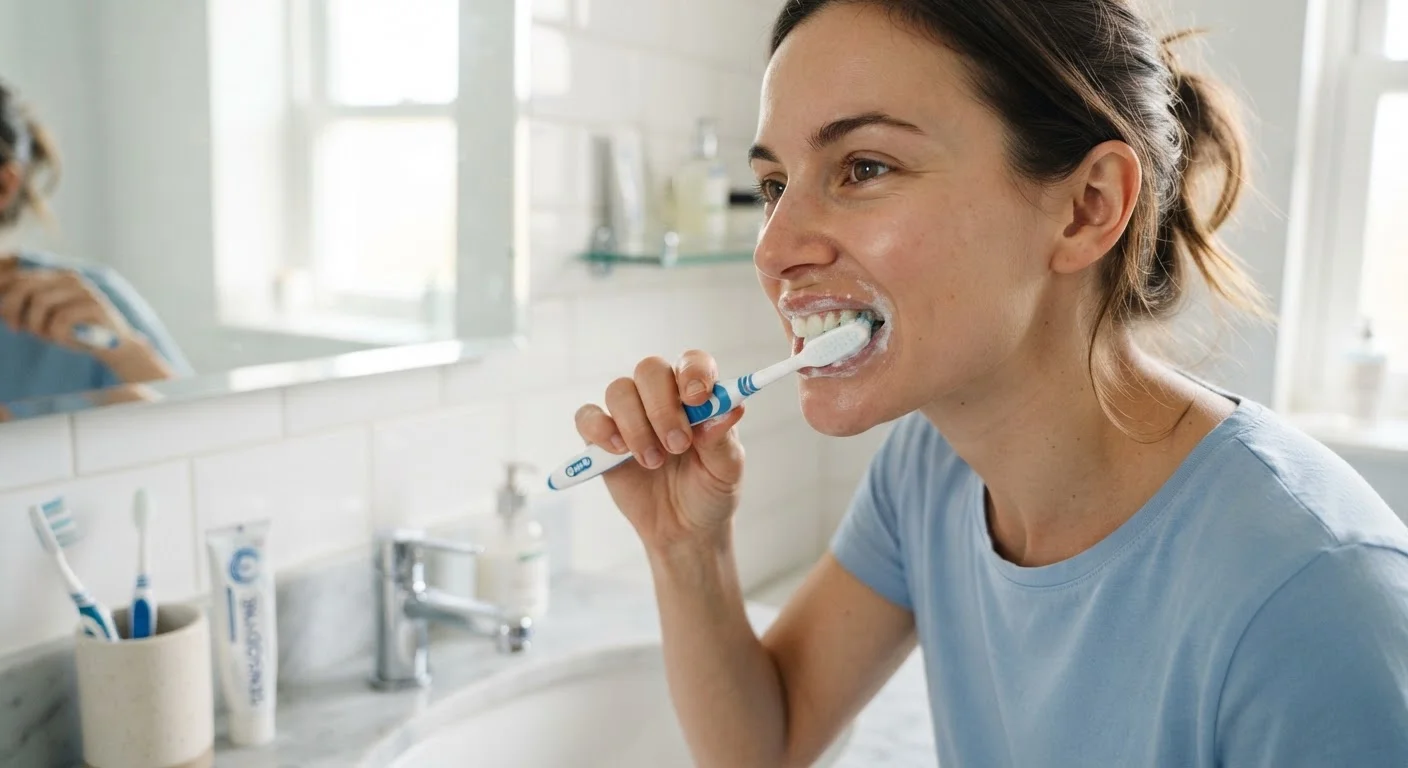
Move the brush in small, circular or short horizontal strokes covering one to two teeth at a time. Work systematically around the mouth: outer surfaces, inner surfaces, then chewing surfaces. Devote roughly 30 seconds to each quadrant (upper right, upper left, lower right, lower left) for a total of two full minutes. For inner surfaces of front teeth, tilt the brush vertically and use the front bristles in gentle up-and-down strokes.
Brush the tongue surface lightly
Gently brush the top surface of your tongue from back to front using light strokes. The tongue harbors bacteria that contribute to bad breath and can recolonize teeth after brushing if not addressed.
Spit — but do not rinse with water
After brushing, spit out excess toothpaste but resist rinsing your mouth with water immediately afterward. Leaving a thin residue of fluoride on tooth surfaces extends its enamel-protective contact time. If you use a fluoride mouthwash, use it at a separate time — such as after lunch — rather than immediately after brushing.
This article provides general oral health information and is not a substitute for personalized advice from a licensed dentist or dental hygienist. If you have existing gum disease, dental restorations, or orthodontic appliances, consult your provider for technique guidance specific to your situation.
Common Mistakes That Undermine Good Habits
Even well-intentioned routines can fall short. The following are the most frequently observed errors in clinical settings:
- Brushing too hard: Aggressive scrubbing wears down enamel and causes gum recession over time. The brush does the work — pressure does not.
- Rinsing immediately after brushing: Spitting out excess toothpaste but not rinsing with water allows fluoride to remain on enamel longer, extending its protective benefit.
- Skipping the back molars: These surfaces are the most cavity-prone and the most commonly missed. Finish each quadrant by angling the brush toward the very last tooth.
- Replacing floss with mouthwash alone: Antiseptic rinses reduce bacterial load but cannot physically dislodge plaque from interproximal (between-tooth) surfaces the way floss does.
- Infrequent toothbrush replacement: Frayed bristles lose their mechanical effectiveness. The ADA recommends replacing a toothbrush every three to four months, or sooner if bristles appear splayed.
Building consistency around these corrections is more sustainable than striving for perfection. Evidence-backed strategies for maintaining oral hygiene through busy periods can help make these habits stick long-term.