

Preventive Health

What to Bring to a Preventive Health Appointment

Share
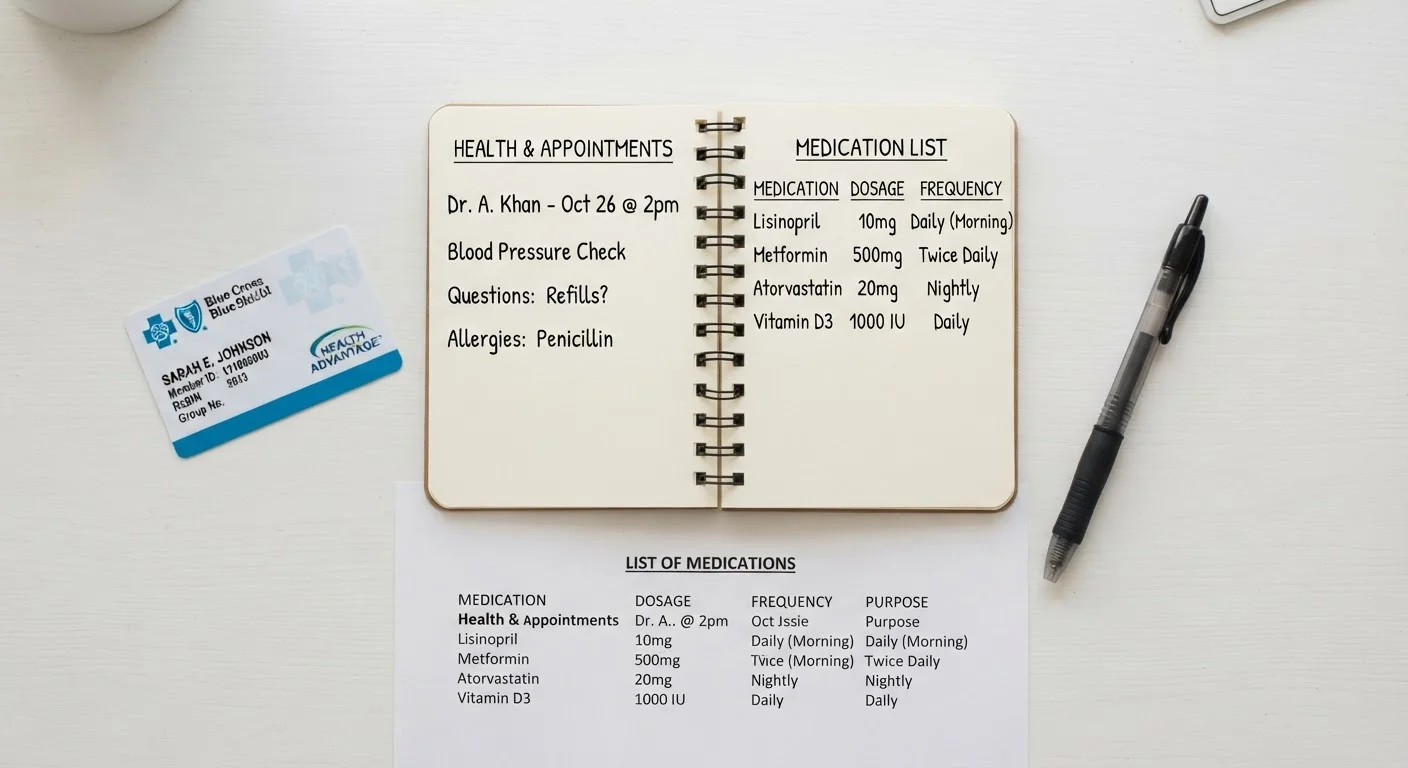
A flat lay of health insurance card, medication list, notebook with questions, and pen on white surface

Key Takeaways

Bring a complete, current list of all medications and supplements you take, including dosages.
Your insurance card and a valid photo ID are essential for every preventive visit.
A written family health history helps your provider assess your personal risk for common conditions.
Preparing specific questions in advance leads to more productive, efficient appointments.
Updated contact information ensures your provider can follow up on test results or referrals.
20–45 min

Summary

22 items · 20–45 minutes

Why Preparation Makes Preventive Care More Effective

A routine preventive health appointment — often called an annual wellness visit or physical exam — is one of the most valuable tools you have for staying ahead of illness. But the quality of that visit depends in part on what you walk in with. Providers typically have limited time per patient, so arriving organized means your clinician can focus on assessment and conversation rather than reconstructing your health history from scratch.

Research consistently shows that informed, prepared patients report higher satisfaction with their care and are more likely to follow through on preventive recommendations. This checklist covers everything you should gather before your next checkup, whether it's your first visit with a new provider or your tenth with a longtime physician.

For deeper strategies on making every minute of your appointment count, see Getting the Most Out of a Primary Care Visit.

Insurance and Identification

Bring your current health insurance card, including any secondary insurance if applicable. Must
Carry a valid government-issued photo ID such as a driver's license or passport. Must
Confirm your copay amount in advance and bring a payment method to cover it. Should
If you've recently changed insurance plans, bring documentation of your new coverage details. Must

Medications and Supplements

Prepare a written list of every prescription medication you take, including the name, dosage, and how often you take it. Must
Include all over-the-counter medications such as antacids, pain relievers, or allergy drugs on your list. Must
List any vitamins, herbal supplements, or other dietary supplements, since these can interact with medications and affect lab results. Must
Note any medications you've recently stopped taking and why, so your provider has an accurate picture. Should

Medical History and Records

Write down your personal medical history, including any past diagnoses, surgeries, hospitalizations, or significant illnesses. Must
Compile a family health history covering first-degree relatives (parents, siblings, children), noting conditions such as heart disease, diabetes, or cancer. Must
Bring records of recent lab work, imaging results, or specialist reports if they were performed outside this practice. Should
Note your vaccination history or bring an immunization record if you have one available. Should
Document any known allergies, including drug allergies and reactions you've experienced. Must

Current Symptoms and Concerns

Write down any new or ongoing symptoms you want to discuss, even if you're unsure whether they're significant. Must
Note how long each symptom has been present and whether it has changed over time. Should
Jot down lifestyle factors you'd like your provider's input on, such as sleep quality, stress levels, or physical activity patterns. Nice to have

Prepared Questions

Write out your top three to five questions before the visit so you don't forget them once you're in the exam room. Must
Include questions about screenings or tests that may be due based on your age, sex, or risk factors. Should
Ask about any lifestyle or preventive interventions your provider recommends for the coming year. Nice to have

Logistics and Contact Details

Confirm your current address, phone number, and preferred pharmacy are on file with the practice. Must
Provide the name and contact information of your emergency contact if this information has changed. Should

What to Do After You've Gathered Everything

Once you've assembled all the items on this checklist, take five minutes to organize them in a folder or envelope — physical or digital — so nothing gets left behind the morning of your appointment. Arrive 10–15 minutes early to allow time for paperwork or insurance verification, which protects the full allotted time for your actual clinical visit.

Don't Skip This Step for New Providers

If you're visiting a new practice or seeing a new physician for the first time, request your medical records from your previous provider at least a week in advance. Incomplete records can lead to duplicated tests, missed context, or gaps in your care plan. Many practices offer electronic record transfers, but processing times vary — plan ahead.

After your appointment, keep a written or digital record of any new diagnoses, lab orders, referrals, or recommended follow-up timelines. This ties directly into maintaining an ongoing record of your personal health habits and history — a practice reinforced by tools like the Weekly and Monthly Hygiene Audit Checklist, which helps you review health habits beyond the clinical setting.

This article is for general informational and educational purposes only and does not constitute medical advice. Always consult a qualified healthcare professional for guidance specific to your personal health situation.

Preventive Health Editorial Team is the collective byline for our editorial team and contributor network. Articles published under this byline or an editorial pen name are researched, written, and reviewed according to our editorial standards for clarity, consistency, and independence before publication.

View all articles by Preventive Health Editorial Team →
Disclaimer: The content on this site is for informational purposes only and is not a substitute for professional advice. Always consult a qualified professional for guidance specific to your situation.