

Key Takeaways
Resting Metabolic Rate and Muscle Mass
Resting metabolic rate (RMR) is the energy your body uses to maintain basic functions while at rest - breathing, circulation, cellular repair. Muscle tissue, being metabolically active, contributes meaningfully to this baseline energy expenditure. More muscle generally means a higher RMR, though the actual calorie difference per pound of muscle is often smaller than popular claims suggest.
Skeletal muscle accounts for roughly 20-25% of total resting metabolic rate in average adults, according to estimates from comparative organ metabolism research.
Why Muscle Tissue Is Metabolically Different from Fat
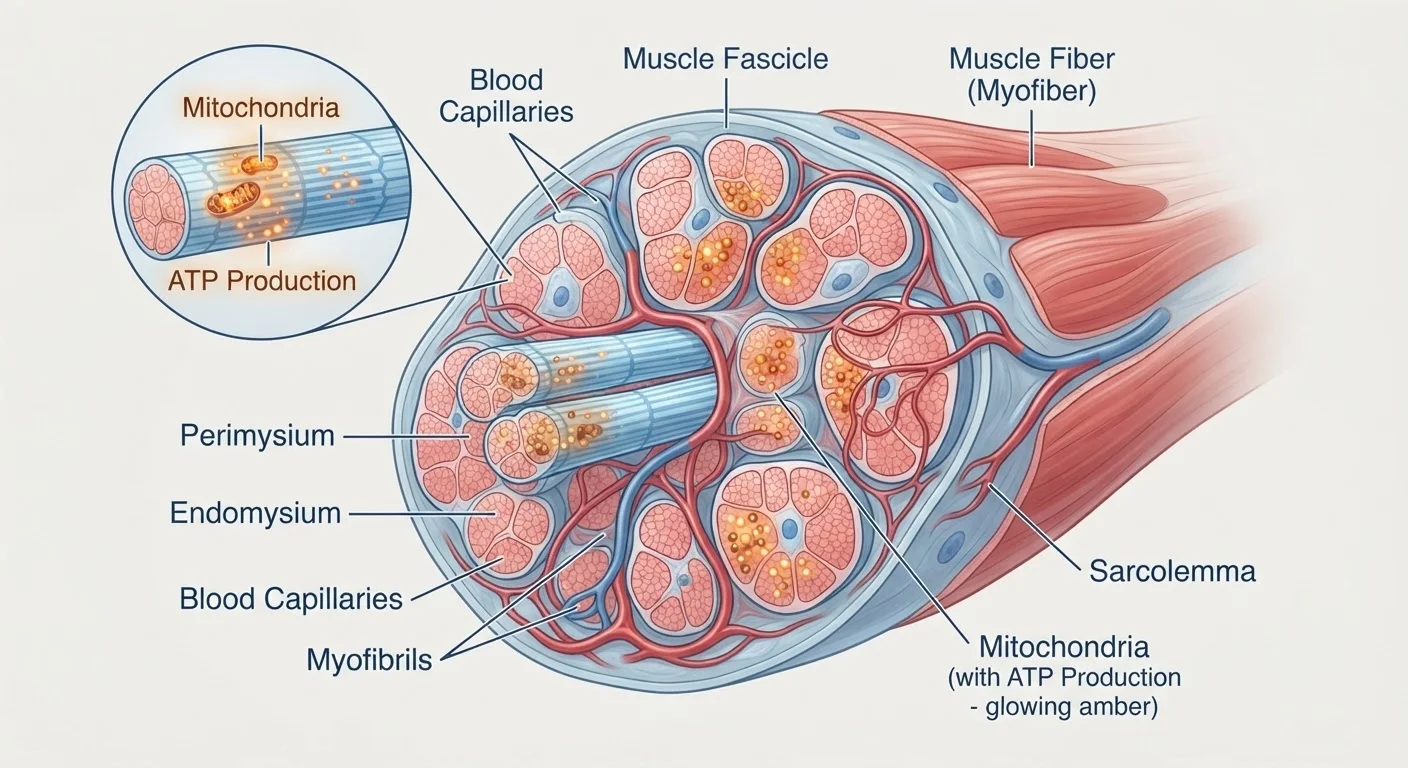
Not all body tissue operates the same way energetically. Fat tissue is largely storage-focused - it holds energy reserves and performs some hormonal functions, but it doesn't demand much fuel to maintain itself. Skeletal muscle, by contrast, is metabolically active. It requires a continuous supply of energy for cellular maintenance, protein turnover, and basic contractile readiness - even when you're sitting still.
This distinction matters for understanding body composition and long-term energy balance. The more skeletal muscle you carry relative to fat, the higher your resting metabolic rate (RMR) is likely to be - all else equal. But the magnitude of this difference is frequently overstated in popular health culture, and a clear-eyed look at the numbers is useful.
Popular Claims vs. Research Estimates
You may have heard that "a pound of muscle burns 50 calories a day" - a figure that circulates widely in fitness culture. Current research estimates are considerably more conservative, placing the number closer to 6-10 calories per pound per day. The metabolic benefit of muscle is genuine and meaningful over time, but these inflated figures can set unrealistic short-term expectations.
What the Research Actually Shows About Muscle and Calorie Burn
Estimates from comparative tissue metabolism research suggest skeletal muscle burns somewhere in the range of 6-10 calories per pound of tissue per day at rest. Fat tissue burns approximately 2-3 calories per pound per day. The gap is real, but modest. Gaining five pounds of muscle - a meaningful achievement that may take months of consistent training - would raise resting energy expenditure by roughly 30-50 calories per day under these estimates.
That's not insignificant across years, but it illustrates why the popular claim that "muscle burns dramatically more calories than fat" deserves some nuance. Skeletal muscle accounts for roughly 20-25% of total RMR in average-sized adults, with organs like the liver, brain, and heart contributing disproportionately large shares relative to their mass. For a fuller picture of how different activities and tissues contribute to daily energy use, non-exercise activity thermogenesis also plays a surprisingly large role many people overlook.
20-25%
Skeletal muscle's share of resting metabolic rate
Estimates from comparative organ metabolism research suggest skeletal muscle contributes roughly this proportion of total RMR in average adults.
3-8%
Muscle mass lost per decade after age 30
Research on sarcopenia suggests this rate of loss in untrained adults, with steeper declines possible after age 60.
~6-10 kcal
Calories burned per pound of muscle daily at rest
Comparative tissue metabolism estimates place skeletal muscle's resting energy cost in this range, versus roughly 2-3 kcal per pound for fat tissue.
The Long-Term Picture: Aging, Muscle Loss, and Metabolic Rate
Where muscle mass becomes especially significant is across decades, not days. Beginning in the third decade of life, most adults gradually lose skeletal muscle - a process called sarcopenia - at a rate that can accelerate with age and inactivity. Research suggests adults may lose 3-8% of muscle mass per decade after age 30, with steeper losses after 60.
This cumulative loss contributes to the modest but real decline in resting metabolic rate that many people experience as they age. It's one reason that maintaining muscle mass through resistance training is increasingly recognized as a priority for metabolic health and functional independence over a lifetime - not just an aesthetic goal. For a broader view of what muscle mass means for health beyond calorie burn, see the science of skeletal muscle.
Practical Implications: Building and Preserving Muscle for Metabolic Health
Understanding the relationship between muscle and metabolism helps clarify why resistance training - and sufficient protein intake to support muscle protein synthesis - are consistently recommended in evidence-based guidance for weight management and healthy aging. Exercise contributes to weight management through multiple pathways beyond calorie burn alone; physical activity's broader metabolic role is worth understanding in its own right.
It's also worth noting that aerobic and resistance exercise affect energy expenditure differently. Resistance training builds the muscle tissue that elevates resting metabolism, while aerobic exercise primarily increases acute calorie burn during activity. Understanding the energy difference between aerobic and anaerobic exercise can help you think about how different movement types complement each other.
If you're navigating questions about body composition changes - particularly if you notice your weight staying stable while your body is visibly changing - it's worth knowing that the scale doesn't capture body recomposition. Muscle and fat have different densities, and shifts in their ratio can occur without significant scale changes.
This article is for general informational purposes only and does not constitute medical or nutritional advice. Consult a qualified healthcare professional before making changes to your exercise or dietary habits, especially if you have an existing health condition.