

Key Takeaways
Metabolism
Metabolism is the complete set of chemical reactions your body carries out to convert food and stored nutrients into energy, and to build or break down the substances your cells need to function. It encompasses everything from digesting a meal to repairing tissue overnight. Every living cell participates in metabolism continuously - it never pauses, even during sleep.
Scientists typically divide metabolism into two categories: catabolism (breaking molecules down to release energy) and anabolism (using energy to build complex molecules like proteins and DNA).
The Real Meaning of Metabolism
Ask most people what metabolism means and they'll say something like: "It's how fast your body burns calories" or "It's why some people can eat anything without gaining weight." These ideas aren't entirely wrong, but they capture only a sliver of the full picture.
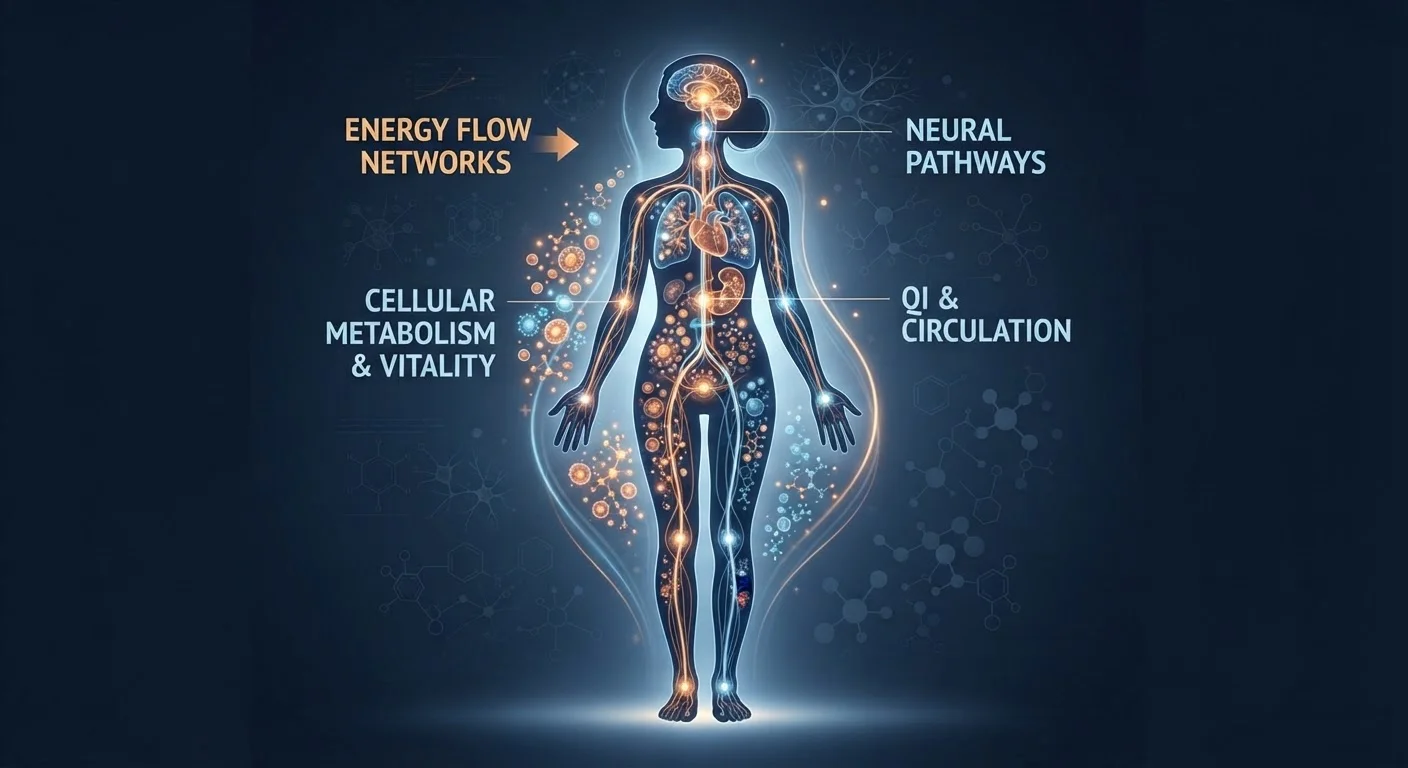
In biological terms, metabolism encompasses every chemical reaction occurring in your body's cells - simultaneously and continuously. That includes converting glucose into energy your muscles can use, synthesizing the hormones that regulate your mood and sleep cycle, repairing cellular damage, and breaking down waste products. Calorie burning is a byproduct of this vast system, not its defining feature.
For a deeper foundation on the topic, the Understanding Metabolism starter guide walks through the core concepts from the ground up.
“Metabolism is not a single process but a vast network of chemical reactions that sustain life at the cellular level. Understanding this complexity is the first step toward separating evidence from myth.”
— Herman Pontzer, Evolutionary anthropologist and metabolism researcher, Duke University
Catabolism and Anabolism: The Two Sides of the Equation
Metabolic reactions fall into two broad categories. Catabolism breaks larger molecules down into smaller ones, releasing energy in the process - this is what happens when your body digests food or taps into stored fat during exercise. Anabolism does the opposite: it uses that released energy to build complex molecules like proteins, hormones, and new cell components.
Both processes run simultaneously. Right now, your body is breaking down old proteins while assembling new ones, converting nutrients into usable fuel while storing any surplus. The balance between these two sides determines your body composition, energy levels, and long-term health - not just your weight.
What Metabolic Rate Actually Measures
When people talk about having a "fast" or "slow" metabolism, they're usually referring to metabolic rate - the total amount of energy the body expends over time. This is commonly expressed in calories per day and breaks down into three components:
- Basal Metabolic Rate (BMR): Energy used at complete rest to sustain basic functions - breathing, circulation, cell maintenance. This typically accounts for 60-70% of total daily energy use.
- Thermic Effect of Food (TEF): Energy spent digesting, absorbing, and processing what you eat - roughly 10% of total expenditure.
- Activity Energy Expenditure: Calories burned through deliberate exercise and everyday movement like walking, fidgeting, and standing.
BMR varies meaningfully between individuals based on genetics, age, biological sex, body size, and muscle mass - which is why two people of similar size can have noticeably different caloric needs.
60-70%
Of daily calorie use from BMR alone
Physiological estimates consistently show basal metabolic rate accounts for the majority of total energy expenditure in sedentary to moderately active adults.
~10%
Calories spent digesting food (TEF)
The thermic effect of food - energy used to digest, absorb, and metabolize nutrients - contributes roughly 10% of total daily energy expenditure on average.
400+ kcal
Typical BMR variation between similar-sized adults
Research on energy expenditure shows that two people of comparable size and age can differ in BMR by several hundred calories daily due to genetics and body composition differences.
What Metabolism Isn't
Perhaps the most important correction: metabolism is not a single on/off switch you can manually control. Several widespread beliefs deserve scrutiny:
- "Eating small, frequent meals boosts metabolism" - Research does not support meaningful metabolic advantages from meal frequency alone. Total calorie and nutrient intake matters far more.
- "Certain foods rev up your metabolism" - Some foods like chili peppers produce a very small, transient increase in energy expenditure, but no food or supplement meaningfully raises metabolic rate in clinically significant ways for healthy people.
- "A slow metabolism is why I can't lose weight" - While metabolic rate varies between individuals, extreme differences are uncommon. Many factors - sleep, stress, diet patterns, movement - interact to influence body weight. Common metabolism myths debunked explores the full list of misconceptions.
Metabolism also isn't separate from your broader health behaviors. What you eat, how you move, and how well you sleep all feed back into your metabolic processes in complex, interconnected ways - much like what healthy eating actually means extends far beyond simple calorie counting.
This article is for general informational purposes only and does not constitute medical advice. If you have concerns about your metabolic health or suspect a metabolic condition, please consult a qualified healthcare professional.