

Key Takeaways
Healthy Eating
Healthy eating is a consistent pattern of choosing foods that provide the nutrients your body needs to function well - not a rigid set of rules about which foods are allowed or forbidden. It centers on variety, balance, and adequacy rather than perfection. Most nutrition experts define it by overall dietary patterns over time, not individual meals or days.
Dietary quality is typically assessed using tools like the Healthy Eating Index (HEI), which scores overall dietary patterns against the U.S. Dietary Guidelines rather than tracking individual food choices in isolation.
The Science-Based Definition of Healthy Eating
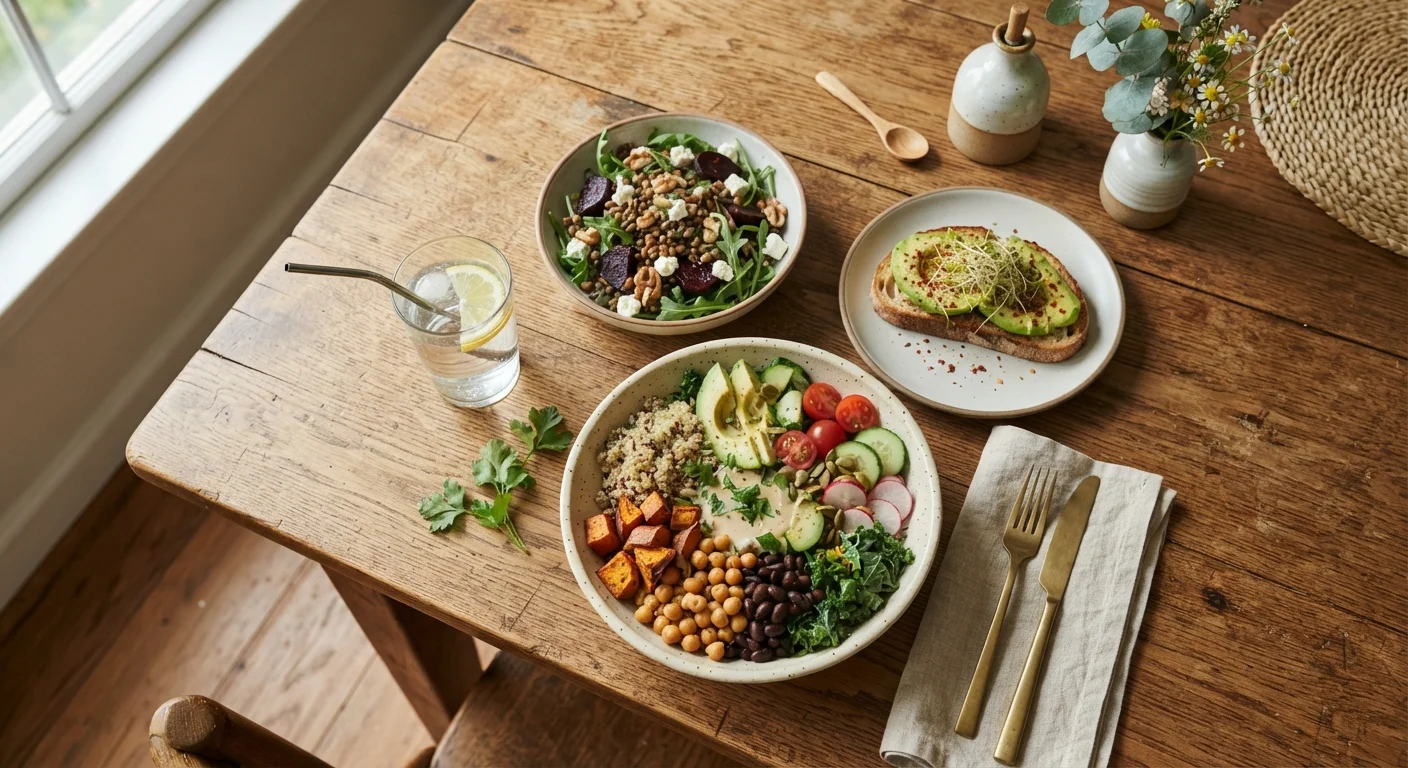
When nutrition researchers talk about healthy eating, they focus almost entirely on dietary patterns - the combination of foods a person eats habitually over time - rather than any single nutrient or meal. Major frameworks, including the U.S. Dietary Guidelines for Americans, consistently point to a few shared features of diets linked to better long-term health outcomes:
- A wide variety of vegetables and fruits
- Whole grains rather than refined grains as the primary starch source
- Lean protein from diverse sources, including legumes, fish, poultry, and nuts
- Healthy fats - particularly unsaturated fats from plants and fish
- Limited added sugars, excess sodium, and saturated fat
Notably absent from this framework: any requirement to eat perfectly every day, eliminate entire food groups, or follow a specific named diet. This distinction matters because it shapes what realistic, lasting healthy eating looks like in practice.
For a deeper look at how one frequently misunderstood nutrient fits into this picture, see why dietary fat isn't the enemy diet culture made it out to be.
What Healthy Eating Isn't
Just as important as understanding what healthy eating is - is understanding what it isn't. Several widespread beliefs about food and diet are not well supported by the nutritional evidence.
Healthy Eating Looks Different for Everyone
Cultural food traditions, food access, personal health conditions, and individual preferences all legitimately shape what a healthy diet looks like for a given person. There is no single universally correct way to eat healthily. Nutrition guidance provides a flexible framework, not a rigid prescription - and many different dietary patterns around the world have been associated with good health outcomes.
No single food defines your diet
One of the most persistent myths is that eating a particular food - or avoiding another - determines whether your diet is healthy. In reality, no single food has the power to make or break overall dietary quality. A piece of cake at a birthday party doesn't undo a week of balanced eating, and a daily salad doesn't compensate for an otherwise poor diet.
Healthy eating isn't the same as clean eating
The term "clean eating" lacks a scientific definition. It typically implies that certain foods are impure or harmful, framing food in moral terms that research does not support. This kind of thinking can sometimes lead to unnecessary food anxiety or overly restrictive patterns that are difficult to sustain.
It's not primarily about body weight
Healthy eating is often conflated with weight management, but the relationship between diet quality and body weight is complex and highly individual. Many factors beyond diet influence body weight, and a person's weight is a limited window into their overall health. What body weight actually measures - and what it doesn't offers a useful perspective on this nuance.
For more on popular food beliefs that lack solid evidence, see common beliefs about healthy eating that nutrition science doesn't support.
Building Habits That Actually Last
The most effective healthy eating approach is one a person can maintain consistently - and that looks different for everyone based on culture, budget, cooking ability, schedule, and personal preference. Research on dietary behavior suggests a few principles that support lasting change:
~1 in 10
U.S. adults meet vegetable intake recommendations
According to CDC data on fruit and vegetable consumption, very few American adults meet federal dietary guidelines for vegetables - highlighting the gap between recommendations and reality.
57%
Of U.S. calories come from ultra-processed foods
A study published in BMJ Open estimated that ultra-processed foods account for more than half of daily caloric intake for many American adults, reflecting the challenge of eating patterns in a modern food environment.
80%
Of chronic disease risk linked to lifestyle factors
The World Health Organization attributes a substantial share of leading chronic disease burden to modifiable lifestyle factors, of which diet quality is a central component.
- Start with addition, not elimination. Adding more vegetables, fruits, or whole grains tends to crowd out less nutritious choices naturally, without the psychological strain of restriction.
- Focus on meals, not nutrients. Everyday decisions are made at the meal level - building balanced, satisfying plates is more practical than tracking individual micronutrients.
- Allow flexibility. Rigid rules increase the risk of all-or-nothing thinking, where one "off" meal derails motivation entirely. A flexible approach is both more sustainable and more effective long-term.
- Consider the whole picture. Diet is just one part of health. Sleep, physical activity, stress, and social connection all interact with nutritional outcomes in ways that a food-only lens misses.
If you want to understand how your body actually uses the food you eat, what metabolism actually is and what it isn't explains the process clearly.
This article is for general informational purposes only and is not a substitute for professional medical or dietary advice. If you have specific health conditions or concerns, consult a qualified healthcare professional or registered dietitian before making significant changes to your diet.