

Key Takeaways
Why the Number on the Scale Is Rarely the Full Story
Body weight is one of the most accessible health metrics available - a scale costs little and takes seconds to use. Yet the reading it produces is one of the noisiest biological signals you can measure. Water retention, digestive contents, hormonal fluctuations, and even ambient temperature can shift the number by 2-5 pounds within a single day, with no corresponding change in body fat or muscle mass.
Understanding this variability is the foundation of useful tracking. The goal is not to capture a perfect daily number but to identify a directional trend across weeks and months. A single data point is close to meaningless; a moving average of 7-14 readings begins to reveal genuine signal. For a deeper look at why the scale captures only part of the picture, see our explainer on body composition vs. body weight.
Think in Trends, Not Single Readings
A useful mental model is to treat each individual weigh-in like a single frame of a film - you need many frames in sequence to understand the story. If your 7-day average is moving in a direction that aligns with your intentions, the data is working as intended. If a single high reading tempts you to make a drastic change, pause and look at the average instead.
Setting Up a Tracking Approach That Produces Reliable Data
Consistency in conditions matters more than consistency in frequency. Before choosing how often to weigh yourself, standardize the circumstances around each measurement so data points are genuinely comparable.
What you will need
Choose a consistent time of day
Weigh yourself at the same time each day - most commonly first thing in the morning after using the bathroom and before eating or drinking. This reduces the influence of food volume, fluid intake, and activity on the reading.
Wear the same amount of clothing each time
Clothing can add anywhere from a few ounces to several pounds depending on fabric and layers. Weigh in minimal or identical clothing to keep this variable controlled across readings.
Place your scale on a hard, flat surface
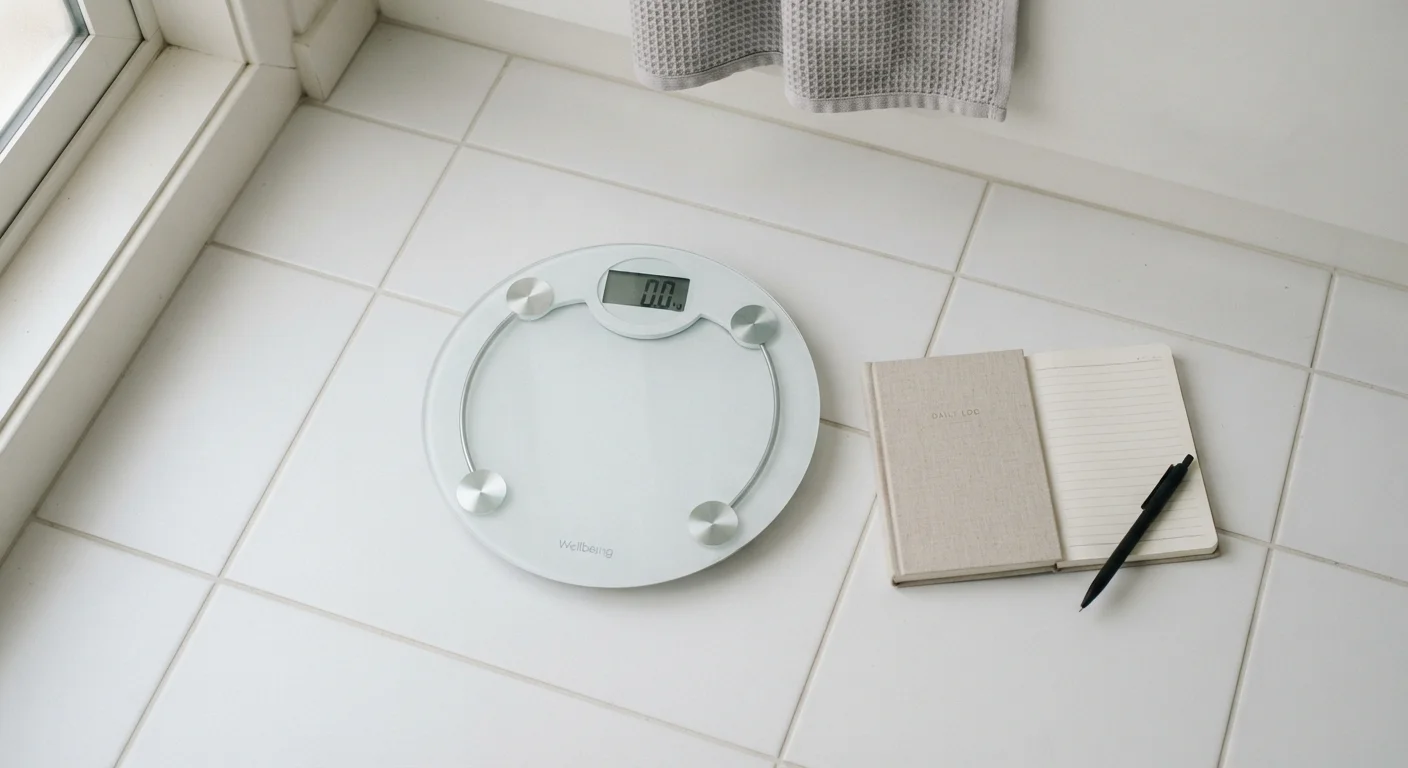
Carpet and uneven flooring introduce mechanical error into scale readings. A hard tile or hardwood floor surface gives the scale's sensors a stable base and produces more accurate results.
Record every reading and calculate a rolling average
Log each measurement in a notebook, spreadsheet, or app. Rather than evaluating any single reading, calculate a 7-day or 14-day moving average. This smooths out daily noise and reveals genuine directional trends over time.
Set a review cadence, not a reaction trigger
Decide in advance that you will assess trends on a set schedule - for example, once every two weeks - rather than reacting to each daily number. This separates the act of data collection from the act of interpretation.
Choosing Tools Without Over-Relying on Them
Modern tracking tools range from basic analog scales to Bluetooth-connected smart scales that estimate body fat percentage using bioelectrical impedance. Each has trade-offs.
Digital bathroom scale
Provides consistent, repeatable weight readings with minimal mechanical drift compared to analog scales.
Smart scale with app connectivity
Automatically syncs readings to a paired app, reducing transcription errors and often displaying trend graphs.
Spreadsheet or tracking app
Stores readings over time and enables calculation of rolling averages to identify genuine trends.
Apps that display a rolling average - rather than just the raw daily figure - are particularly useful because they automatically smooth out normal fluctuation. However, no algorithm replaces your own judgment. Be cautious about platforms that gamify weight loss with streaks, badges, or aggressive goal-setting, as these features can nudge tracking from a neutral data-collection habit toward something emotionally loaded. This dynamic parallels issues documented with fitness wearables - patterns worth reviewing in our guide to activity tracker habits that undermine progress.
Recognizing When Tracking Is Working Against You
Weight tracking is a tool, not a virtue. For some people, regular weighing supports self-awareness and helps them notice genuine trends early. For others, it amplifies anxiety, triggers emotional eating, or distorts body perception in ways that cause harm.
Signs that tracking may have shifted from helpful to harmful include: weighing yourself multiple times per day, significant mood changes tied to daily scale readings, restrictive eating triggered by a single higher number, or difficulty separating the number from your sense of self-worth. These are not personal failings - they are well-documented psychological responses to frequent self-monitoring. If you recognize these patterns, stepping back from the scale entirely can be the more health-supporting choice. Our related article on when tracking body composition becomes counterproductive explores this in detail.
Tracking Can Amplify Distress for Some Readers
Research on frequent self-weighing shows divergent outcomes: some individuals find it supportive, while others experience increased body dissatisfaction and anxiety. If you have a history of disordered eating or a difficult relationship with body image, routine weight tracking may not be appropriate for you. Please speak with a healthcare provider or mental health professional before adopting a regular weighing practice.
This article is for general informational purposes only and does not constitute medical or psychological advice. If concerns about weight, eating, or body image are affecting your daily functioning, please consult a qualified healthcare provider.