

Key Takeaways
Our Verdict
Household chores vary widely in their physical activity value. High-intensity tasks - vigorous scrubbing, gardening, stair-climbing with loads - genuinely contribute to your movement totals and support overall health. Lower-effort chores are still worth doing, but shouldn't be counted as meaningful aerobic activity. The smartest approach is to recognize which chores actually raise your heart rate and lean into them intentionally.
| Best for | Recommended |
|---|---|
| People with limited time for structured workouts | High-effort chores (scrubbing, gardening, mopping) |
| Those looking to reduce prolonged sitting throughout the day | Low-effort chores (folding laundry, light tidying) |
| Active adults wanting to supplement a workout routine | Stacking moderate and vigorous chores intentionally |
Why Chores and Exercise Aren't the Same Thing - But Can Overlap
Physical activity is broadly defined as any body movement produced by skeletal muscles that requires energy expenditure. By that standard, many household chores technically qualify. But there's an important nuance: not all movement rises to a level that meaningfully supports cardiovascular health, muscular endurance, or the activity totals recommended by public health guidelines.
Federal physical activity guidelines - explained in plain terms in our breakdown of activity guidelines for adults - generally recommend that adults accumulate at least 150 minutes of moderate-intensity activity per week. The key phrase is intensity. A chore only counts toward that goal if it raises your heart rate and breathing noticeably above resting levels.
Understanding this distinction empowers you to be strategic - recognizing which household tasks can double as real movement, and which ones are simply tasks.
High-Value Chores: Tasks That Earn Their Activity Credit
Some chores are genuinely moderate to vigorous in intensity. These are the ones worth counting - and potentially building more of into your day.
| Chore | Intensity Level | Counts Toward Activity Goals? | |
|---|---|---|---|
| Scrubbing floors/bathrooms | Vigorous scrubbing | Moderate-Vigorous | Yes |
| Gardening / yard work | Digging, raking, hauling | Moderate-Vigorous | Yes |
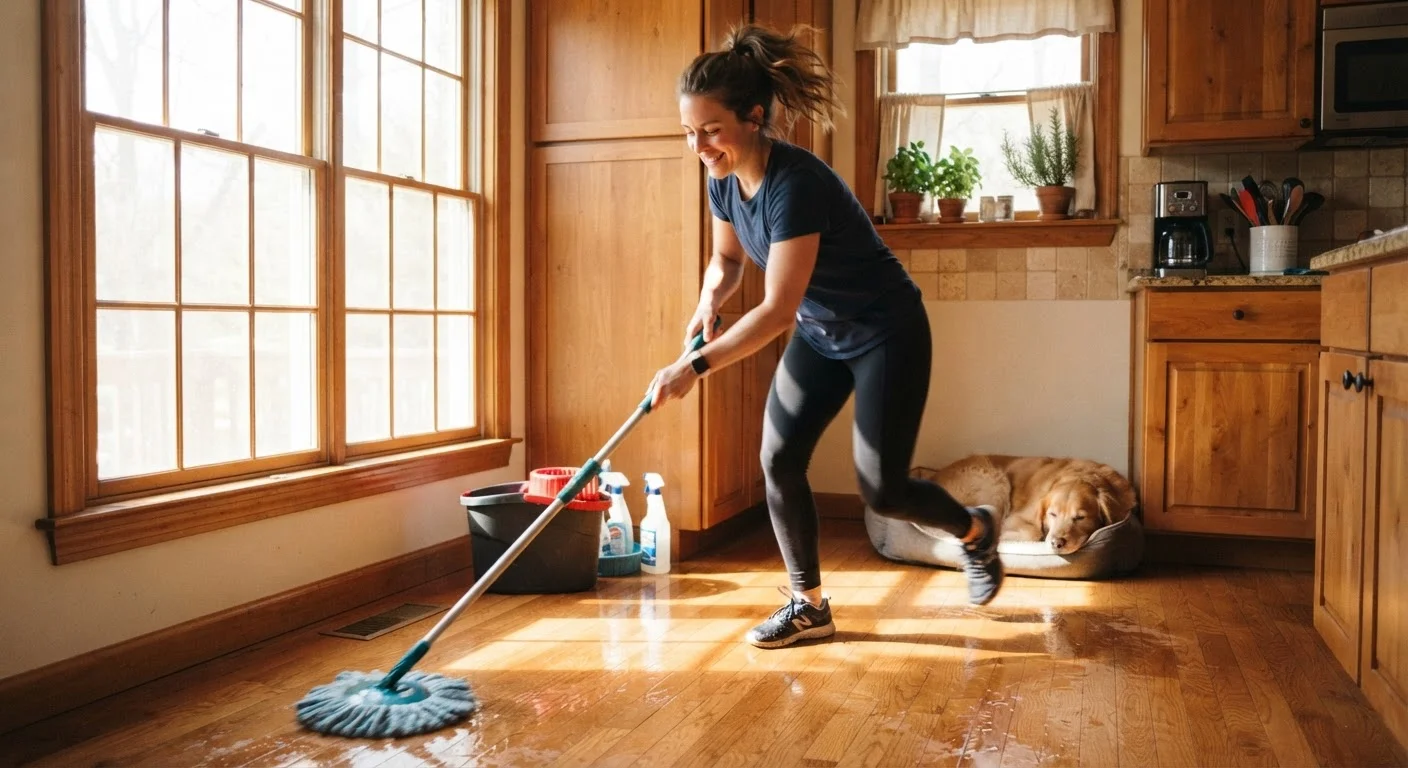
| Mopping large areas | Sustained, whole-body effort | Moderate | Yes |
| Carrying groceries upstairs | Resistance + cardio combined | Moderate | Yes |
| Vacuuming | Depends on pace and area size | Low-Moderate | Partially |
| Folding laundry | Minimal effort, standing | Low | No |
| Light dusting / wiping counters | Very low exertion | Low | No |
| Loading dishwasher | Brief, low-demand movement | Low | No |
Vigorous scrubbing (bathrooms, floors on hands and knees) elevates heart rate significantly and engages core and upper body muscles. Gardening and yard work - digging, raking, hauling bags of soil - can match the intensity of a brisk walk or light jog. Mopping and vacuuming large areas with sustained effort engage the whole body and keep you moving continuously. Carrying groceries or laundry up flights of stairs adds both cardiovascular and resistance elements. These tasks share common traits: they involve continuous movement, engage large muscle groups, and require enough effort that conversation becomes slightly difficult - a reliable marker of moderate intensity.
Low-Value Chores: Movement, But Not Much Activity
Other chores involve movement but don't meaningfully elevate heart rate or contribute to aerobic fitness. Folding laundry, light dusting, loading a dishwasher, or wiping down countertops are common examples. These tasks break up sedentary time - which has its own value, as explored in our guide to the difference between sedentary and low-active lifestyles - but they fall well short of moderate-intensity activity thresholds.
Use the 'Talk Test' to Gauge Intensity
An easy way to check whether a chore qualifies as moderate activity: try speaking a full sentence while doing it. If you can talk comfortably without effort, the intensity is likely too low to count. If speaking feels slightly labored but you're not gasping, you're in the moderate-intensity range - and the chore is earning its activity credit.
That doesn't make these chores worthless from a health standpoint. Breaking up long sitting stretches with brief low-effort tasks can help reduce the harms associated with prolonged sedentary behavior. But if your goal is to accumulate meaningful activity minutes, low-effort chores shouldn't be counted toward that total.
How to Strategically Stack Chores for More Activity
The most practical takeaway here isn't to start doing chores differently - it's to do them more intentionally. If you have 30 minutes to clean the kitchen, consider tackling the floor by hand, making multiple trips carrying items, and moving briskly rather than leisurely. The physical demand of a chore isn't fixed; your pace and effort level shape how much activity value you extract from it.
You can also think about chores as part of a broader movement strategy. As we discuss in our article on daily movement vs. structured workouts, informal activity throughout the day and structured exercise aren't competing approaches - they complement each other. High-effort chores won't replace a workout, but they can meaningfully close the gap on days when structured exercise isn't possible.
A few practical ways to raise chore intensity:
- Add extra trips on the stairs when carrying loads
- Scrub surfaces vigorously rather than lightly wiping
- Garden for sustained 10-minute blocks rather than brief intervals
- Vacuum with full-body engagement, not just arm movement
This article is for general informational purposes only and is not medical advice. Consult a qualified healthcare professional before making significant changes to your physical activity, especially if you have an existing health condition.