

Key Takeaways
Option A
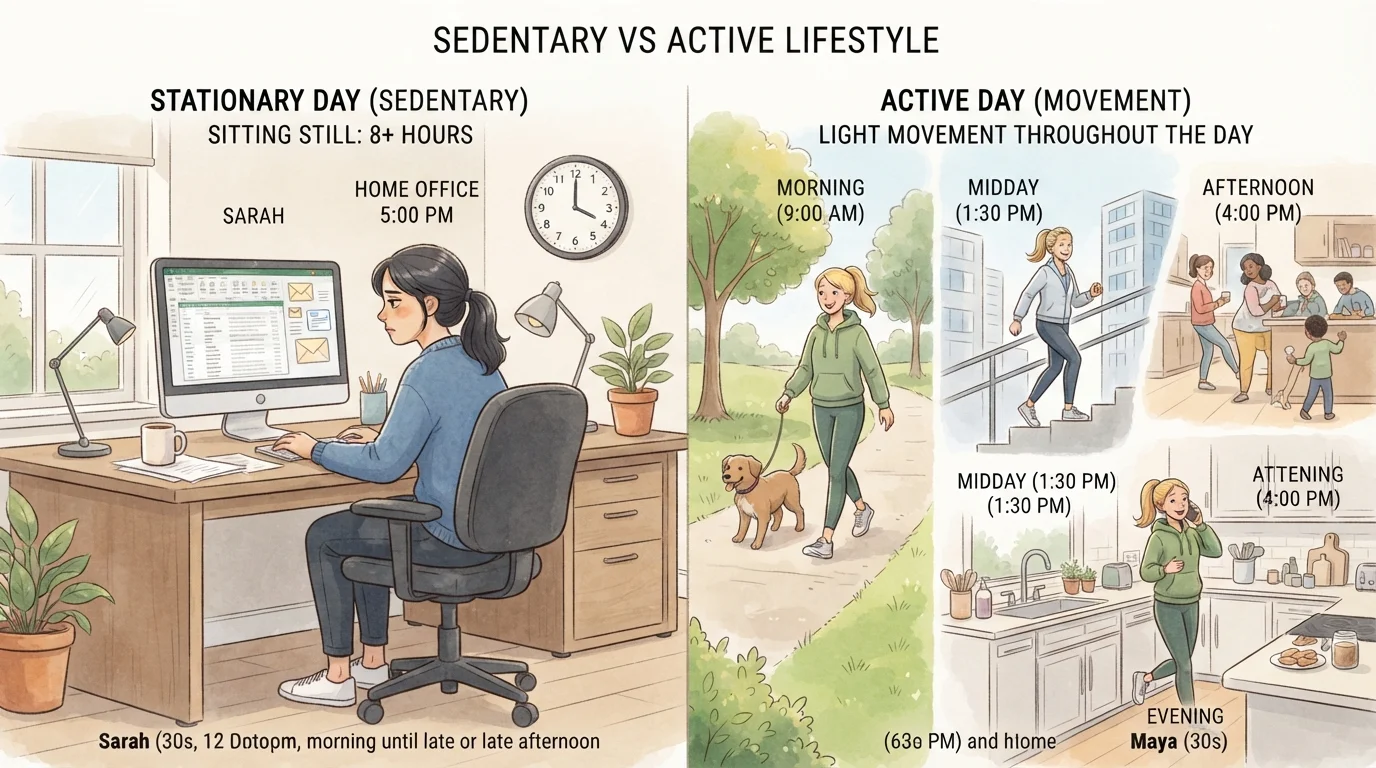
Sedentary Lifestyle
Little to no intentional movement throughout the day.
Best for: A label that applies when prolonged sitting or physical inactivity dominates most waking hours with minimal breaks.
Option B
Low-Active Lifestyle
Some movement present, but below recommended levels.
Best for: People who do light incidental activity - walking, light chores - but fall short of standard physical activity guidelines.
If you sit for most of your waking hours with few interruptions
Sedentary Lifestyle (as a starting point to change)
Recognizing you're sedentary is the first step. Prioritize breaking up sitting time with short movement breaks before adding formal exercise.
If you do light daily movement but haven't hit exercise guidelines
Low-Active Lifestyle
You already have a foundation. Building on existing habits - like adding a short walk - is the most sustainable path forward.
If you want to reduce health risks without joining a gym
Low-Active Lifestyle
Research consistently shows that transitioning from sedentary to low-active through daily movement delivers significant health gains, no gym required.
If you have a desk job and struggle to find time to exercise
Low-Active Lifestyle
Incorporating movement breaks, walking meetings, or light household activity can meaningfully reduce sedentary time within your existing schedule.
Defining the Terms: Not All Inactivity Is the Same
The words sedentary and low-active are often used interchangeably in everyday conversation, but in exercise science they describe distinct patterns with different health implications. Getting clear on the distinction isn't a matter of semantics - it's a practical tool for setting realistic goals.
A sedentary lifestyle is characterized by extended periods of sitting or reclining with very little physical movement during waking hours. Researchers often define sedentary behavior as activity that uses 1.5 METs (metabolic equivalents) or less - essentially your resting energy output. Watching TV, working at a desk without breaks, and driving for long stretches all count. What matters most isn't just the total amount, but the uninterrupted duration of stillness.
A low-active lifestyle, by contrast, means some physical movement is present - light walking, casual household tasks, brief errands - but the total volume falls short of the levels recommended by public health guidelines. Someone who walks to their car, does light tidying, and takes occasional short strolls may still be considered low-active rather than sedentary. The distinction lies in the presence, however modest, of regular movement interruptions.
Understanding which everyday activities count as physical movement can help you assess your baseline more accurately than you might expect.
Why the Distinction Has Real Health Consequences
The gap between sedentary and low-active isn't just definitional - it's biological. Prolonged uninterrupted sitting has been associated in research with metabolic changes that are distinct from simply not exercising enough. Even people who meet weekly exercise targets can show elevated health risks if they also sit for long stretches without breaks - a pattern sometimes described in research literature as the "active couch potato" effect.
Breaking up sedentary time - even with brief, low-intensity movement - appears to have meaningful metabolic benefits. Studies on blood glucose regulation, for example, have observed differences between participants who stood or walked for short intervals versus those who remained seated continuously, independent of their total exercise volume.
~25%
U.S. adults meeting aerobic activity guidelines
According to the CDC, only about one in four American adults meets recommended aerobic physical activity levels, highlighting how common low-active and sedentary patterns are.
6-8 hrs
Average daily sitting time for U.S. adults
Research published in health journals estimates that many American adults spend between six and eight hours per day in sedentary behaviors, not counting sleep.
2-3 min
Movement break interval shown to support metabolic health
Studies examining light-intensity walking breaks every 30 minutes have observed improvements in blood glucose and insulin response compared to unbroken sitting.
This is why public health guidelines increasingly address both dimensions: how much structured activity you get and how much of your remaining day is spent sitting. The two levers are related but not identical. Being low-active - even without a formal workout routine - offers a meaningful buffer that sedentary living does not.
If you're exploring how structured sessions compare to everyday movement, our guide on daily movement vs. structured workouts lays out both approaches clearly.
How to Identify Where You Actually Fall
Most people overestimate how active they are. A useful self-assessment focuses on two questions: How many hours per day do you spend sitting or reclining? And how often do you interrupt that sitting with even brief movement?
If you're sitting for eight or more hours daily with breaks only for meals or bathroom visits, that pattern aligns with sedentary behavior regardless of whether you exercise in the evenings. If you're regularly walking between tasks, doing light chores, or standing periodically, you're likely in low-active territory - still below guidelines, but in a meaningfully different position.
Practical ways to shift from sedentary toward low-active don't require overhauling your schedule. Consider:
- Standing or walking for two to three minutes every 30-45 minutes of sitting
- Taking calls while walking when possible
- Incorporating light movement into existing routines, like walking after a meal
- Using micro-habit strategies to embed movement into daily patterns without relying on motivation alone
For those ready to add more structured movement, walking vs. running for everyday health is a natural next step to explore.
This article is for general informational purposes only and is not a substitute for personalized medical or fitness advice. If you have health conditions or concerns about starting an activity program, consult a qualified healthcare professional.