

Key Takeaways
Circadian Rhythm
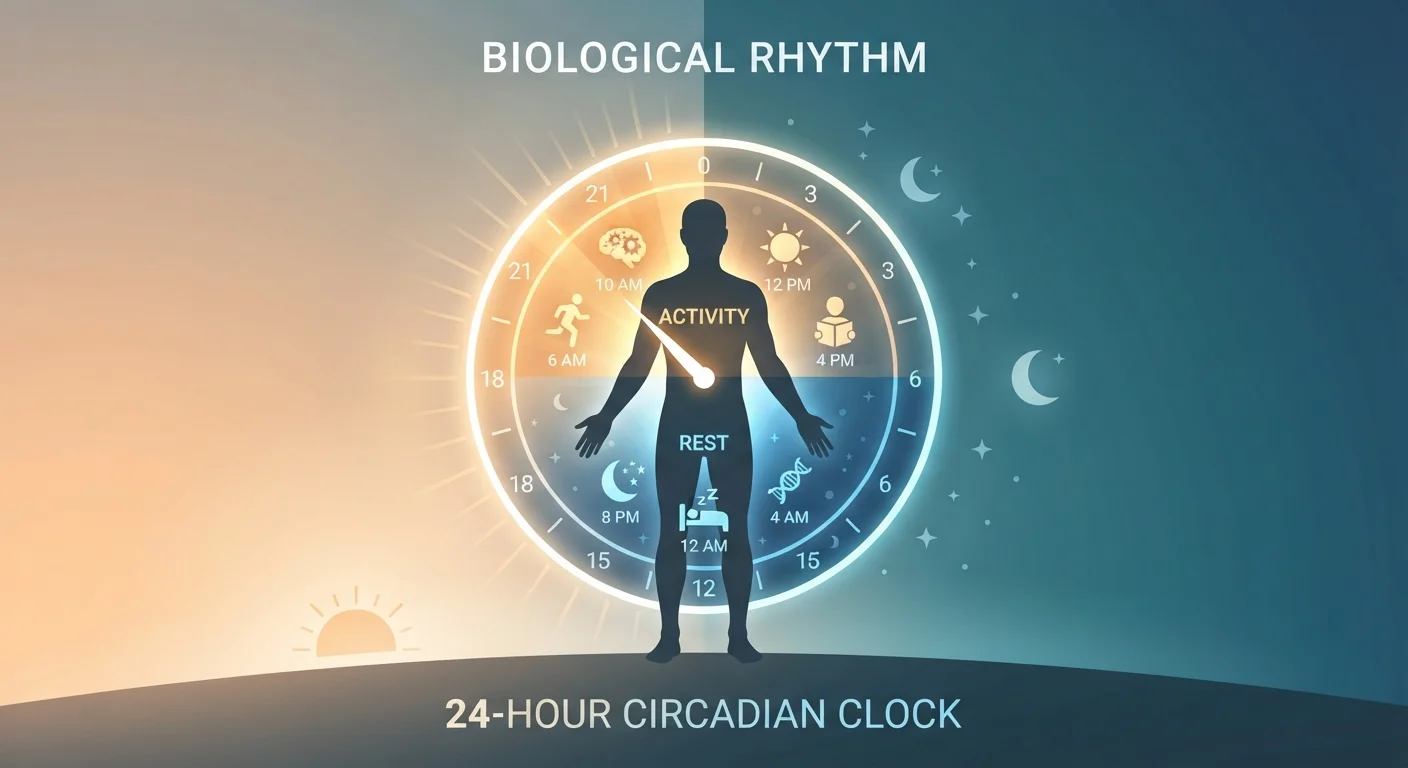
A circadian rhythm is your body's internal 24-hour biological clock that cycles through predictable patterns of wakefulness, energy, and rest. It is driven by a master timekeeper in the brain - a tiny region called the suprachiasmatic nucleus (SCN) - that coordinates nearly every organ and tissue. Light is the primary signal that keeps this clock aligned with the outside world, which is why sunrise and sunset have such a powerful effect on how you feel throughout the day.
The SCN sits in the hypothalamus and regulates downstream clocks in peripheral tissues, including the liver, gut, and heart, through hormonal and neural signals - most notably cortisol and melatonin.
How Your Internal Clock Actually Works
Think of your circadian rhythm as a finely tuned orchestra conductor inside your brain. The suprachiasmatic nucleus (SCN) receives light information from specialized cells in your retinas and uses that signal to time the release of key hormones - particularly cortisol in the morning and melatonin in the evening. These hormones act as biological cues that tell your body when to be alert and when to wind down.
This 24-hour cycle doesn't just govern sleep. It orchestrates body temperature, digestion, immune function, and even cell repair. Research published across decades of sleep science consistently shows that nearly every physiological system peaks and troughs at predictable times. For a deeper look at the biology, explore what your circadian rhythm really is and how it touches far more than bedtime.
“The circadian clock is not just a sleep-wake switch - it is a fundamental feature of almost every cell in the body, timed to anticipate and prepare for the demands of the day.”
— Till Roenneberg, Chronobiologist and author of 'Internal Time,' Ludwig Maximilian University of Munich
Energy Peaks and Troughs Throughout the Day
Your alertness and physical performance don't stay flat - they ride predictable waves. Most people experience a natural energy surge in the late morning as cortisol and body temperature rise, a mild afternoon dip roughly 7-8 hours after waking (sometimes called the post-lunch slump, though it occurs even without eating), and a second alertness window in the early evening before melatonin kicks in and sleepiness builds.
Understanding these patterns lets you schedule demanding cognitive tasks during peak alertness windows and save routine or low-effort work for energy troughs - a strategy sometimes called chronobiological task matching. Physical coordination and muscle strength also peak in the mid-to-late afternoon for many people, which is worth considering when timing exercise.
~24.2 hrs
Average intrinsic human circadian period
Research from Harvard Medical School and other institutions has found that without external time cues, the average human circadian period runs slightly longer than 24 hours, underscoring the importance of daily light signals to keep the clock on track.
1-3 hrs
Typical weekend sleep timing shift
Population studies suggest a significant proportion of adults shift their sleep timing by one to three hours on weekends compared to weekdays, a pattern researchers have termed social jetlag.
~30 min
Morning light exposure to anchor your clock
Sleep researchers generally recommend 20-30 minutes of bright natural light exposure in the morning as a practical, low-cost way to reinforce circadian alignment.
What Disrupts Circadian Alignment
Modern life poses significant challenges to the internal clock. The biggest disruptors include:
- Artificial light at night: Blue-wavelength light from screens and LED bulbs suppresses melatonin production, signaling your brain that it is still daytime.
- Irregular sleep schedules: Varying your bedtime and wake time by even 60-90 minutes across weekdays and weekends - sometimes called social jetlag - can blunt circadian signals.
- Shift work and transmeridian travel: Working overnight or crossing time zones forces your body to perform against its clock, which research associates with elevated risk of metabolic and cardiovascular issues over time.
- Late-night eating: Consuming large meals close to bedtime can shift peripheral organ clocks - the gut, liver, and pancreas - out of sync with the brain's master timekeeper.
None of these factors are absolute, and occasional disruption is normal. The concern arises from chronic misalignment over weeks and months.
Behavioral Strategies to Strengthen Your Clock
The good news is that circadian rhythms are responsive to consistent behavioral cues. The following habits are well-supported by sleep research:
- Anchor your wake time: Waking at the same time every day - including weekends - is the highest-leverage habit for stabilizing circadian timing. Your body uses this anchor to predict when to release alerting hormones.
- Seek morning light: Getting bright natural light within an hour of waking - ideally outdoors - reinforces the morning cortisol peak and helps set your clock earlier in the day.
- Dim lights in the evening: Reduce overhead lighting and screen brightness in the 1-2 hours before your intended bedtime. This preserves natural melatonin onset.
- Time meals consistently: Eating your first and last meal at roughly the same time each day provides a reliable cue to peripheral body clocks.
- Be strategic with exercise: Morning or afternoon exercise tends to support earlier sleep timing, while vigorous late-night workouts can delay melatonin release in some individuals.
Start With One Consistent Wake Time
If you are new to circadian-friendly habits, locking in a consistent wake time is the single most effective first step - more impactful than any supplement or gadget. Choose a time you can realistically maintain seven days a week and anchor your entire sleep schedule to it. Improvements in alertness and sleep quality typically become noticeable within one to two weeks of consistency.
This article is for general health information and educational purposes only. It is not a substitute for professional medical advice, diagnosis, or treatment. If you have concerns about sleep disorders or related health conditions, consult a qualified healthcare provider.