

Key Takeaways
Why Evening Habits Shift Bedtime Without You Noticing
Sleep timing rarely collapses all at once. Instead, it drifts - five minutes later on Monday, another ten on Thursday - until a midnight bedtime feels normal even when an early alarm clock does not. The mechanisms driving this drift are mostly behavioral, and they tend to operate below conscious awareness.
Your brain relies on consistent environmental and behavioral cues to regulate its internal clock. When those cues - light, meal timing, activity level, and social patterns - arrive at inconsistent or late hours, the circadian system adjusts accordingly. The result is a biological clock that keeps later and later hours, making earlier bedtimes feel genuinely difficult rather than just undesirable. Understanding why your body clock matters more than bedtime is the first step toward regaining control of your sleep window.
Common Evening Mistakes That Delay Sleep
The following patterns are among the most common behavioral contributors to a drifting bedtime. Each one is easy to overlook precisely because it feels normal or even necessary in the moment.
Engaging in 'revenge bedtime procrastination' - staying up late to reclaim personal time after a demanding day.
Why it happens: When daytime feels fully scheduled for obligations, the evening becomes the only perceived window of autonomy, making it tempting to delay sleep regardless of tiredness.
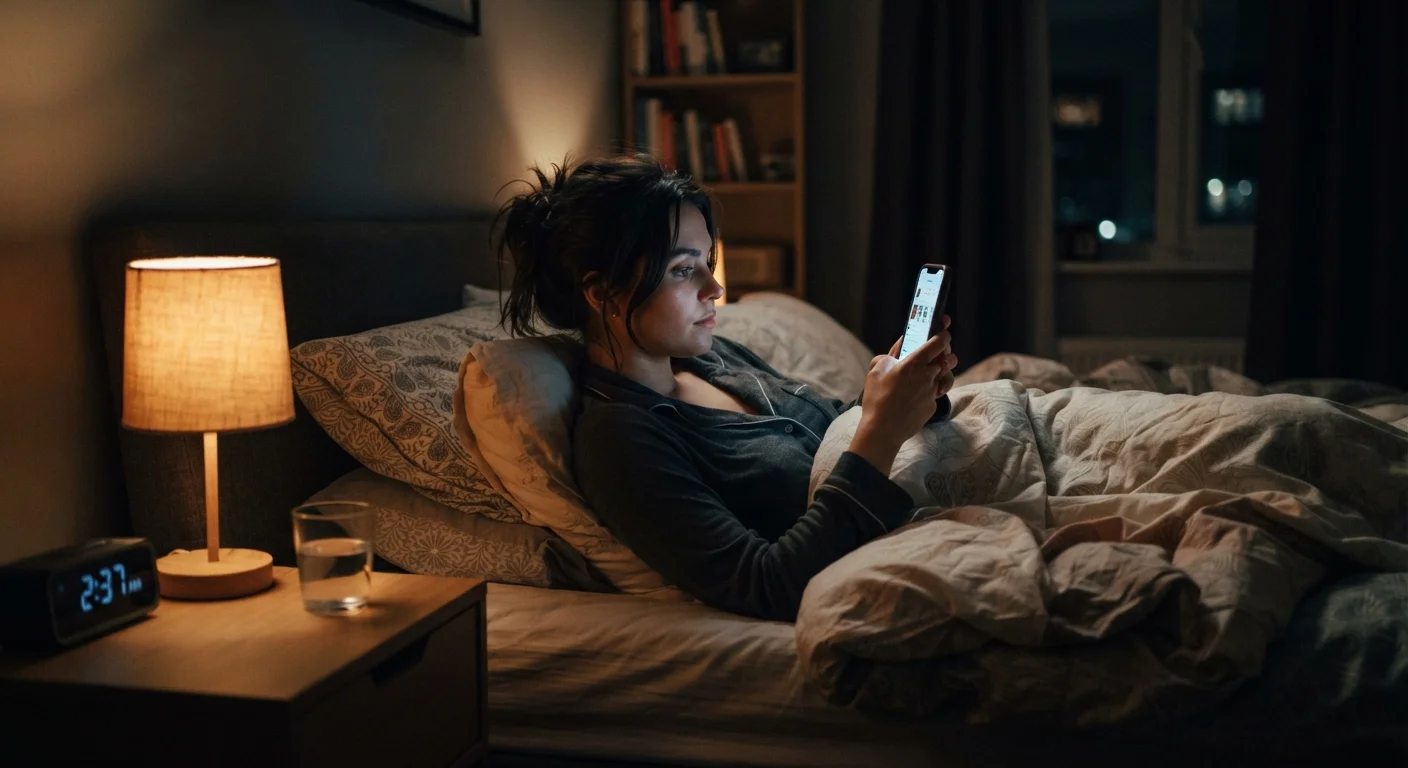
Using bright screens - phones, tablets, laptops - right up until the moment you try to sleep.
Why it happens: Screens are deeply embedded in evening routines, and the content is often designed to hold attention. Most people underestimate how much blue-wavelength light from these devices affects their brain chemistry.
Consuming caffeine in the afternoon or early evening without accounting for its long half-life.
Why it happens: Many people feel like afternoon caffeine has 'worn off' once the acute alertness fades. In reality, caffeine has a half-life of roughly five to six hours, meaning a 4 p.m. coffee still has significant circulating levels at 10 p.m.
Eating a large meal or heavy snacks within two hours of bedtime.
Why it happens: Evening is often the first relaxed opportunity to eat, especially after long work hours. Late dinners and snacking feel socially and practically normal, even when they fall close to sleep time.
Treating bedtime as variable depending on how tired you feel, rather than anchoring it consistently.
Why it happens: Fatigue doesn't always feel the same from night to night, so people adjust bedtime reactively. This seems logical but ignores the role of circadian rhythm, which operates on a near-24-hour biological clock.
For a broader look at how these patterns interact with overall sleep quality, see the habits that quietly erode sleep quality over time.
This Is General Information, Not Medical Advice
The content in this article is intended for general educational purposes only. If you are experiencing persistent sleep difficulties, daytime impairment, or symptoms that concern you, please consult a qualified healthcare professional. Do not use this information to diagnose or treat a medical condition.
Building an Evening Environment That Supports Earlier Sleep
Correcting a drifting bedtime doesn't require overhauling your lifestyle overnight. Small, consistent environmental changes do much of the work passively. Dimming household lights after dinner, establishing a low-stimulation wind-down activity, and keeping a consistent wake time are among the most evidence-informed strategies sleep researchers point to.
The goal is to make the hour before bed feel categorically different from the rest of the day - quieter, dimmer, and less cognitively demanding. This is what allows the brain's sleep-promoting systems to gain momentum. Designing an evening wind-down offers practical, step-by-step guidance on building exactly that kind of routine. And if you want to understand the science behind light management more deeply, morning sunlight, evening darkness, and your sleep drive explains how daytime and evening light choices work together to shape sleep timing.
This article is for general informational and educational purposes only and does not constitute medical advice. If you are experiencing ongoing sleep difficulties or related health concerns, please speak with a qualified healthcare professional.