

Key Takeaways
Option A
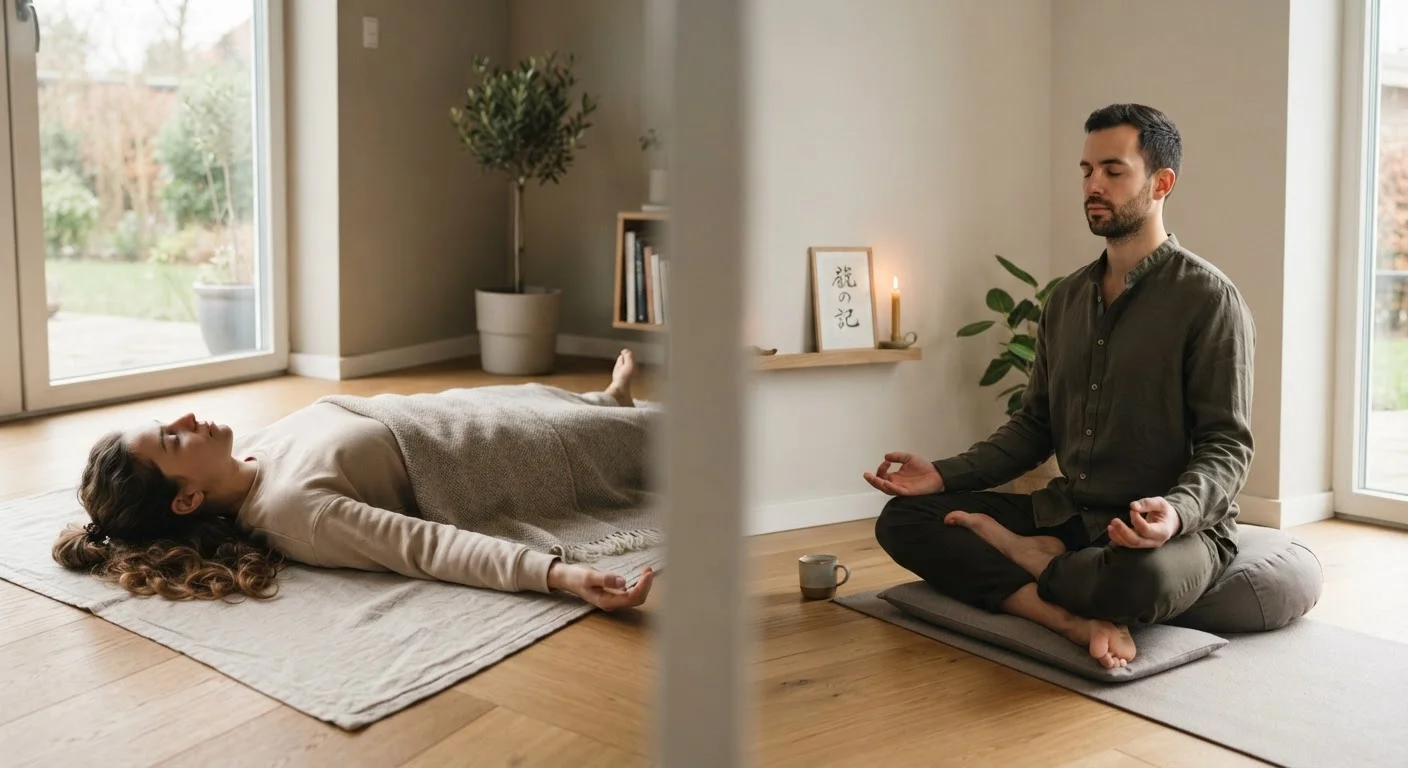
Body Scan
The grounding, head-to-toe awareness technique.
Best for: People who carry physical tension, struggle to unwind before sleep, or want a structured way to reconnect with their bodies.
Option B
Breath Awareness
The accessible, anchor-anywhere mindfulness method.
Best for: People who want a quick, flexible practice they can use anywhere - including during stressful moments in daily life.
If you want to ease physical tension or prepare for sleep
Body Scan
Systematically directing attention through the body helps release held tension and activates the relaxation response, making it especially well-suited to winding down at night.
If you need a quick reset during a busy or stressful day
Breath Awareness
Breath awareness requires no special position or quiet room - a few conscious breaths can interrupt a stress spiral almost anywhere, anytime.
If you are completely new to mindfulness and want structure
Body Scan
Its step-by-step progression through body regions gives beginners a clear focus point, reducing the frustration of wondering 'am I doing this right?'
If you want a practice you can sustain long-term with minimal friction
Breath Awareness
Its simplicity and portability make it easier to build into a daily habit without needing dedicated time or a specific environment.
If you want to explore both formal and informal mindfulness
Breath Awareness
Breath awareness bridges formal seated practice and informal everyday mindfulness, making it versatile across many daily moments.
What Each Technique Actually Involves
Both body scan and breath awareness are rooted in the same core mindfulness principle: deliberately directing attention to present-moment experience without trying to change it. Where they differ is in what you pay attention to and how that attention moves.
Body scan involves slowly moving awareness through successive regions of the body - typically starting at the feet or the top of the head and progressing to the other end. You notice whatever sensations are present: warmth, tightness, tingling, numbness, or nothing at all. The goal is not to relax on command but to observe with curiosity and without judgment. Research published in psychology and behavioral medicine journals suggests the practice can reduce perceived stress and improve sleep quality, though individual results vary.
Breath awareness is simpler in structure: you choose a specific aspect of breathing - the sensation of air entering the nostrils, the rise and fall of the chest, or the rhythm of the belly - and keep returning your attention there whenever the mind wanders. It is one of the oldest documented meditation anchors and remains among the most widely studied. For a broader look at how mindfulness and meditation relate to one another, see how mindfulness and meditation differ for stress relief.
Key Differences at a Glance
Understanding how these two practices compare across practical dimensions helps you choose the one that fits your life right now - not the one that sounds most impressive.
| Criterion | Body Scan | Breath Awareness |
|---|---|---|
| Primary focus | Sequential body sensations | Rhythm and sensation of breathing |
| Typical duration | 10-45 minutes | 1-20 minutes |
| Best posture | Lying down | Any - seated, standing, walking |
| Ideal time of day | Evening or before sleep | Anytime, including mid-day |
| Learning curve | Moderate - structured but lengthy | Low - simple concept, quick to try |
| Common evidence-based benefits | Tension relief, improved sleep | Stress reduction, focus, calm |
| Equipment needed | None (mat or bed helpful) | None |
One meaningful distinction is posture flexibility. Body scan is almost always practiced lying down, which makes it ideal for bedtime routines but impractical on a lunch break. Breath awareness can be practiced seated, standing, or even during a slow walk. For other breath-based techniques that can complement either practice, the plain-language guide to breathwork for stress covers methods like box breathing and diaphragmatic breathing in depth.
When to Use Each - and When to Combine Them
These techniques are not rivals. Many practitioners use both, selecting each for different contexts.
Choose body scan when: you have 15 or more minutes to dedicate, you want to prepare your nervous system for sleep, or you notice you are disconnected from physical sensations - perhaps holding your breath or clenching your jaw without realizing it.
Choose breath awareness when: time is short, you are already in a stressful situation and need a rapid anchor, or you want to build a consistent daily habit with low logistical barriers. Its portability is why it is often recommended as a first practice for beginners.
For a wider frame on how these fit within the landscape of relaxation and formal meditation, understanding the differences between meditation, mindfulness, and relaxation offers useful context. You might also compare both techniques against other evidence-based approaches - for instance, mindfulness meditation versus progressive muscle relaxation explores another popular body-based method.
This article is for general informational and educational purposes only and does not constitute medical advice. If you are experiencing significant stress, anxiety, or sleep difficulties, please consult a qualified healthcare professional.