

| Primary macronutrients | Carbohydrates, Protein, Fat (Dietary Reference Intakes, National Academies) |
| Recommended carbohydrate range (adults) | 45-65% of total calories (USDA Dietary Guidelines for Americans) |
| Recommended protein range (adults) | 10-35% of total calories (USDA Dietary Guidelines for Americans) |
| Recommended fat range (adults) | 20-35% of total calories (USDA Dietary Guidelines for Americans) |
| Protein priority life stages | Adolescence, pregnancy, older adulthood |
| Age-related muscle loss begins | Around age 30-40, accelerates after 60 (National Institute on Aging) |
Why Macronutrient Needs Change Over a Lifetime
Macronutrients - carbohydrates, protein, and fat - are the three main categories of nutrients that supply your body with energy and the raw materials it needs to function. But the amounts your body requires aren't fixed. Growth, hormonal shifts, physical activity, and changes in muscle mass and metabolism all influence how much of each macronutrient supports health at any given life stage.
Understanding these shifts can help you make more informed food choices for yourself and your family - without the need to obsessively count grams. For a deeper look at how metabolism itself changes decade by decade, see how energy needs shift as you age.
| Primary macronutrients | Carbohydrates, Protein, Fat (Dietary Reference Intakes, National Academies) |
| Recommended carbohydrate range (adults) | 45-65% of total calories (USDA Dietary Guidelines for Americans) |
| Recommended protein range (adults) | 10-35% of total calories (USDA Dietary Guidelines for Americans) |
| Recommended fat range (adults) | 20-35% of total calories (USDA Dietary Guidelines for Americans) |
| Protein priority life stages | Adolescence, pregnancy, older adulthood |
| Age-related muscle loss begins | Around age 30-40, accelerates after 60 (National Institute on Aging) |
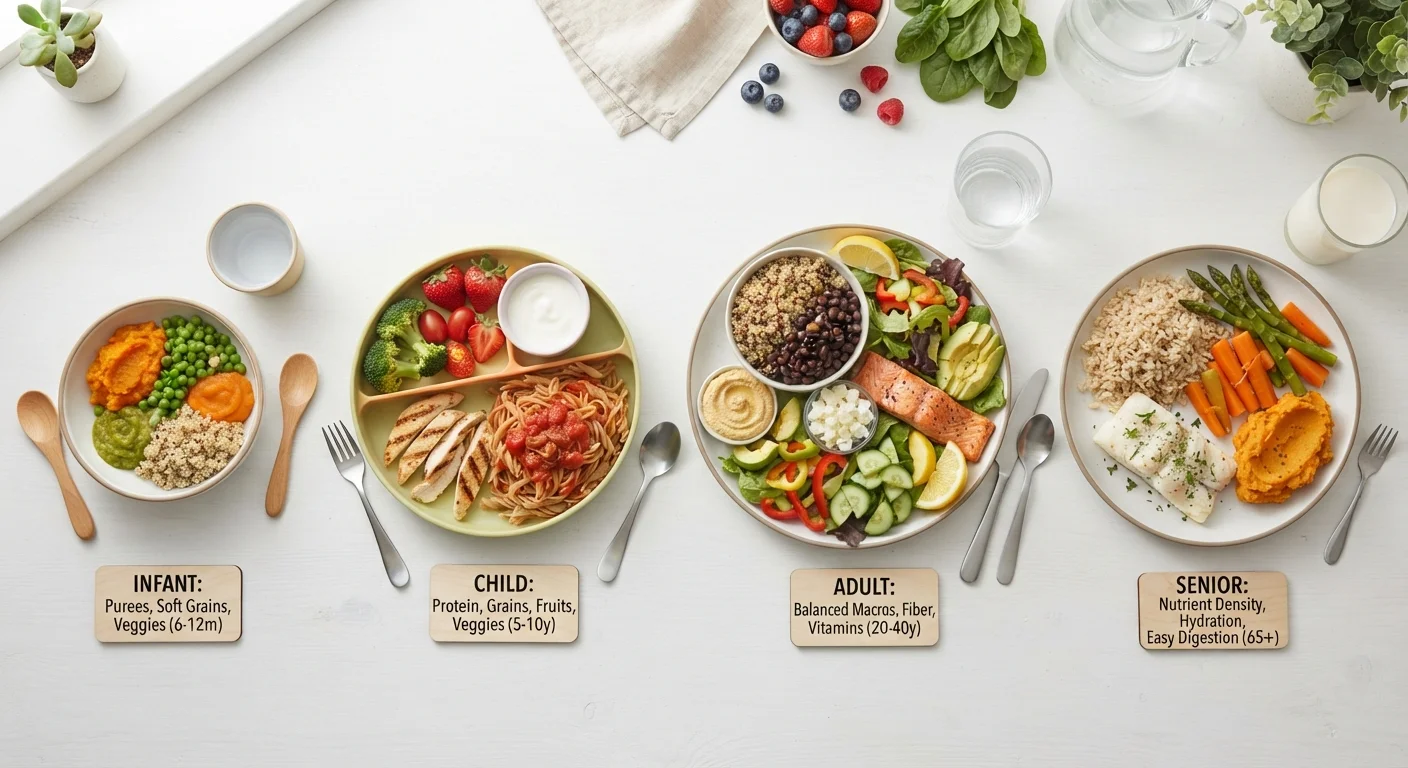
Childhood and Adolescence: Growth Drives Higher Demands
During childhood and the teenage years, the body is building muscle, bone, and organ tissue at a rapid pace. This means proportionally higher needs for all three macronutrients relative to body weight compared to adults.
- Protein is especially critical. Growing children need adequate protein to support tissue development. Adolescents undergoing puberty have particularly elevated protein requirements per pound of body weight.
- Carbohydrates serve as the primary fuel for the brain and active muscles. Whole grains, fruits, and legumes provide sustained energy alongside fiber, vitamins, and minerals.
- Fat is essential for brain development, particularly in early childhood. Healthy unsaturated fats from sources like fish, nuts, and avocados support cognitive function throughout this period.
Parents should focus on nutrient-dense whole foods rather than specific numerical targets. Consulting a pediatric healthcare provider is the most reliable way to assess whether a child's intake is appropriate for their age and size.
Adults: Maintenance, Activity, and Balance
For most healthy adults, macronutrient needs stabilize around supporting maintenance, energy output, and long-term disease prevention. General dietary guidelines suggest carbohydrates should make up the largest share of calories - roughly 45-65% - with protein and fat filling the remainder. See what research says about balancing your plate for a closer look at whether specific ratios actually matter.
Physically active adults and athletes will generally need more protein to support muscle repair and more carbohydrates to fuel training. Sedentary adults may need fewer total calories but still benefit from adequate protein to preserve lean muscle mass. For practical guidance on putting these proportions into action, explore building a balanced meal using macronutrient proportions.
Pregnancy and Lactation: Elevated Needs Across the Board
Pregnancy and breastfeeding increase caloric and macronutrient demands significantly. Protein needs rise to support fetal tissue growth and maternal blood volume expansion. Carbohydrates remain an important energy source, and dietary fat - particularly omega-3 fatty acids - plays a key role in fetal brain and eye development.
Folate, iron, and calcium are micronutrients of particular importance during this period as well; for more on these, see the Vitamins & Minerals hub.
Anyone who is pregnant or breastfeeding should work closely with a qualified healthcare provider or registered dietitian to determine their individual nutritional needs. General population guidelines are not a substitute for personalized guidance during these life stages.
Older Adults: Preserving Muscle and Supporting Bone Health
After around age 60, the body begins to lose muscle mass more rapidly - a process called sarcopenia. Research suggests that older adults may benefit from higher protein intake relative to younger adults, even if total calorie needs decline, to help preserve lean muscle tissue and functional strength.
Fat and carbohydrate needs don't change dramatically, but food quality becomes especially important. Older adults absorbing fewer nutrients due to digestive changes benefit from nutrient-dense choices at every meal. Regular physical activity, particularly resistance training, works alongside adequate protein to slow muscle loss.
For a broader look at how eating habits should evolve through adulthood, see healthy eating habits across every stage of adult life.
This article provides general health information for educational purposes and is not a substitute for personalized medical or dietary advice. Speak with a qualified healthcare professional about nutritional needs specific to your age, health status, and lifestyle.