

Key Takeaways
Our Verdict
Neither protein category is universally superior. Animal proteins offer completeness and digestibility advantages; plant proteins bring fiber and micronutrient diversity that support long-term health. A diet drawing thoughtfully from both - or one that strategically combines plant sources - can meet protein needs well for most healthy adults.
| Best for | Recommended |
|---|---|
| Those wanting straightforward amino acid completeness with minimal meal planning | Animal Proteins |
| Those prioritizing fiber intake, lower saturated fat, and broader phytonutrient variety | Plant Proteins |
| Most everyday eaters seeking balanced, flexible nutrition | A mix of both |
Why the Protein Source Matters
Protein is far more than a muscle-building macronutrient. As our companion article explains, protein supports enzymes, hormones, immunity, and cellular repair throughout the body. But not all protein foods deliver that raw material in the same way. Where your protein comes from - a chicken breast, a cup of lentils, a handful of almonds - determines which amino acids you get, how readily your body can use them, and what other nutrients arrive alongside them.
This comparison focuses on those practical trade-offs. It is not a case for eliminating any food group; it is a tool for building meals with a clearer picture of what each protein source contributes.
Amino Acid Completeness: The Core Difference
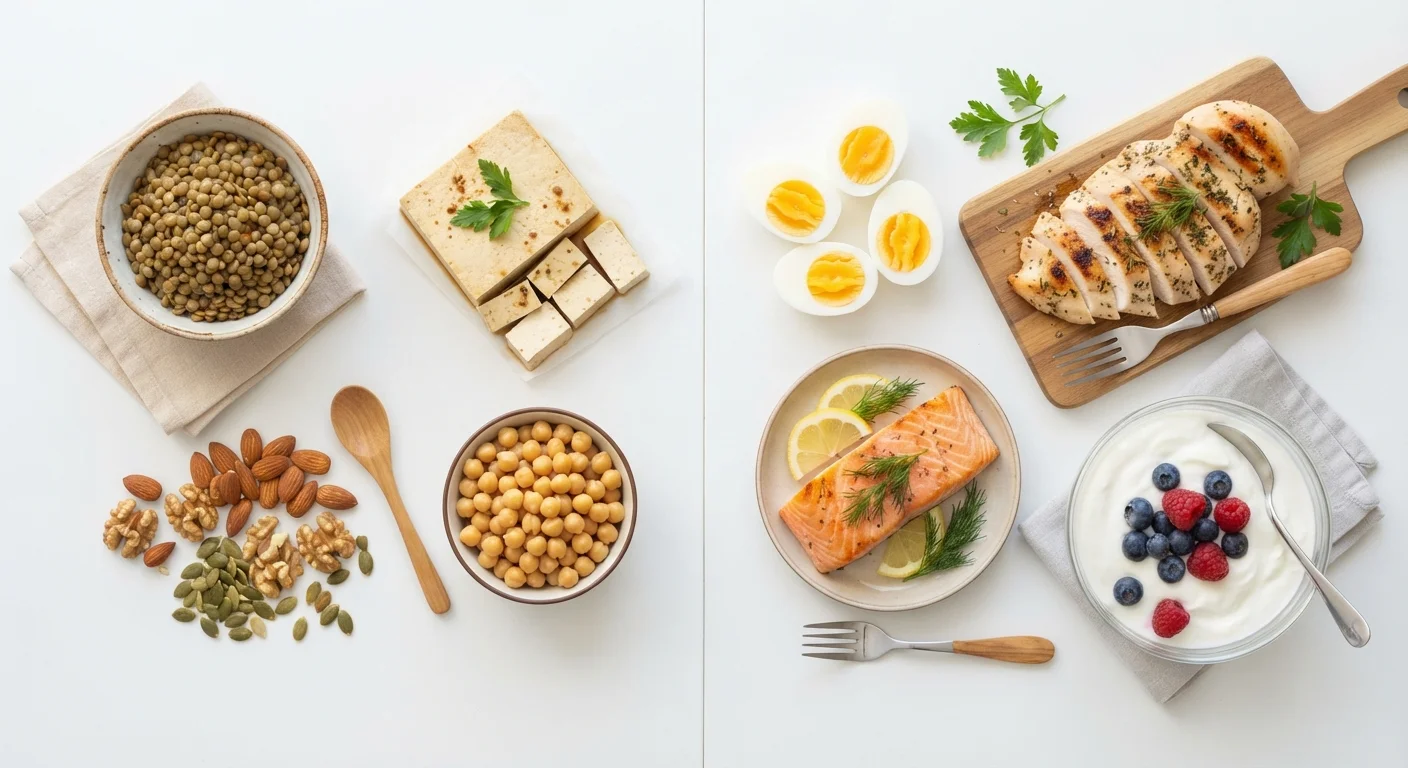
Proteins are built from 20 amino acids, nine of which are considered essential - meaning the body cannot make them and must obtain them from food. Animal proteins (meat, poultry, fish, eggs, dairy) supply all nine essential amino acids in proportions that closely match human needs, earning the label complete proteins.
Most plant proteins - beans, lentils, peas, nuts, seeds, grains - are lower in at least one essential amino acid. Lysine tends to be limited in grains; methionine is lower in legumes. This does not mean plant proteins are inadequate; it means variety matters. Eating a broad range of plant foods across the day naturally fills these gaps. For a deeper look at why the complete vs. incomplete distinction is less alarming than it sounds, see our article on amino acid profiles and what they really mean for your diet.
Notable exceptions include soy, quinoa, and buckwheat, which are plant foods considered complete proteins on their own.
| Plant Proteins | Animal Proteins | |
|---|---|---|
| Amino acid completeness | Incomplete (most); soy/quinoa exceptions | Complete - all 9 essential amino acids |
| Digestibility (PDCAAS/DIAAS) | Moderate; improved by cooking/soaking | High; consistently top-scoring |
| Fiber content | High in legumes and grains | None |
| Saturated fat | Generally low | Varies; can be high in red/processed meats |
| Vitamin B12 | Absent (needs supplementation) | Naturally present |
| Iron bioavailability | Non-heme; lower absorption rate | Heme iron; 2-3× more absorbable |
| Phytonutrients | Rich in flavonoids, polyphenols | Minimal |
| Environmental footprint | Generally lower land/water use | Generally higher resource intensity |
Digestibility: How Much You Actually Absorb
Even when amino acids are present, the body must be able to extract them. Protein digestibility is commonly measured using the Protein Digestibility-Corrected Amino Acid Score (PDCAAS) or the newer Digestible Indispensable Amino Acid Score (DIAAS). Animal proteins - eggs, dairy, meat - consistently score at or near the top of these scales, meaning the body absorbs a high proportion of what is consumed.
Plant proteins, on average, score somewhat lower. Factors like fiber content, antinutrients (phytates, tannins, lectins), and cell wall structures can reduce how much protein the digestive system can access. Cooking, soaking, fermenting, and sprouting all improve plant protein digestibility meaningfully - so preparation method is a real variable worth considering.
Nutrients That Travel With Your Protein
Protein never arrives alone; it brings a constellation of other nutrients that affect overall diet quality.
Animal protein advantages:
- Heme iron - absorbed two to three times more efficiently than the non-heme iron in plants. Our heme vs. non-heme iron explainer covers ways to boost absorption from plant sources.
- Vitamin B12 - essential for nerve function and red blood cell production; found almost exclusively in animal foods.
- Zinc and omega-3 fatty acids (especially from fish) in highly bioavailable forms.
Plant protein advantages:
- Dietary fiber - animal foods contain none; legumes and whole grains deliver significant amounts that support gut health and satiety.
- Phytonutrients - compounds like flavonoids and polyphenols that are associated with reduced inflammation and chronic disease risk in observational research.
- Lower saturated fat - many plant proteins are naturally low in saturated fat, relevant to cardiovascular considerations.
How protein sources fit into your broader dietary pattern also matters. For an evidence-based look at how various eating patterns balance these elements, see dietary patterns compared.
Putting It Into Practice
For most healthy adults, the goal is not to pick a winner but to understand what each protein source contributes and plan meals accordingly. Consider these practical principles:
- Diversify plant proteins - rotating legumes, grains, nuts, and seeds throughout the week addresses amino acid variety without complex calculations.
- Pay attention to B12 and iron if you eat little or no animal food - these are the nutrients most likely to require intentional dietary attention or, in some cases, supplementation under a healthcare provider's guidance.
- Consider cooking methods - soaking dried beans, fermenting soy into tempeh, or sprouting lentils improves plant protein bioavailability noticeably.
- Balance saturated fat intake - if animal proteins are a large part of your diet, leaner choices (fish, poultry, low-fat dairy) and plant protein substitutions on some days support cardiovascular health goals.
Your ideal protein mix is shaped by health status, food preferences, cultural context, and any conditions your healthcare provider is monitoring. These trade-offs provide a useful framework - not a personal prescription.
This article is for general informational and educational purposes only and is not a substitute for personalized medical or nutritional advice. Consult a qualified healthcare professional for guidance specific to your health needs.