

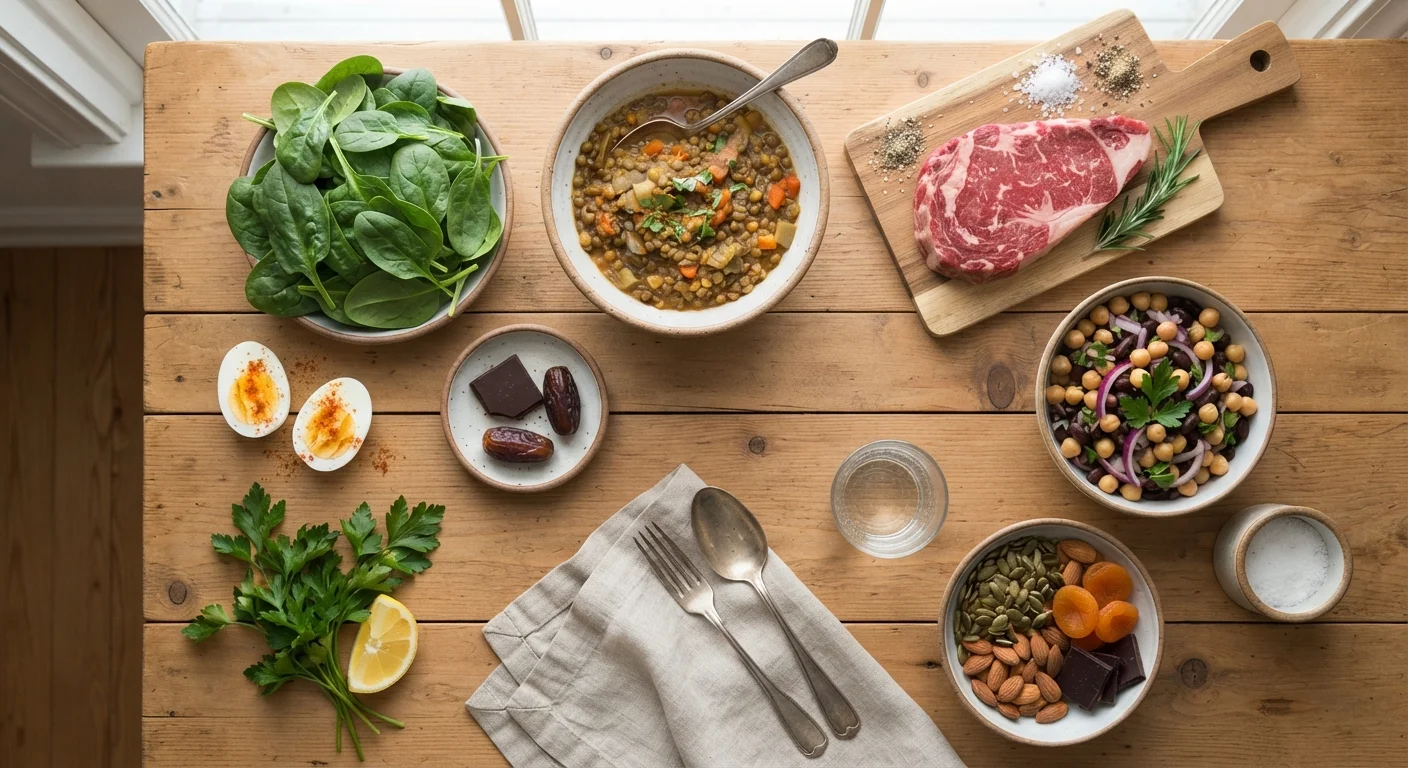
Key Takeaways
Option A
Heme Iron
The highly bioavailable form found exclusively in animal foods.
Best for: People who eat meat, poultry, or seafood and want reliable, efficient iron absorption with minimal dietary planning.
Option B
Non-Heme Iron
The widely available but less efficiently absorbed form from plant sources.
Best for: Vegetarians, vegans, and anyone relying primarily on plant foods, who can boost absorption through strategic food pairing.
If you eat meat regularly and want reliable iron intake
Heme Iron
Heme iron from red meat, poultry, and seafood is absorbed efficiently and is less affected by other foods in your meal, making it the easier route to meeting iron needs.
If you follow a vegetarian or vegan diet
Non-Heme Iron
Non-heme iron from lentils, tofu, spinach, and fortified grains is your primary dietary source. Strategic food pairing and cooking techniques can meaningfully improve how much your body absorbs.
If you have been told you are at risk for iron deficiency
Heme Iron
Those with elevated iron needs - including menstruating individuals, pregnant women, or athletes - may benefit most from including heme sources regularly. Always consult a healthcare professional about personal needs.
If you are reducing animal product consumption for health or environmental reasons
Non-Heme Iron
A well-planned plant-forward diet can supply adequate iron. Focus on iron-dense legumes, seeds, and fortified foods while applying proven absorption-boosting strategies.
What Makes These Two Forms of Iron Different
Iron in food exists in two chemically distinct forms that your digestive system handles very differently. Heme iron is bound to hemoglobin and myoglobin proteins found in animal muscle tissue. Because it enters intestinal cells as an intact molecule, your body absorbs it efficiently regardless of what else you eat alongside it.
Non-heme iron is the form found in plant foods, dairy, eggs, and also added to fortified products. Unlike heme iron, it must be converted from ferric (Fe³⁺) to ferrous (Fe²⁺) form before intestinal cells can absorb it - a step that makes it far more susceptible to help or interference from surrounding nutrients. This difference in chemistry is the core reason the two forms behave so differently in your body.
This distinction also matters when thinking about broader dietary trade-offs. For a fuller picture of how plant and animal foods compare nutritionally, see our guide to plant-based vs. animal proteins.
Absorption Rates and What Drives Them
The most practical difference between the two iron types is how much of what you eat actually reaches your bloodstream. Heme iron is absorbed at roughly 15-35% efficiency. Non-heme iron absorption is considerably more variable, ranging from about 2% to 20%, depending heavily on the rest of your meal.
| Criterion | Heme Iron | Non-Heme Iron |
|---|---|---|
| Found in | Meat, poultry, seafood | Plants, eggs, dairy, fortified foods |
| Typical absorption rate | 15-35% | 2-20% |
| Affected by meal composition | Minimally | Significantly |
| Boosted by vitamin C | No notable effect | Yes - markedly improved |
| Inhibited by phytates/polyphenols | No | Yes |
| Suitable for plant-based diets | No | Yes |
Several dietary factors can either support or suppress non-heme iron uptake:
- Enhancers: Vitamin C (ascorbic acid) is the most potent enhancer - it reduces ferric iron to the absorbable ferrous form. Consuming a vitamin C-rich food (citrus, bell peppers, strawberries, broccoli) alongside plant iron sources can substantially increase how much you absorb.
- Inhibitors: Phytates (found in whole grains and legumes), polyphenols (in tea, coffee, and red wine), and calcium can each reduce non-heme iron absorption when consumed in the same meal. This does not mean avoiding these foods - just being mindful of timing.
Heme iron, by contrast, is largely unaffected by these dietary variables, which makes it a more predictable contributor to daily iron intake.
Best Dietary Sources of Each Iron Type
Knowing which foods deliver meaningful amounts of each iron type helps you plan practical meals rather than chasing abstract numbers.
Top heme iron sources include:
- Beef, lamb, and pork (especially organ meats such as liver - though these are also very high in vitamin A, so occasional rather than frequent consumption is prudent)
- Chicken and turkey (dark meat contains more iron than white meat)
- Clams, oysters, mussels, and sardines
Top non-heme iron sources include:
- Lentils, chickpeas, kidney beans, and tofu
- Pumpkin seeds, hemp seeds, and tahini
- Spinach, Swiss chard, and cooked white potatoes
- Iron-fortified cereals and breads
- Blackstrap molasses and dried apricots
15-35%
Heme iron absorption rate
The National Institutes of Health notes heme iron is generally absorbed at two to three times the rate of non-heme iron.
~2-20%
Non-heme iron absorption range
Absorption varies widely based on vitamin C intake, inhibitor foods consumed in the same meal, and an individual's existing iron stores.
18 mg
Daily iron RDA for adult women (19-50)
According to the NIH Office of Dietary Supplements, adult women of reproductive age have significantly higher iron needs than adult men, who require 8 mg per day.
Cooking in cast-iron cookware can add small but measurable amounts of non-heme iron to acidic or moist foods - a useful supplementary strategy, though not a replacement for dietary planning.
This article is for general informational and educational purposes only. It is not a substitute for professional medical advice, diagnosis, or treatment. If you have concerns about your iron levels or nutritional status, consult a qualified healthcare professional.