

Key Takeaways
The Immune System
The immune system is the body's built-in defense network — a complex collection of cells, tissues, and proteins that identify and neutralize threats like bacteria, viruses, and abnormal cells. It operates continuously, distinguishing between your own healthy cells and foreign invaders. When functioning well, it mounts targeted responses to illness while tolerating harmless substances.
Immunologists divide immune responses into two major branches: innate immunity (rapid, nonspecific) and adaptive immunity (slower but highly targeted, with memory). Both branches communicate and cooperate to resolve most threats.
Two Lines of Defense: Innate and Adaptive Immunity
Your immune system doesn't operate as a single unified force — it's organized into two complementary branches that work in sequence.
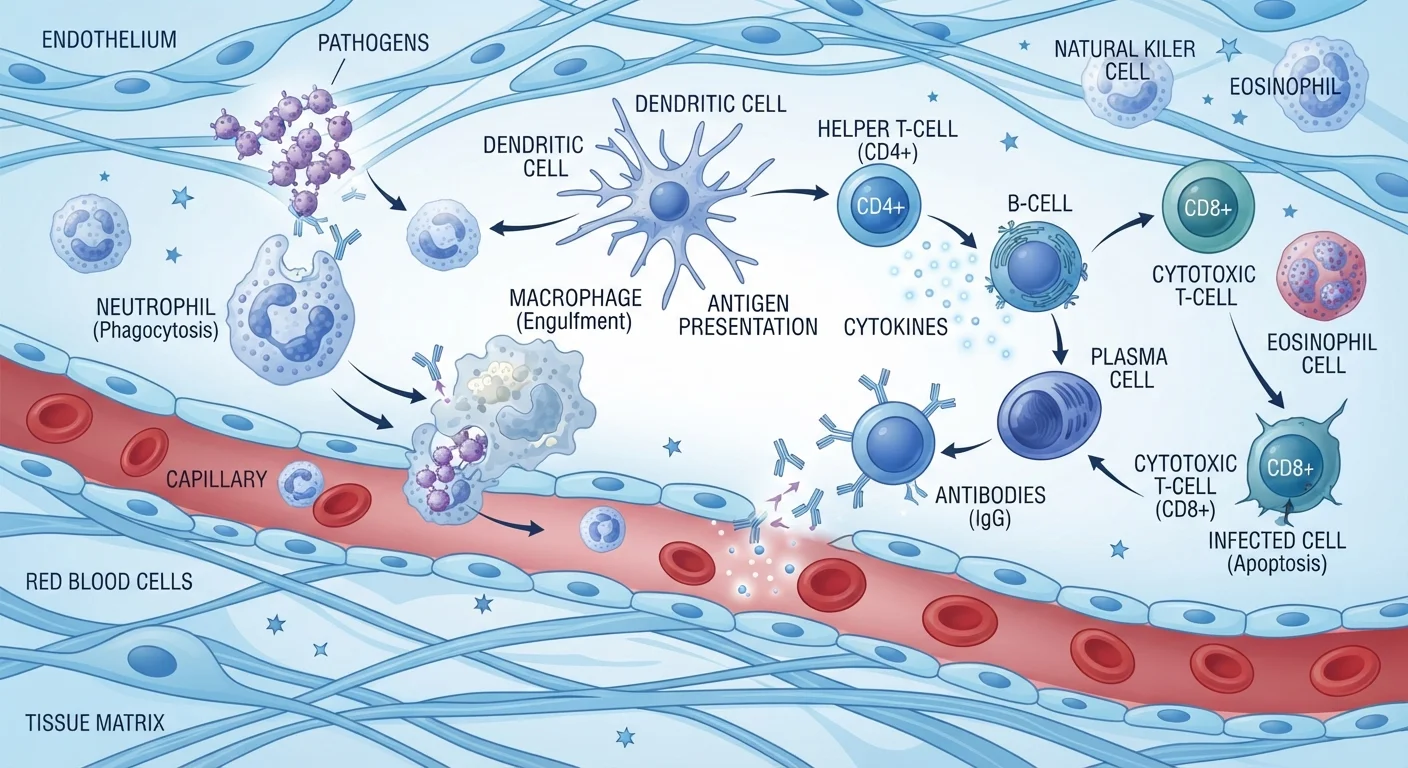
Innate immunity is your first responder. It activates within minutes to hours of encountering a threat, deploying generalist cells like neutrophils and macrophages that engulf and destroy invaders without needing prior exposure. Fever, inflammation, and that familiar sense of feeling ill are largely products of this rapid-response system doing its job.
Adaptive immunity takes longer — days to weeks — but is far more precise. Specialized white blood cells called T cells and B cells identify specific threats, mount a targeted counterattack, and — critically — store that information as immunological memory. This is why you're typically protected from certain illnesses after recovering from them, and why vaccines are effective. For a practical overview of how these foundations connect, see our starter guide to immune health.
Key Players: Cells, Antibodies, and Proteins
Understanding the immune system is easier when you know its main cast of characters.
- Neutrophils: The most abundant white blood cells, they are the front-line troops that quickly engulf and destroy bacteria and fungi.
- Macrophages: Larger cells that consume cellular debris and pathogens, and also signal other immune cells to join the response.
- T cells: Come in several subtypes — cytotoxic T cells kill infected cells directly, while helper T cells coordinate the broader immune response.
- B cells: Produce antibodies, Y-shaped proteins that bind to specific antigens (foreign markers) on pathogens, flagging them for destruction or neutralizing them directly.
- Natural killer (NK) cells: Patrol the body for cells that display signs of viral infection or early cancer transformation, destroying them before they spread.
The vitamins and minerals that support these cells — including zinc, vitamin C, and vitamin D — are well-documented in the research literature. You can explore which specific nutrients have the strongest evidence in our quick-reference overview of key immune nutrients.
70%
Of immune cells located in the gut
Estimates from immunology research suggest that roughly 70% of the body's immune cells reside in or around the gastrointestinal tract, underscoring the gut–immune connection.
~3×
Infection risk increase with short sleep
A study published in Sleep (2015) by Prather et al. found that people sleeping fewer than six hours per night were approximately three times more likely to develop a cold than those sleeping seven or more hours.
2–4 weeks
Time for adaptive immune response to mature
According to general immunological consensus, a full adaptive (specific) immune response typically develops over two to four weeks following first exposure to a novel pathogen.
Everyday Factors That Shape Immune Performance
The immune system doesn't operate in isolation from your daily habits. Substantial research links several lifestyle factors to meaningful differences in immune function:
Sleep is perhaps the most underappreciated immune support tool. During deep sleep, the body produces cytokines — signaling proteins that coordinate immune responses — and consolidates immunological memory. Chronic short sleep is associated with reduced vaccine effectiveness and greater susceptibility to respiratory infections. Learn more about the overnight biology in our article on sleep and immunity.
Diet supplies the raw materials — amino acids, vitamins, and minerals — that immune cells require to function. A diet rich in vegetables, fruits, legumes, and whole grains also feeds the gut microbiome, which plays a significant and still-emerging role in immune regulation. Our article on gut health and immunity explores this connection in depth.
Chronic stress elevates cortisol, a hormone that, at persistently high levels, suppresses immune cell activity and increases susceptibility to illness. Moderate, regular physical activity has been shown to support healthy immune surveillance without overstressing the system.
For a side-by-side view of how these factors compare in impact, see lifestyle factors that shape immune resilience.
This article is for general informational and educational purposes only and is not a substitute for professional medical advice. Always consult a qualified healthcare provider with questions about your health or immune function.