

Key Takeaways
Start here
What Is a Lipid Panel?
Next
Breaking Down Each Number
Then
What Clinicians Actually Look For
Also consider
Factors That Affect Your Results
Finally
Next Steps After Getting Your Results
What Is a Lipid Panel?
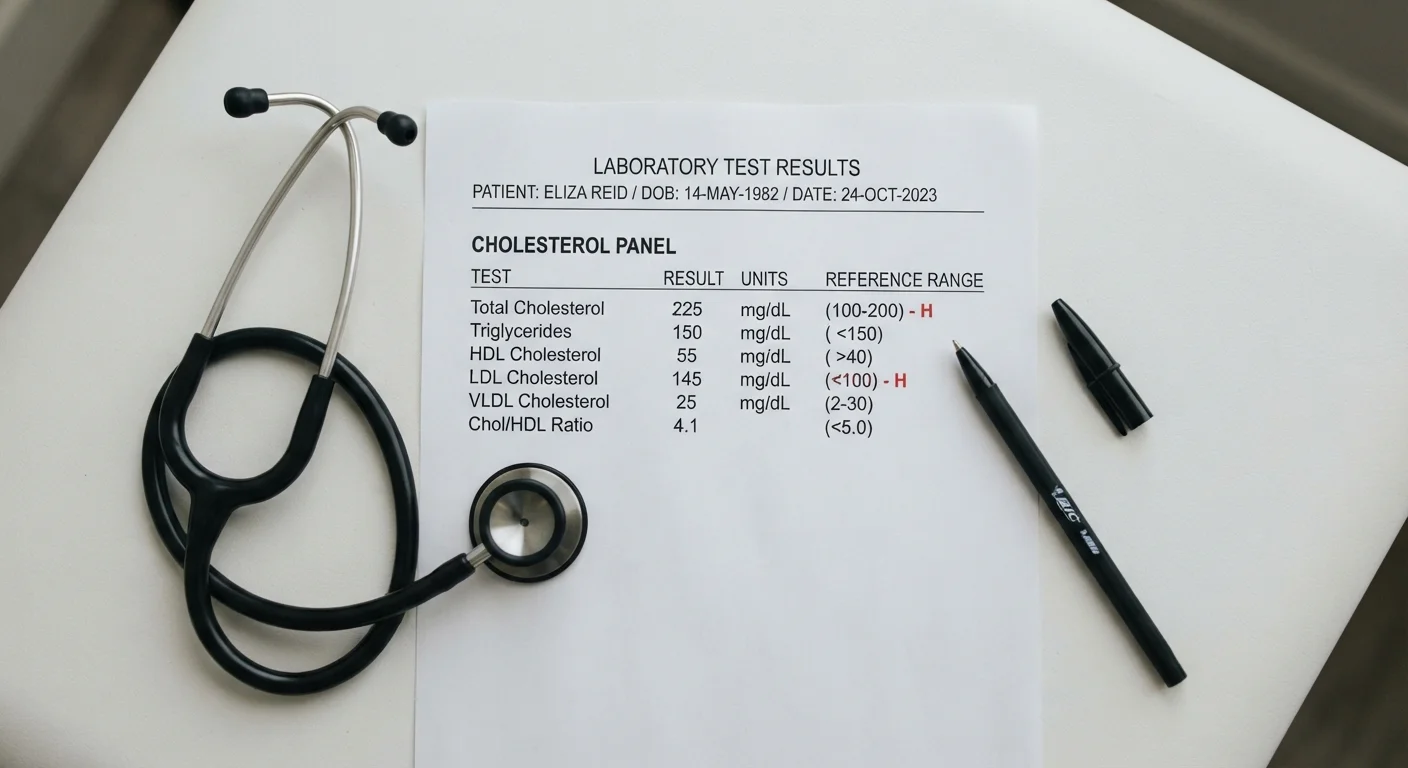
A lipid panel (also called a lipid profile or cholesterol panel) is a routine blood test that measures the fats circulating in your bloodstream. It's one of the most common preventive screenings ordered by primary care providers because cholesterol levels are closely linked to cardiovascular disease risk — a leading cause of death in the United States.
The test typically measures four values:
- Total cholesterol
- LDL cholesterol (low-density lipoprotein)
- HDL cholesterol (high-density lipoprotein)
- Triglycerides
Results are reported in milligrams per deciliter (mg/dL). Understanding what each number represents helps you engage more productively with your provider — and take ownership of your long-term heart health.
Lipid panel
A blood test that measures different types of cholesterol and fats in your bloodstream to help assess cardiovascular risk.
LDL (Low-Density Lipoprotein)
A type of cholesterol that can accumulate in artery walls and contribute to narrowing of the blood vessels over time.
HDL (High-Density Lipoprotein)
A type of cholesterol that helps carry fats away from arteries to the liver, generally associated with lower cardiovascular risk at higher levels.
Triglycerides
A type of fat in the blood derived from calories not immediately burned for energy; elevated levels are linked to metabolic and heart health concerns.
Familial hypercholesterolemia
An inherited condition that causes very high LDL cholesterol from birth, regardless of diet or lifestyle choices.
Cardiovascular risk
The likelihood of experiencing a heart-related event such as a heart attack or stroke, estimated using multiple health factors together.
Breaking Down Each Number
LDL Cholesterol
LDL is often labeled the "bad" cholesterol because excess LDL in the bloodstream can deposit in artery walls, forming plaques that narrow blood vessels over time. Most guidelines consider LDL below 100 mg/dL optimal for adults at average risk, though target levels vary based on individual cardiovascular risk profile.
HDL Cholesterol
HDL is frequently called the "good" cholesterol. It helps transport cholesterol away from arteries back to the liver. For most adults, HDL above 60 mg/dL is considered protective, while levels below 40 mg/dL in men or below 50 mg/dL in women are associated with higher cardiovascular risk.
Triglycerides
Triglycerides are a type of fat derived from calories your body doesn't immediately use. Elevated triglycerides (above 150 mg/dL in most guidelines) are linked to metabolic conditions including insulin resistance. Very high levels (above 500 mg/dL) can raise the risk of pancreatitis.
Total Cholesterol
Total cholesterol is a combined measure of all cholesterol types in your blood. While a useful initial snapshot, it's less clinically informative on its own than the individual values — particularly the LDL-to-HDL ratio.
What Clinicians Actually Look For
Your provider won't simply compare each number to a cutoff and stop there. Cholesterol results are interpreted as part of a broader cardiovascular risk picture that includes:
- Age, sex, and family history
- Blood pressure readings
- Smoking status
- Presence of diabetes or metabolic syndrome
- Body weight and physical activity level
Tools such as the Pooled Cohort Equations — endorsed by the American College of Cardiology and American Heart Association — combine these factors to estimate a 10-year risk of a cardiovascular event. A person with moderately elevated LDL but no other risk factors may need only lifestyle changes, while another person with similar LDL plus diabetes and hypertension may warrant medication.
Just as reading a body composition report requires context (similar to how DEXA scan results blend multiple measurements), your lipid numbers are most meaningful when read alongside your full health picture.
Factors That Affect Your Results
Several controllable and uncontrollable factors influence your lipid panel:
- Diet
- Foods high in saturated and trans fats raise LDL. Soluble fiber (found in oats, beans, and certain fruits) can help lower it.
- Physical activity
- Regular aerobic exercise is consistently associated with higher HDL levels and modest reductions in triglycerides.
- Weight
- Excess body weight, particularly abdominal fat, tends to raise triglycerides and lower HDL.
- Smoking
- Smoking lowers HDL cholesterol. Quitting is associated with measurable improvement in HDL levels over time.
- Genetics
- Familial hypercholesterolemia can cause very high LDL regardless of lifestyle. Genetic screening may be recommended if your results are significantly elevated despite healthy habits.
- Medications and conditions
- Certain medications (including some blood pressure drugs and corticosteroids) and health conditions (such as hypothyroidism or kidney disease) can alter lipid levels.
Bring Your Results to Your Appointment
If your lab results arrive via a patient portal before your follow-up visit, write down any questions you have while reviewing them. Asking your provider to walk through each value — and what it means specifically for you — leads to more personalized guidance than a generic comparison to reference ranges.
Next Steps After Getting Your Results
Receiving your lab report is a starting point, not a final verdict. Here's a practical approach to moving forward:
- Schedule a follow-up appointment. Don't rely solely on a patient portal message. Discuss your results directly with your provider so they can address your specific context.
- Ask about your 10-year cardiovascular risk. Understanding where you fall on a risk calculator puts individual numbers in perspective.
- Clarify your personal targets. Optimal LDL levels differ for someone who has already had a cardiac event versus someone with no prior history.
- Explore lifestyle changes first (if appropriate). For many people at lower risk, diet and exercise modifications are the recommended first step before medication is considered.
- Plan your next screening. Ask your provider how often you should retest based on your current results and risk factors.
This article is for general health information and educational purposes only. It is not a substitute for professional medical advice, diagnosis, or treatment. Always consult a qualified healthcare provider with questions about your cholesterol results or cardiovascular health.