

Key Takeaways
Why Screens Became the Sleep Villain
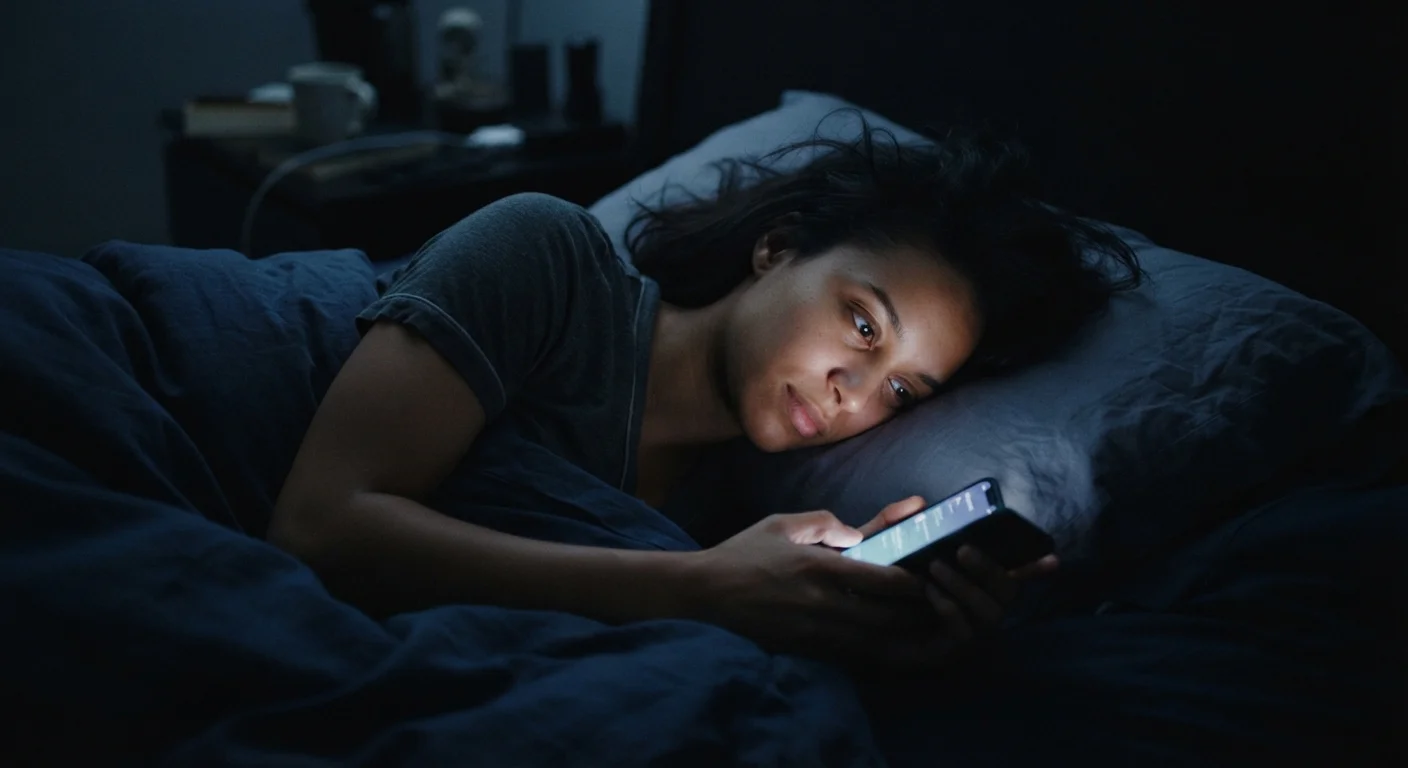
Over the past decade, screens have absorbed enormous blame for poor sleep in America. Headlines warn that smartphones are ruining rest, and pediatricians caution parents about devices in children's bedrooms. The concern isn't baseless — but the story is considerably more layered than most coverage suggests.
The underlying biology is real. Light exposure in the evening suppresses the release of melatonin, a hormone that signals to your body that it's time to sleep. Short-wavelength blue light — emitted by LED screens, among many other sources — is particularly effective at doing this. To understand the full physiology, see how light exposure shapes your sleep biology. But knowing that blue light can suppress melatonin doesn't tell us how much real harm a typical evening scroll session actually causes.
That distinction — between what's biologically possible and what demonstrably disrupts sleep under everyday conditions — is where the science and the panic diverge.
Myth vs. Fact: What the Research Actually Shows
Below are the most persistent misconceptions about screens and sleep, corrected by what current evidence actually supports.
Myth
The blue light from your phone is the primary reason screens hurt sleep.
Fact
Blue light is one factor, but the intensity, timing, and stimulating nature of screen content typically have a larger practical effect on sleep.
Blue light does suppress melatonin, but the screens most people use in the evening emit far less blue light than indoor lighting or daylight. Laboratory studies demonstrating melatonin suppression often use light intensities higher than what a typical phone or laptop produces at arm's length. Several controlled studies have found only modest differences in sleep onset when blue light is filtered but content and behavior remain unchanged.
Myth
Blue-light-blocking glasses are a proven solution to screen-related sleep problems.
Fact
Evidence for blue-light-blocking glasses improving sleep is weak and inconsistent across well-designed studies.
Despite their popularity, randomized trials of blue-light-blocking glasses have produced mixed results, with several high-quality studies finding no significant benefit over clear lenses for sleep onset or quality. Regulatory agencies and sleep medicine researchers have noted the gap between marketing claims and the available evidence. Behavioral changes — like reducing screen use and dimming brightness — have stronger empirical support.
Myth
Any screen use after 8 p.m. will ruin your sleep.
Fact
Timing, duration, content, and individual sensitivity all interact to determine whether evening screen use meaningfully disrupts a given person's sleep.
Sleep science does not support a universal bright-line cutoff. Individuals vary considerably in their sensitivity to evening light based on genetics, age, and habitual sleep timing. Someone watching a calm documentary at low brightness an hour before bed is in a meaningfully different situation than someone rapidly scrolling social media at maximum brightness until the moment they close their eyes. Context matters more than the presence of a screen alone.
Myth
Night mode or warm-tone settings on your device fully protect your sleep.
Fact
Warm-tone display settings reduce blue light output but do not eliminate light's alerting effects or address the stimulating nature of content.
Night mode features shift the display color toward amber or red tones, which produces less short-wavelength light. This is a reasonable marginal adjustment, but it does not transform a bright, engaging screen into a neutral stimulus. Brightness level, viewing distance, and what you're actually doing on the screen remain important variables. Night mode is a helpful tool, not a full solution.
Myth
Children and adults are equally affected by screen light at night.
Fact
Children and adolescents are generally more sensitive to evening light exposure and experience greater melatonin suppression than most adults.
Research suggests that the developing visual system in children and teenagers is more sensitive to short-wavelength light. Adolescents in particular already have a biologically delayed sleep phase, and evening light exposure can compound this shift further. This is why pediatric sleep guidance around screen use tends to be more conservative than general adult recommendations. Parents of children with sleep concerns should consult a pediatrician or pediatric sleep specialist.
For broader context on how daylight and darkness shape your nightly sleep drive, see morning sunlight, evening darkness, and your sleep drive.
What Actually Matters More Than the Screen Itself
Research consistently points to behavioral and cognitive factors as more consequential sleep disruptors than light wavelength alone. Watching emotionally intense content — news, conflict-driven dramas, or anxiety-inducing social media — activates the sympathetic nervous system, raising alertness at exactly the wrong time. If a racing mind at bedtime sounds familiar, stress, rumination, and the racing mind at bedtime explores why this happens and how to address it.
Equally important is when screen use displaces sleep. The phenomenon known as revenge bedtime procrastination — staying up late with a device simply to reclaim personal time after a demanding day — delays sleep onset far more reliably than blue light does. Evening habits that quietly push bedtime later and later breaks down these patterns in detail.
Practical adjustments worth considering include reducing overall screen brightness in the evening, enabling warm-tone or night-shift display modes, and choosing lower-stimulation content in the hour before bed. Most importantly, a consistent pre-sleep routine — one that transitions your mind away from work and reactive content — tends to produce more measurable benefit than any single filter or gadget. Strategic light management throughout the entire day also plays a meaningful supporting role.
This article is for general informational purposes only and does not constitute medical advice. If you have concerns about sleep quality or a possible sleep disorder, consult a qualified healthcare professional.