

Key Takeaways
Obstructive Sleep Apnea (OSA)
Obstructive sleep apnea is a sleep disorder in which the muscles at the back of the throat relax too much during sleep, causing the airway to narrow or fully collapse. This results in repeated pauses in breathing — sometimes dozens or hundreds of times per night — that disrupt sleep and reduce oxygen levels in the blood. Unlike ordinary snoring, OSA carries real health consequences if left unaddressed.
Each breathing pause is called an apnea event; severity is measured by the Apnea-Hypopnea Index (AHI), which counts the average number of events per hour of sleep.
When Snoring Becomes a Warning Sign
Nearly half of American adults snore occasionally, and many treat it as little more than an annoyance. But snoring exists on a spectrum, and at its more serious end sits obstructive sleep apnea — a condition that is fundamentally different from simple snoring and that carries measurable health consequences.
The distinction matters because OSA is significantly underdiagnosed. Many people — and their partners — assume loud snoring is just a personality quirk of deep sleep, never realizing that breathing is actually stopping and restarting throughout the night. Understanding where ordinary snoring ends and OSA begins is a critical first step toward getting appropriate care.
For a broader look at how disrupted sleep fits into the wider landscape of sleep medicine, see Sleep Disorders Explained.
What Actually Happens During an Apnea Event
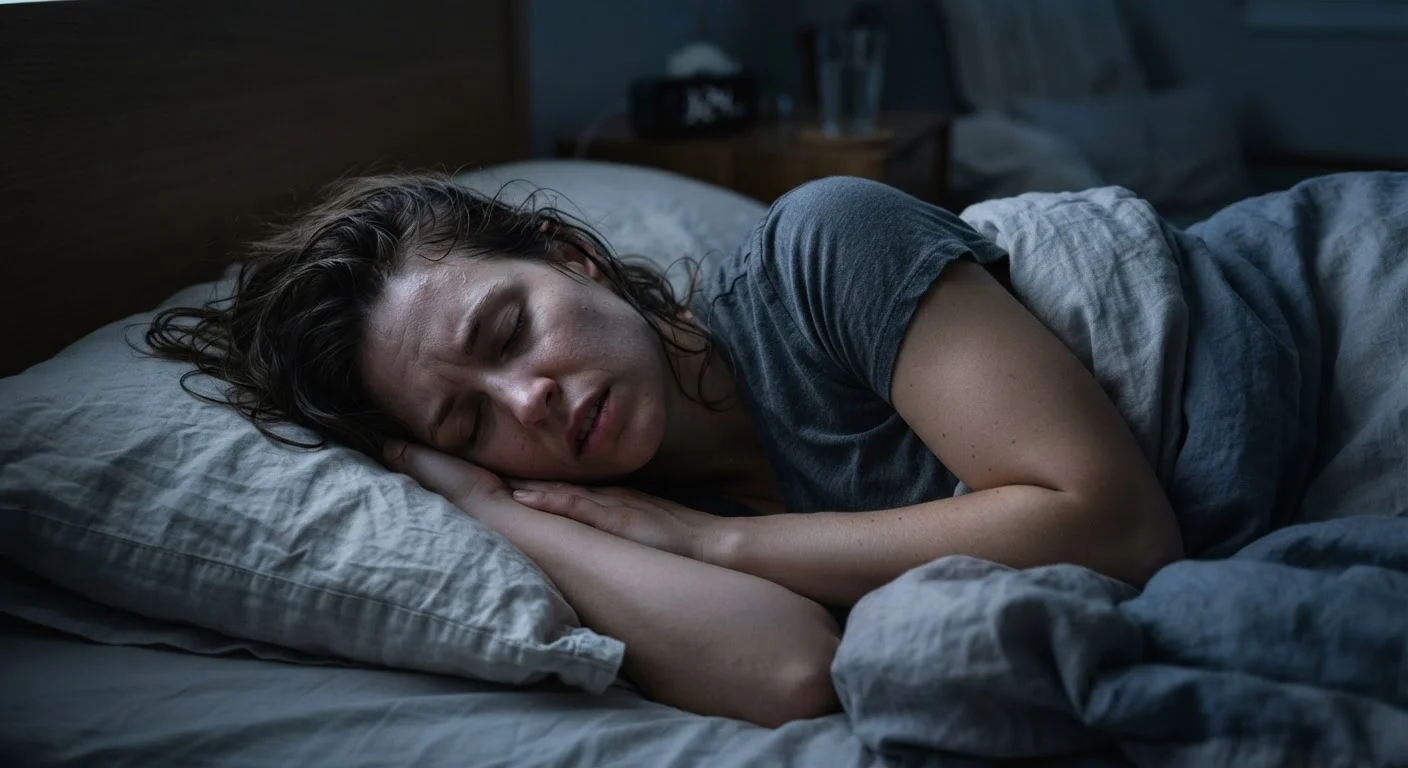
During normal sleep, the muscles that support the soft palate, tongue, and throat relax. In people with OSA, this relaxation is excessive — the airway narrows or collapses entirely, blocking airflow. The brain detects the oxygen drop and triggers a brief arousal, reopening the airway with a gasp or snort. The person usually does not wake up fully and has no memory of these events.
This cycle can repeat 5 to over 100 times per hour, fragmenting sleep architecture and preventing the deep, restorative stages the body needs. Each event also causes a transient drop in blood oxygen saturation, which over time creates a cumulative burden on the cardiovascular system.
~30 million
Americans estimated to have obstructive sleep apnea
According to the American Academy of Sleep Medicine, an estimated 30 million U.S. adults have OSA, yet a large proportion remain undiagnosed.
3x
Increased hypertension risk with untreated OSA
Research published in sleep medicine literature consistently links moderate-to-severe untreated OSA with significantly elevated risk of high blood pressure.
80%
Estimated share of moderate-to-severe OSA cases undiagnosed
Studies suggest the vast majority of people with clinically significant OSA have never received a formal diagnosis, leaving the condition untreated.
The severity of OSA is classified using the Apnea-Hypopnea Index (AHI): mild is 5–14 events per hour, moderate is 15–29, and severe is 30 or more. Even mild OSA can impair daytime function and elevate long-term health risk.
Recognizing the Symptoms Beyond the Snore
Loud, persistent snoring is the most commonly reported symptom, but OSA produces a cluster of other signs that often go unrecognized or are attributed to other causes. Key indicators include:
- Witnessed breathing pauses — a bed partner notices the person stop breathing, then gasp or choke
- Excessive daytime sleepiness — falling asleep during routine activities despite adequate time in bed
- Morning headaches — caused by overnight oxygen fluctuations affecting blood vessels
- Unrefreshing sleep — waking up feeling exhausted regardless of sleep duration
- Difficulty concentrating or memory problems — a result of fragmented sleep and reduced cognitive restoration
- Mood changes — irritability, depression, and anxiety are more prevalent in people with OSA
OSA is one of the most common sleep disorders affecting American adults. The Most Common Sleep Disorders in Adults provides a helpful comparison of how OSA presents alongside other conditions.
OSA vs. Insomnia: Not the Same Problem
People sometimes confuse poor sleep quality caused by OSA with insomnia — both leave sufferers exhausted, but the underlying mechanisms are entirely different. Insomnia typically involves difficulty falling or staying asleep due to psychological, behavioral, or circadian factors. OSA, by contrast, involves a physical obstruction that disrupts sleep from within, often without the person knowing it is occurring.
This distinction is clinically important because treating one condition does not address the other, and some treatments for insomnia (such as certain sedatives) can actually worsen OSA by further relaxing airway muscles. Insomnia vs. Sleep Apnea explores these differences in depth.
If you recognize symptoms of OSA in yourself or someone close to you, the appropriate next step is a consultation with a healthcare provider — not self-diagnosis. A formal sleep study is the only reliable way to confirm the condition and determine its severity.
This article is for informational and educational purposes only and does not constitute medical advice. If you have concerns about snoring, sleep quality, or any symptoms described here, please consult a qualified healthcare professional for a personalized evaluation.