

Key Takeaways
Option A
Visceral Fat
The metabolically active fat stored deep within the abdominal cavity.
Best for: Understanding which fat type is more closely linked to metabolic and cardiovascular health risks.
Option B
Subcutaneous Fat
The visible, surface-level fat stored just beneath the skin.
Best for: Understanding the fat tissue most people can see and feel, which plays a largely structural and insulating role.
If you want to understand which fat type carries greater health implications
Visceral Fat
Research consistently links elevated visceral fat to a higher risk of metabolic conditions, independent of total body weight or overall obesity classification.
If you're trying to understand the fat you can physically see or pinch
Subcutaneous Fat
The soft fat visible under the skin is subcutaneous fat - it serves real biological functions and, at moderate levels, is not considered a primary driver of metabolic disease.
If you're assessing your health risk beyond the bathroom scale
Visceral Fat
Since visceral fat is internal and invisible, clinical measurements such as waist circumference or imaging are more informative than weight alone for gauging this risk factor.
If you're considering how lifestyle changes affect body fat
Visceral Fat
Evidence suggests visceral fat tends to respond more readily to aerobic exercise and dietary improvements than subcutaneous deposits, offering a meaningful target for behavior change.
Where Each Type of Fat Lives - and Why Location Matters
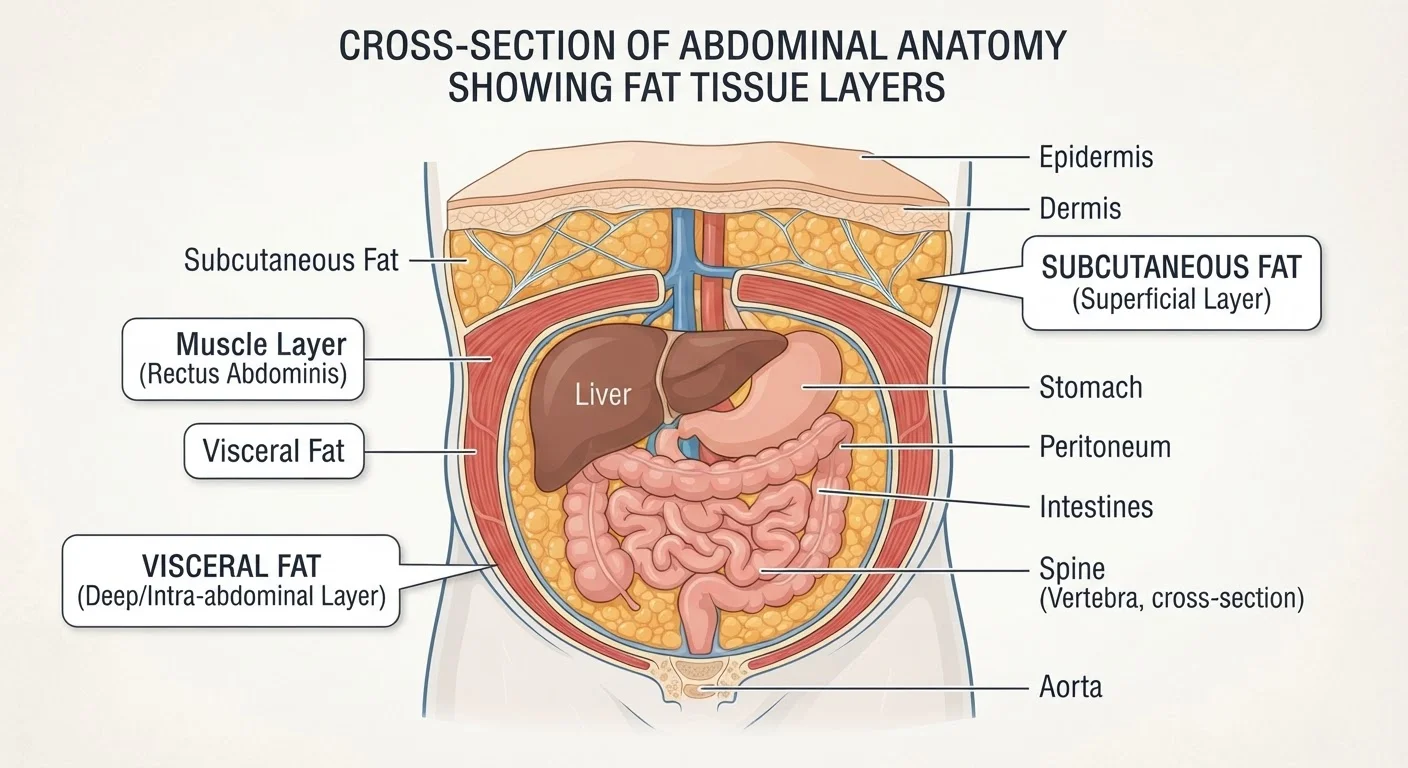
The human body stores fat in two structurally distinct compartments, and the distinction is far more consequential than it might initially seem. Subcutaneous fat (from the Latin sub, meaning under, and cutis, meaning skin) is the layer of adipose tissue deposited directly beneath the skin. It's the fat you can pinch on your abdomen, thighs, upper arms, or hips. Visceral fat, by contrast, is stored deep inside the abdominal cavity, surrounding and infiltrating organs including the liver, pancreas, and intestines.
This positional difference is not cosmetic - it shapes how each fat depot interacts with the body's metabolic systems. Because visceral fat sits adjacent to the portal vein, which carries blood from the digestive tract directly to the liver, metabolic byproducts released by visceral adipose tissue have rapid, direct access to the liver. This anatomical shortcut is a key reason researchers have identified visceral fat as a more significant driver of metabolic risk than subcutaneous stores.
As explored in our overview of body composition, fat tissue is not inert - it functions as an active endocrine organ, secreting hormones and signaling molecules. Understanding where that tissue lives is essential context for interpreting what it does.
How Each Fat Type Behaves Metabolically
Visceral fat is considerably more metabolically active than subcutaneous fat. It releases higher concentrations of free fatty acids and inflammatory cytokines - cell-signaling proteins including tumor necrosis factor-alpha (TNF-α) and interleukin-6 (IL-6) - into circulation. Chronically elevated levels of these compounds are associated with insulin resistance, systemic inflammation, and dyslipidemia (abnormal blood lipid levels). This is why visceral adiposity (excess visceral fat accumulation) appears in research as an independent risk factor for type 2 diabetes and cardiovascular disease, even when total body weight falls within a normal range.
Subcutaneous fat, while still biologically active, secretes a different profile of adipokines (fat-cell hormones). It produces relatively more adiponectin - a hormone generally associated with improved insulin sensitivity and anti-inflammatory effects - compared to visceral tissue. At moderate levels, subcutaneous fat performs legitimate functions: thermal insulation, mechanical cushioning, and long-term energy reserves.
| Criterion | Visceral Fat | Subcutaneous Fat |
|---|---|---|
| Location | Deep in abdominal cavity, around organs | Directly beneath the skin surface |
| Visibility | Not visible or pinchable | Visible and pinchable |
| Metabolic activity | High - releases fatty acids and cytokines rapidly | Moderate - more metabolically stable |
| Inflammatory signaling | Higher pro-inflammatory output | Lower pro-inflammatory output |
| Association with metabolic disease | Strongly linked to insulin resistance, CVD risk | Less strongly linked at moderate levels |
| Response to aerobic exercise | Tends to respond well and relatively quickly | Slower, more modest response |
| Measurable by scale or BMI? | No | Partially, but imprecisely |
It's worth noting that not all subcutaneous fat behaves identically. Research has identified meaningful differences between subcutaneous fat stored in the abdomen versus the lower body (hips and thighs), with lower-body depots appearing comparatively benign and even potentially protective in some studies. However, this is an active area of research and conclusions should be drawn cautiously.
Body fat percentage and BMI both fail to distinguish between these two fat compartments - a meaningful limitation when using either metric to infer health risk.
What Influences Visceral vs. Subcutaneous Fat Accumulation
Several factors influence how and where the body stores fat. Genetics play a substantial role in fat distribution patterns - some individuals are predisposed to store more fat viscerally even at lower overall body fat levels, while others accumulate more subcutaneous fat. Sex hormones also strongly affect distribution: estrogen tends to favor subcutaneous storage in the hips and thighs, which is why premenopausal women often carry more lower-body fat, while testosterone is associated with greater abdominal and visceral accumulation.
Beyond genetics and hormones, lifestyle factors exert meaningful influence. Chronic stress deserves particular attention here: cortisol, the primary stress hormone, has been shown to promote visceral fat deposition specifically. Chronic, ongoing stress - rather than acute, short-term stress - appears most relevant to this effect, given the sustained cortisol elevation it produces.
Sleep quality and duration also matter. Short sleep duration has been associated with preferential increases in visceral fat in several controlled studies. Physical inactivity, diets high in refined carbohydrates and ultra-processed foods, and excess alcohol intake have all been linked to greater visceral accumulation. Conversely, regular aerobic exercise is among the most reliably documented interventions for reducing visceral fat, with effects often appearing even in the absence of significant weight change.
This article provides general health information and is not a substitute for personalized medical advice. Speak with a qualified healthcare professional for guidance specific to your health history and goals.