

Key Takeaways
Option A
Acute Stress
The short-lived, situational stress response.
Best for: Understanding the body's normal, adaptive reaction to immediate challenges or threats.
Option B
Chronic Stress
The persistent, health-eroding stress load.
Best for: Recognizing when long-term stressors are silently undermining physical and mental wellbeing.
If you experience stress tied to a specific event or deadline
Acute Stress
This short-term stress is a normal, adaptive response. Allowing the body time to recover after the event typically resolves symptoms naturally.
If stress feels constant with no clear endpoint
Chronic Stress
Chronic stress requires active, sustained management strategies and often benefits from professional support to prevent long-term health consequences.
If you want to understand physical symptoms like fatigue, headaches, or sleep disruption
Chronic Stress
These symptoms are more commonly linked to ongoing, unresolved stress loads rather than single acute episodes.
If you're looking to build everyday resilience habits
Acute Stress
Training your recovery response after acute stressors - through exercise, sleep, and relaxation - strengthens your ability to handle future challenges.
What Sets Acute and Chronic Stress Apart
Stress is not a single, uniform experience. The anxious rush before a job interview and the grinding exhaustion of a year-long financial crisis both feel like "stress," but they activate your body's systems in meaningfully different ways. Understanding that difference shapes how you respond - and how much damage, if any, gets done.
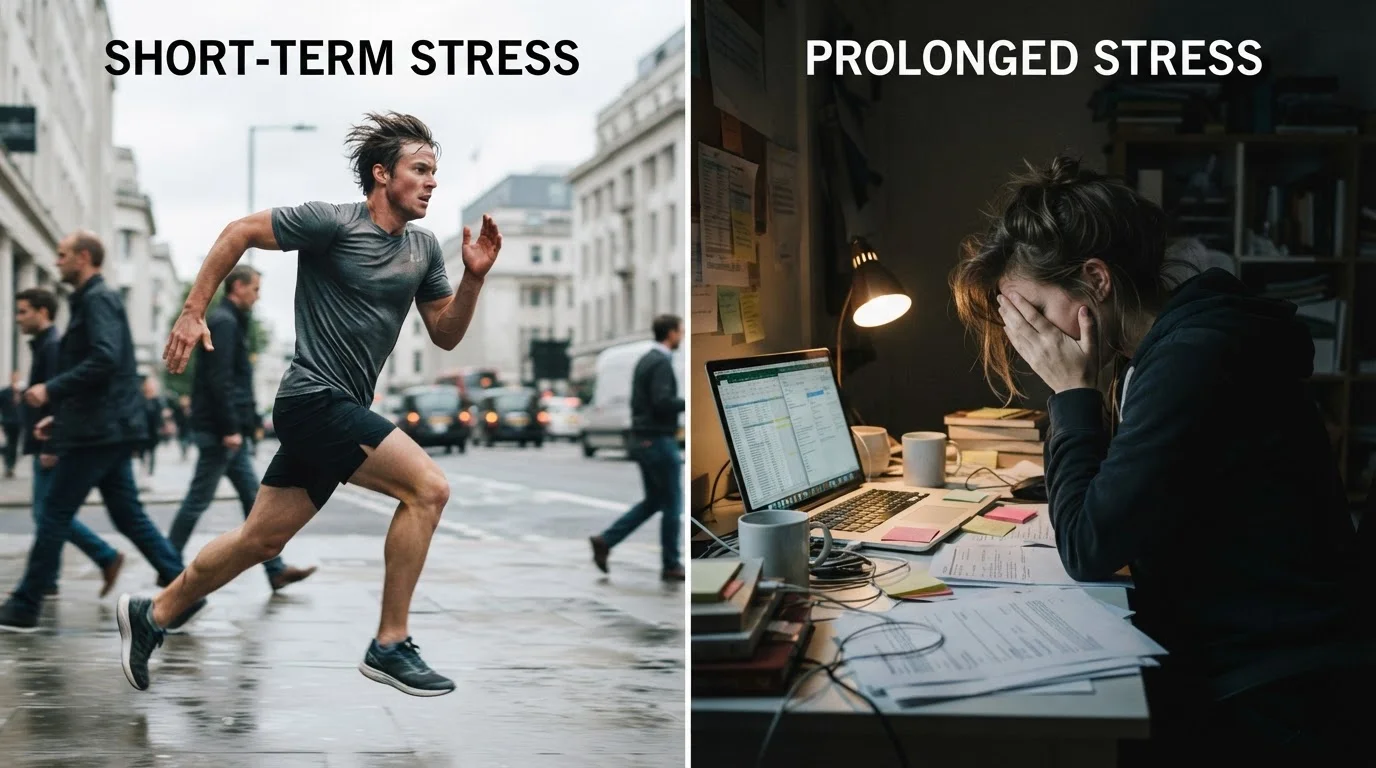
Acute stress is the body's immediate reaction to a perceived challenge or threat. It spikes quickly, is tied to a specific situation, and dissipates once that situation resolves. Classic examples include a near-miss while driving, an upcoming public presentation, or a sudden conflict. The nervous system fires up, cortisol and adrenaline surge, and then - once the event passes - the body returns to baseline. To learn exactly what's happening physiologically during these moments, see our full breakdown of the stress response.
Chronic stress, by contrast, is sustained activation of that same system over weeks, months, or years. The stressor - whether it's a difficult work environment, caregiving demands, or financial insecurity - doesn't go away, which means the body never fully returns to baseline. Cortisol levels remain elevated, inflammation persists, and key regulatory systems begin to show wear. This persistent low-grade activation is where the real health risks accumulate.
| Criterion | Acute Stress | Chronic Stress |
|---|---|---|
| Duration | Minutes to hours | Weeks, months, or years |
| Trigger | Specific, identifiable event | Ongoing or unresolved situation |
| Cortisol pattern | Spikes then returns to baseline | Remains persistently elevated |
| Immune effect | Briefly enhanced then normalized | Suppressed over time |
| Cardiovascular risk | Minimal with normal recovery | Significantly elevated long-term |
| Mental health impact | Typically resolves with the stressor | Associated with anxiety and depression |
| Management approach | Support natural recovery | Sustained lifestyle change and professional support |
How Each Type Affects Your Body
Both acute and chronic stress rely on the same core hormones: cortisol, adrenaline (epinephrine), and norepinephrine. The critical difference is duration and recovery. In acute stress, these hormones perform their intended job - sharpening focus, boosting energy, prioritizing immediate survival - and then recede. Research consistently shows that brief, resolved stress episodes are not harmful and may even strengthen adaptive responses over time.
Chronic stress is a different matter. Sustained cortisol elevation has been associated with suppressed immune function, disrupted sleep architecture, increased visceral fat accumulation, elevated blood pressure, and a higher risk of cardiovascular disease. The connection between chronic stress and visceral fat versus subcutaneous fat is particularly relevant: cortisol specifically encourages fat storage around abdominal organs, where metabolic risk is highest.
Mental health is equally affected. Chronic stress is a well-established risk factor for anxiety disorders and depression, and it often produces cognitive symptoms - difficulty concentrating, memory lapses, and irritability - that can be mistaken for other conditions. For a closer look at the boundary between stress and anxiety, our companion piece on stress versus anxiety can help you distinguish the two.
77%
Americans who experience physical stress symptoms
According to the American Psychological Association's Stress in America surveys, roughly three-quarters of U.S. adults report experiencing physical symptoms they attribute to stress.
2-3×
Increased cardiovascular risk with chronic stress
Research published in peer-reviewed cardiology literature indicates that chronic psychosocial stress is associated with a two- to threefold increase in major cardiac event risk.
~50%
Cortisol reduction with regular mindfulness practice
Multiple controlled studies on Mindfulness-Based Stress Reduction programs have found meaningful reductions in salivary cortisol levels among participants versus control groups.
Evidence-Informed Strategies for Both Types
Managing acute stress is largely about supporting your body's natural recovery. After an acute stressor resolves, practices like diaphragmatic breathing, brief physical movement, and adequate sleep help the nervous system return to a calm state efficiently. These are not cures but proven facilitators of the recovery your body is already designed to complete.
Chronic stress requires a broader, more sustained approach. Evidence supports several strategies:
- Regular physical activity: Exercise reduces resting cortisol over time and builds stress resilience, though the relationship between intensity and benefit is nuanced. Our article on how exercise affects the stress response covers this in detail.
- Mindfulness-based stress reduction (MBSR): Structured mindfulness programs have a substantial body of research behind them, with studies showing reductions in perceived stress and inflammatory markers.
- Social connection: Strong social support is consistently linked to better stress outcomes across large-scale longitudinal studies.
- Sleep prioritization: Chronic stress disrupts sleep, and poor sleep amplifies stress reactivity - a cycle that requires deliberate interruption. This parallels findings in short-term versus chronic insomnia, where the persistence of symptoms changes what management looks like.
For broader context on everyday stress management tools, the Stress & Anxiety hub offers a curated range of practical approaches.
This article is for general informational and educational purposes only and is not a substitute for professional medical advice, diagnosis, or treatment. If you are experiencing persistent stress symptoms, please consult a qualified healthcare professional.