

Key Takeaways
Simple, fast, and requires no special equipment
BMI can be calculated with just height and weight, making it practical for broad screenings and large-scale public health research where cost and time are constraints.
Correlates with disease risk at the population level
Higher BMI categories are consistently associated with elevated risks of type 2 diabetes, cardiovascular disease, and hypertension across large epidemiological studies.
Standardized and reproducible across settings
Because the formula is fixed and objective, BMI produces consistent results regardless of who takes the measurement, making it reliable for tracking trends in large datasets.
Widely recognized reference point for research comparisons
Decades of data collected using BMI allow researchers to compare findings across studies and time periods - a continuity that more complex metrics can't yet match.
Cannot distinguish fat from muscle or bone
A muscular athlete and a sedentary person of the same height and weight will produce the same BMI, even though their metabolic and cardiovascular profiles may be very different.
Misclassifies individuals at both ends of the spectrum
Lean, highly muscular individuals are frequently labeled 'overweight,' while people with low muscle mass but high body fat - sometimes called 'normal weight obesity' - may be classified as healthy.
Does not account for fat distribution
Where fat is stored matters as much as how much exists. Visceral fat around the abdomen carries higher metabolic risk than subcutaneous fat, a distinction BMI cannot capture.
Cut-offs were developed from predominantly white European populations
Research indicates that people of Asian descent, for example, experience higher metabolic risk at lower BMI thresholds than the standard cut-offs reflect, raising equity concerns in clinical use.
Fails to account for age-related body composition changes
Older adults typically lose muscle mass and gain fat even when body weight stays stable, meaning BMI may significantly underestimate health risk in aging populations.
Provides no information on metabolic health markers
Blood glucose, blood pressure, and lipid levels - all critical to assessing cardiometabolic risk - are entirely invisible to BMI, limiting its diagnostic value as a standalone measure.
Our Verdict
BMI is a low-cost, quick screening tool with real population-level utility - but it was never designed to serve as a standalone health verdict for individuals. Its failure to account for body composition, age, sex, and ethnicity means it can mislead as often as it informs. Used alongside other measures, it still has a place; used alone, it tells an incomplete story.
BMI is most useful as a first-pass screening tool for public health researchers, clinicians doing broad population assessments, or individuals seeking a basic starting point - not as a definitive personal health judgment.
How BMI Is Calculated and What It Was Designed to Do
Body Mass Index (BMI) is calculated by dividing a person's weight in kilograms by the square of their height in meters (kg/m²). In U.S. customary units, the same formula applies with a conversion factor. The result places individuals into four standard categories: underweight (below 18.5), normal weight (18.5-24.9), overweight (25-29.9), or obese (30 and above).
The formula originates with 19th-century Belgian statistician Adolphe Quetelet, who created it to describe weight distributions across large populations - not to assess any individual's health. It was adopted widely by public health authorities in the 20th century largely because it's inexpensive, requires no special equipment, and produces consistent results across large datasets. For those reasons, it remains a common epidemiological tool today.
Understanding that foundation matters: BMI was built for populations, not people. That distinction shapes virtually every strength and limitation it carries. To understand what weight-based numbers can and cannot tell you at the individual level, see our piece on what body weight actually measures.
Where BMI Holds Up: Legitimate Uses
Simple, fast, and requires no special equipment
BMI can be calculated with just height and weight, making it practical for broad screenings and large-scale public health research where cost and time are constraints.
Correlates with disease risk at the population level
Higher BMI categories are consistently associated with elevated risks of type 2 diabetes, cardiovascular disease, and hypertension across large epidemiological studies.
Standardized and reproducible across settings
Because the formula is fixed and objective, BMI produces consistent results regardless of who takes the measurement, making it reliable for tracking trends in large datasets.
Widely recognized reference point for research comparisons
Decades of data collected using BMI allow researchers to compare findings across studies and time periods - a continuity that more complex metrics can't yet match.
At the population level, higher BMI categories are associated with increased risk for conditions including type 2 diabetes, cardiovascular disease, hypertension, and certain cancers. These statistical associations are well-replicated across large studies, which is why BMI remains a standard variable in public health research and clinical screenings.
Its simplicity also has practical value. In settings where access to sophisticated body composition testing is limited - community health screenings, primary care visits, large epidemiological studies - BMI provides a rapid, reproducible starting point that requires nothing more than a scale and a height measurement.
Where BMI Falls Short: Real and Significant Limitations
Cannot distinguish fat from muscle or bone
A muscular athlete and a sedentary person of the same height and weight will produce the same BMI, even though their metabolic and cardiovascular profiles may be very different.
Misclassifies individuals at both ends of the spectrum
Lean, highly muscular individuals are frequently labeled 'overweight,' while people with low muscle mass but high body fat - sometimes called 'normal weight obesity' - may be classified as healthy.
Does not account for fat distribution
Where fat is stored matters as much as how much exists. Visceral fat around the abdomen carries higher metabolic risk than subcutaneous fat, a distinction BMI cannot capture.
Cut-offs were developed from predominantly white European populations
Research indicates that people of Asian descent, for example, experience higher metabolic risk at lower BMI thresholds than the standard cut-offs reflect, raising equity concerns in clinical use.
Fails to account for age-related body composition changes
Older adults typically lose muscle mass and gain fat even when body weight stays stable, meaning BMI may significantly underestimate health risk in aging populations.
Provides no information on metabolic health markers
Blood glucose, blood pressure, and lipid levels - all critical to assessing cardiometabolic risk - are entirely invisible to BMI, limiting its diagnostic value as a standalone measure.
The most fundamental problem is what BMI cannot see: the composition of the weight it's measuring. A pound of muscle and a pound of fat weigh the same but have profoundly different metabolic effects. Two people can share an identical BMI and carry entirely different amounts of fat and lean mass - meaning their actual metabolic and cardiovascular risk profiles may differ substantially.
This is why body composition and body weight tell meaningfully different stories, and why researchers and clinicians increasingly argue that BMI alone is insufficient for individual health assessment. For a direct comparison of what BMI and body fat percentage each capture, see body fat percentage vs. BMI.
BMI and Ethnicity: A Known Gap
Standard BMI thresholds were derived largely from studies of white European populations. Research consistently shows that people of South and East Asian descent face elevated cardiometabolic risk at BMI levels that fall within the 'normal' range by conventional standards. Some organizations have published adjusted thresholds for specific ethnic groups, though universal guidelines remain inconsistent. If you have concerns, your healthcare provider can help interpret BMI alongside other relevant clinical data.
What Clinicians and Researchers Recommend Instead
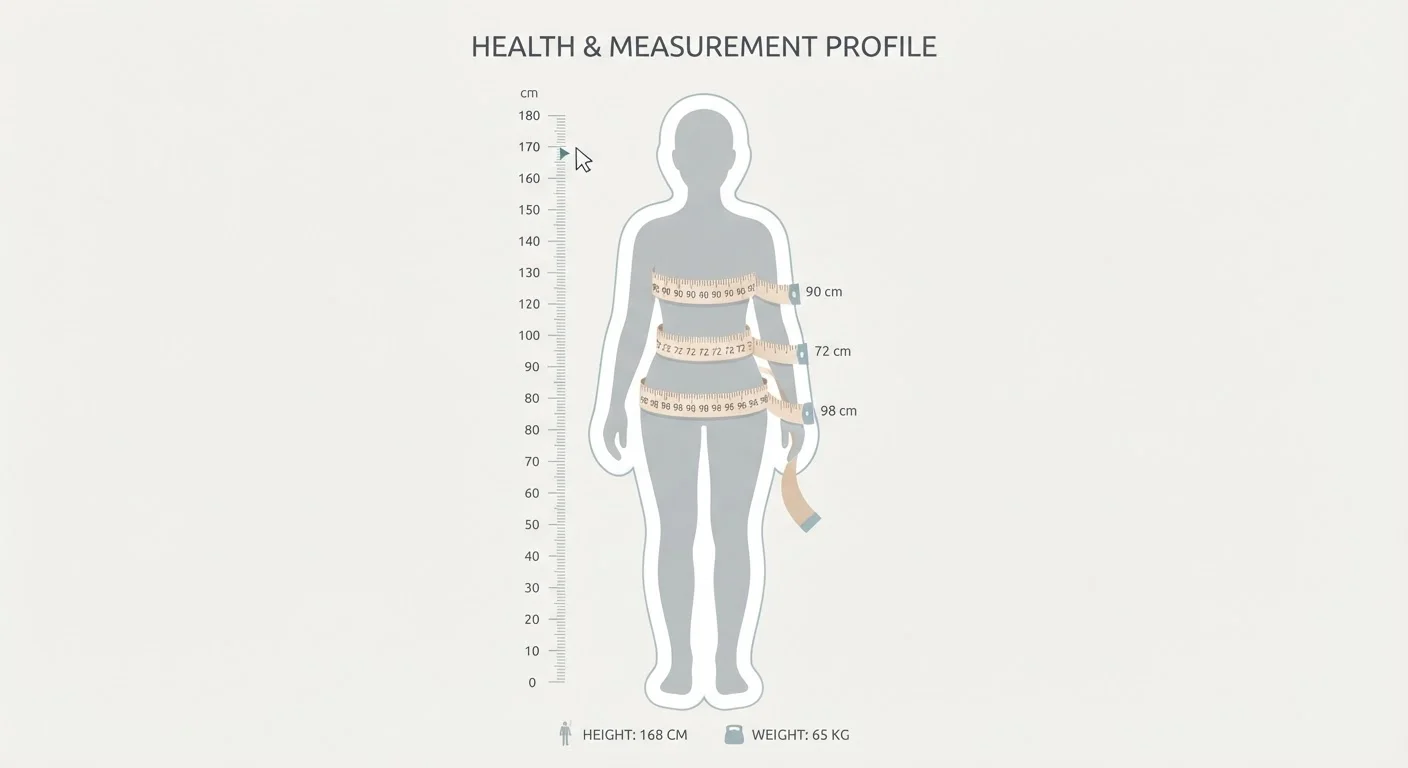
Most major health organizations now recommend treating BMI as one input among several rather than a standalone verdict. Waist circumference, waist-to-height ratio, and direct body composition measurements - such as DEXA scans or bioelectrical impedance - can provide context that BMI entirely misses.
Blood pressure, blood glucose, lipid panels, and other clinical markers add still more dimension. No single number captures health, and that's particularly true of one that can't distinguish fat from muscle or bone. The body composition hub offers broader context on the metrics that clinicians use alongside BMI.
It's also worth noting that how you engage with any health metric matters. If tracking numbers fuels anxiety or distorted self-perception, that's worth examining. Our guide on interpreting body composition data in a body-neutral framework addresses how to use health data informatively without letting it define self-worth.
This article provides general health information and is not a substitute for personalized medical advice. Consult a qualified healthcare professional for guidance specific to your health history and circumstances.