

Key Takeaways
Mind-Body Exercise
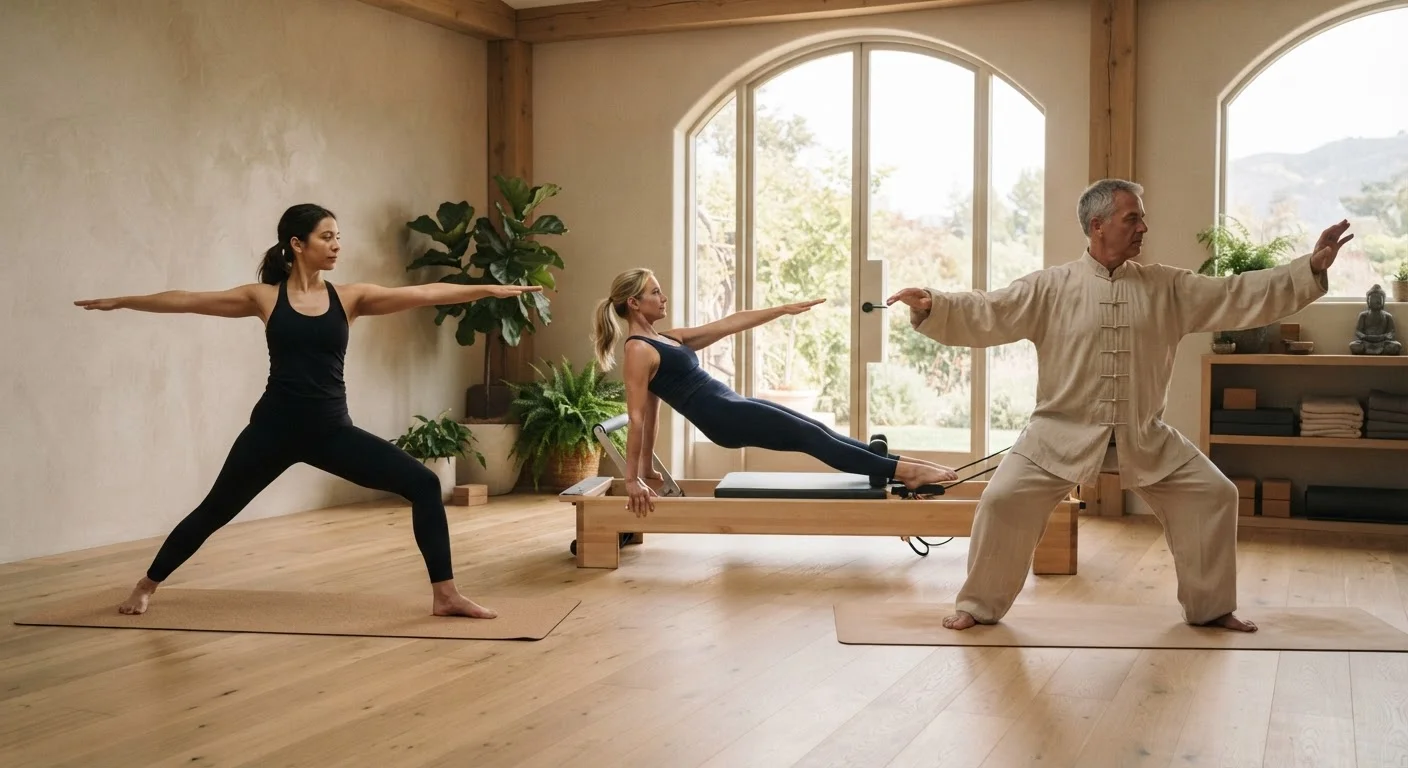
Mind-body exercise refers to physical practices that intentionally integrate mental focus, breath control, and deliberate movement. Unlike conventional workouts that isolate fitness variables like strength or cardio, these disciplines train the connection between thought, breath, and physical action simultaneously. Yoga, Pilates, and tai chi are the most widely practiced examples.
Exercise scientists often classify mind-body practices under multiple fitness domains at once - flexibility, balance, muscular endurance, and neuromuscular coordination - because a single session can develop all of these qualities together.
Why Classification Gets Complicated
When people try to slot yoga, Pilates, or tai chi into a single exercise category, they quickly run into a problem: these practices don't stay in one box. A conventional classification system divides exercise into cardio, strength, flexibility, and balance - and mind-body disciplines draw from all four simultaneously.
Understanding where they fit starts with recognizing what makes them distinct. See our reference guide to every major movement category for a broader look at how exercise types are organized. For a plain-language breakdown of the core categories themselves, this overview of cardio, strength, flexibility, and balance is a useful starting point.
What separates mind-body exercise from general fitness activity is the deliberate, sustained integration of mental attention with physical movement. Breath is not incidental - it's a structural part of the practice. That quality is what exercise scientists use to define the category.
How Each Practice Is Classified
Yoga is most accurately classified as a flexibility and balance discipline with elements of muscular endurance. Holding postures (called asanas) lengthens muscle-tendon units, challenges stability, and requires sustained isometric effort. Breath work (pranayama) is central, and the meditative focus distinguishes it from passive stretching. Some vigorous yoga styles - power yoga, vinyasa - produce enough cardiovascular demand to overlap with light aerobic training, but yoga is not primarily a cardio modality.
Pilates sits most clearly in the muscular endurance and neuromuscular coordination categories. Developed to strengthen the body's stabilizing muscles - especially the deep core - Pilates uses controlled, low-load movements performed with precise alignment and conscious breathing. It develops functional strength and postural control rather than maximal strength. Mat Pilates and reformer Pilates both follow this classification, though reformer work adds spring resistance that can increase the strength demand modestly.
Tai chi is classified within the balance and low-intensity mobility category. Rooted in traditional Chinese martial arts, its slow, flowing movement sequences challenge dynamic balance, joint mobility, and proprioception (the body's awareness of its own position in space). Research consistently supports tai chi's role in improving balance and reducing fall risk, particularly in older adults. Its cardiovascular intensity is generally low - comparable to a slow walk.
~36M
Americans who practice yoga
According to Yoga Alliance and Yoga Journal survey data, approximately 36 million Americans reported practicing yoga - reflecting the discipline's broad mainstream adoption.
21%
Reduction in fall risk with tai chi
A review published in the Journal of the American Geriatrics Society found that tai chi practice was associated with a roughly 21% reduction in fall risk among older adults.
4 domains
Fitness qualities mind-body exercise spans
Exercise scientists note that a single mind-body session can simultaneously train flexibility, balance, muscular endurance, and neuromuscular coordination - spanning four recognized fitness domains.
What These Practices Share - and Why That Matters
Despite their different origins and emphases, yoga, Pilates, and tai chi share three structural features that place them in the mind-body category together:
- Intentional breath: All three synchronize movement with breathing patterns. This isn't decorative - coordinated breath regulates exertion, supports core stability, and is linked to calming effects on the nervous system.
- Focused attention: Each practice requires conscious mental engagement with movement. This distinguishes them from activities where the mind can wander freely during physical effort.
- Low impact: None of these disciplines involve high-force impacts on joints, making them broadly accessible. This is part of why they're often recommended for rehabilitation, older adults, and people returning from inactivity.
The mental engagement component connects these practices to broader wellness concepts. If you're curious how the mindfulness dimension of these practices relates to mental health outcomes, the complete overview of mindfulness and mental wellness offers helpful context. The Mindfulness & Rest hub is also a useful resource for exploring the intersection of these disciplines with mental wellbeing.
Fitting Mind-Body Exercise Into a Routine
Because mind-body practices develop flexibility, balance, and body awareness rather than cardiovascular fitness or maximal strength, they work best as a complement to other activity types rather than a standalone program for most adults. A well-rounded routine might use yoga or Pilates for mobility and core stability alongside separate aerobic and resistance training sessions.
That said, for individuals with specific health considerations - recovering from injury, managing chronic pain, or beginning exercise after a long break - mind-body disciplines may serve as a primary starting point precisely because of their low impact and adaptability. Always consult a qualified healthcare professional before beginning a new exercise program, particularly if you have existing health conditions or concerns.
The breath and attentional skills developed through these practices also carry over into other areas of wellness. Techniques like breath awareness - foundational to yoga and tai chi alike - are explored in more depth in this comparison of body scan and breath awareness techniques.
This article is for general informational purposes only and is not a substitute for professional medical or fitness advice. Speak with a qualified healthcare provider before starting any new exercise program.