

Key Takeaways
Our Verdict
Passive relief and active coping are not rivals - they serve different functions in a stress management routine. Passive strategies offer quick emotional respite, while active coping addresses the physiological and cognitive roots of stress. A balanced routine that leans primarily on active strategies, with passive rest used intentionally, is generally more effective for sustained well-being.
| Best for | Recommended |
|---|---|
| Those needing immediate emotional respite after a hard day | Passive Relief |
| Those building long-term stress resilience and coping capacity | Active Coping |
| Those experiencing chronic or compounding daily stressors | Active Coping |
| Those recovering from physical or mental exhaustion | Passive Relief (used intentionally) |
What Separates Passive Relief from Active Coping?
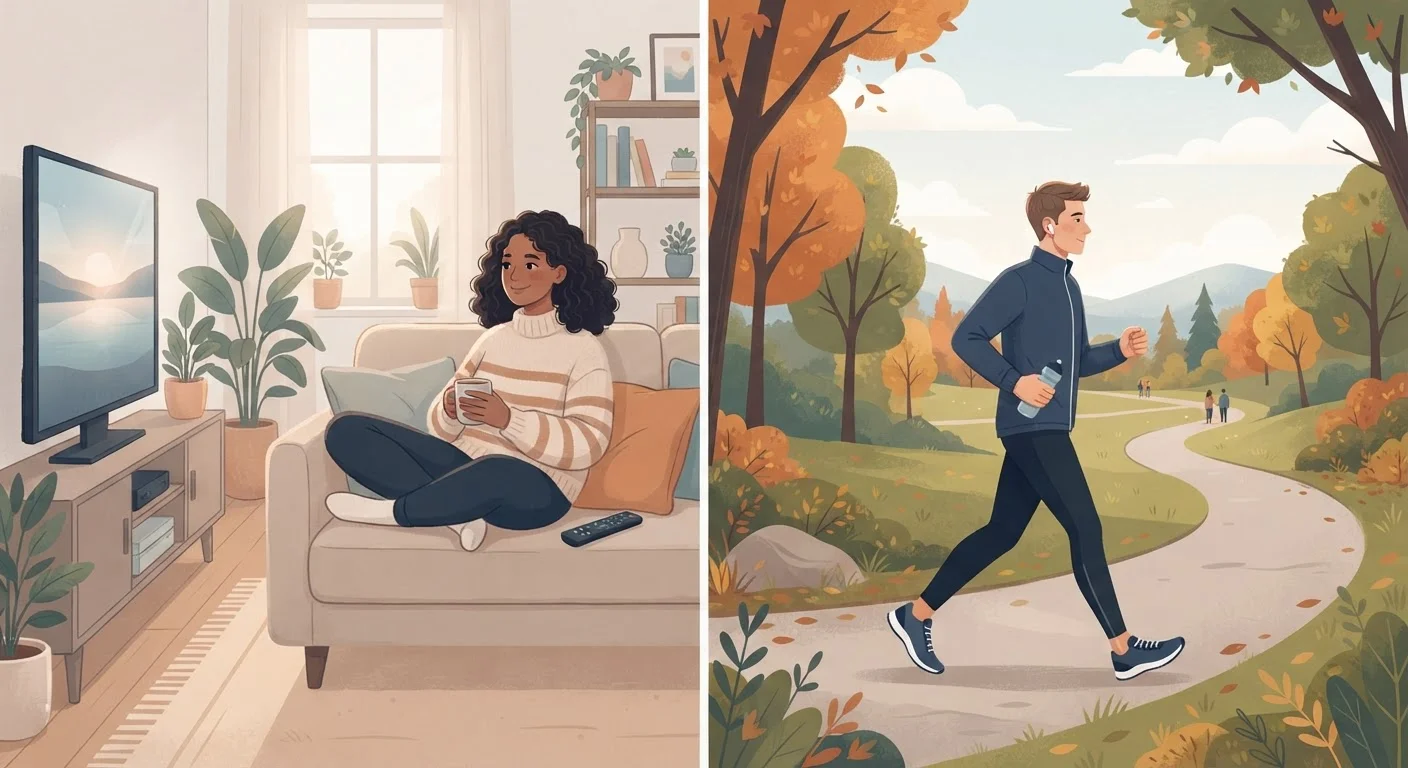
When stress hits, most people reach for something that provides quick relief - scrolling a phone, watching a show, or zoning out. These are passive coping strategies: they reduce the feeling of stress temporarily by distraction or disengagement. They require little effort and offer immediate comfort, which is exactly why they're so appealing after a demanding day.
Active coping, by contrast, involves deliberate engagement with the stress response itself - through movement, structured relaxation, problem-solving, or social connection. Rather than bypassing discomfort, active strategies work with the body and mind to process and discharge stress. Research in behavioral health consistently finds that active coping is more strongly associated with long-term psychological well-being than passive avoidance.
The distinction isn't about effort for its own sake. It's about whether the strategy addresses the underlying stress or simply postpones it. See the Stress & Anxiety hub for a broader overview of evidence-informed approaches.
How Each Strategy Affects Your Body
Stress triggers the sympathetic nervous system - the classic fight-or-flight response - which elevates cortisol, tightens muscles, and raises heart rate. What happens next depends heavily on how you respond.
Passive activities like watching television do little to clear cortisol from the bloodstream. They may lower perceived stress while you're distracted, but the physiological arousal often persists underneath. Over time, leaning primarily on passive strategies can allow chronic stress to accumulate without adequate discharge.
Active coping strategies - particularly physical movement - directly engage the body's stress recovery systems. Exercise, for example, metabolizes excess adrenaline and cortisol, and stimulates endorphin release. Even a brisk 20-minute walk has been shown in multiple studies to meaningfully reduce self-reported stress and anxiety. For a deeper look at the evidence, see the case for exercise as a stress tool.
Structured relaxation practices - like diaphragmatic breathing or progressive muscle relaxation - activate the parasympathetic nervous system, which is the body's counterbalance to fight-or-flight. These are active in the sense that they require intentional practice, even though they look restful from the outside. Compare two well-researched options in our comparison of mindfulness meditation vs. progressive muscle relaxation.
| Passive Relief | Active Coping | |
|---|---|---|
| Examples | Watching TV, scrolling, napping | Walking, breathing exercises, journaling |
| Effort required | Minimal | Moderate - requires intention |
| Immediate comfort | High | Moderate (builds with practice) |
| Physiological stress reduction | Low to moderate | Moderate to high |
| Long-term resilience | Limited | Strongly supported by research |
| Risk of overuse | Higher - can reinforce avoidance | Lower when habits are sustainable |
| Best use case | Short-term respite | Sustained stress management |
When Passive Relief Is Actually Useful
Passive strategies are not inherently harmful. After an acute, emotionally draining event, giving the mind space to disengage - without demanding productive output - can support short-term recovery. Watching a film you enjoy, listening to music, or simply resting without agenda has genuine restorative value when used intentionally and for a defined period.
The concern arises when passive relief becomes the default response to every stressor, including chronic ones. Avoidance-based coping is associated in the research literature with higher rates of anxiety and depression over time, not because rest is bad, but because unresolved stress accumulates. If you recognize patterns where your coping strategies aren't reducing overall stress levels, these signs may indicate your routine needs adjustment.
Building a Balanced Coping Routine
The goal isn't to eliminate passive relief - it's to ensure active coping carries enough of the load. A practical starting point: identify your highest-stress windows during the week and assign at least one active strategy to each. This might mean a short walk after work, a few minutes of intentional breathing before bed, or a brief journaling session to process the day's events.
Mindfulness practices occupy an interesting middle ground - they are active in their intentionality but can feel restful in practice. For clarity on how mindfulness and meditation differ in this context, see mindfulness vs. meditation for stress relief. If you're exploring structured support beyond self-directed habits, therapy, self-help programs, and digital tools each offer different advantages.
Consistency matters more than intensity. A daily 15-minute active coping habit generally produces more durable stress reduction than occasional intensive efforts. Start with what fits your current schedule, and build from there.
This article is for general informational and educational purposes only and is not a substitute for professional medical or mental health advice. If you are experiencing significant stress, anxiety, or related symptoms, please consult a qualified healthcare professional.