

Key Takeaways
Social Eating
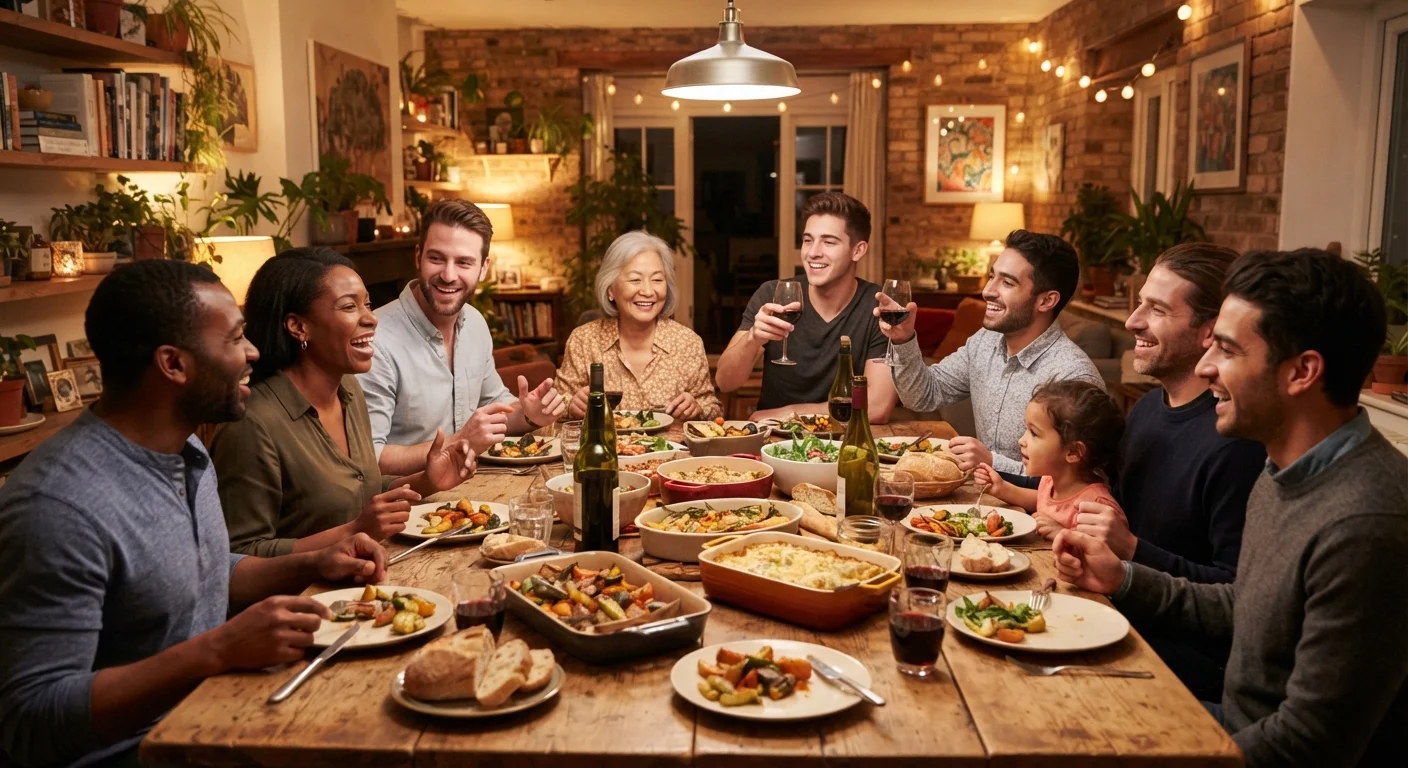
Social eating refers to consuming food in the presence of other people - at restaurants, family dinners, office lunches, or any shared meal context. Research consistently shows that the company we keep at the table influences not just what foods we choose, but also how much we eat and how quickly we eat it. These social forces operate largely beneath our conscious awareness.
Researchers use the term 'social facilitation of eating' to describe the well-documented tendency for people to eat more when dining with others compared to eating alone - an effect that grows stronger as group size increases.
The Social Facilitation Effect: Why Groups Lead to More Eating
Decades of research point to a consistent finding: people eat more in the company of others than when they eat alone. A widely cited analysis by psychologist John de Castro found that meals eaten with one other person were roughly 35% larger than solo meals - and that number climbed steadily with group size, reaching nearly double for gatherings of seven or more.
Why does this happen? Several mechanisms are at work simultaneously. Meals with others last longer, which simply means more time in front of food. Social conversation is absorbing, making it harder to notice the internal signals - a quieting of hunger, a sense of fullness - that would otherwise slow you down. And there's a deep cultural permission structure at play: sharing food is celebratory, and celebration tends to encourage indulgence.
Understanding this dynamic doesn't mean you should eat alone. It means recognizing that group meals create a specific kind of eating environment, one that calls for a slightly different level of self-awareness. As explored in the science behind why eating habits are so hard to change, environmental cues - including social ones - play a powerful role in shaping food behavior before we consciously decide anything.
Food Choice Contagion: Ordering What Others Order
Beyond quantity, social eating shapes what ends up on your plate. People consistently anchor their menu choices to what their dining companions select - a phenomenon sometimes called food choice modeling. If the first person at the table orders a salad, others are more likely to follow suit. If the first order is a large burger and fries, that sets a different norm for the meal.
This tendency is especially pronounced when people want to signal belonging or avoid standing out. In new social situations - a work lunch with a new team, a first dinner with a partner's family - individuals are more likely to mirror choices rather than assert their own preferences.
Preview the Menu Before You Arrive
Deciding what you want to eat before others place their orders removes the anchoring effect of social modeling. You're more likely to choose something that genuinely appeals to you - rather than something that just matched the table's direction. This works whether you're eating at a restaurant or scanning a catered buffet before joining the group.
Interestingly, the effect runs in both directions. Eating with people who tend toward balanced, varied meals can nudge your own choices positively. This is one reason that your food environment shapes your diet extends well beyond your kitchen - the social environment is an environment too.
Pace, Attention, and the Distraction Factor
How fast you eat matters for fullness signaling. The body's satiety hormones take roughly 15-20 minutes to relay the "I've had enough" message to the brain. When conversation accelerates the pace of a meal - or simply keeps your attention away from the food itself - that feedback loop gets disrupted.
Social meals are, by nature, distracted meals. This isn't inherently a problem; connection and enjoyment are real benefits of shared eating. But distracted eating is consistently linked to eating more and feeling less satisfied afterward, a topic covered in depth in our piece on mindful eating vs. mindless eating.
One useful anchor: try to match your eating pace to your own internal cues rather than the table's rhythm. Setting down utensils between bites and taking full sips of water are small physical habits that slow the pace without disrupting the conversation.
Navigating Social Meals Without Stress
The goal of understanding social eating dynamics isn't to turn every shared meal into a vigilance exercise. It's to make the invisible visible so your choices feel more like yours.
A few strategies that research and behavioral nutrition support:
- Preview the menu independently before arriving or before others order, so your choice isn't rushed or anchored to someone else's.
- Check in with hunger before the food arrives - a quick mental note of where you actually are on the hunger scale grounds you before the social momentum takes over.
- Choose your eating pace intentionally rather than unconsciously matching the fastest eater at the table.
- Give yourself permission to stop when you feel satisfied, regardless of whether others are still eating.
These aren't rules or restrictions - they're simply ways to stay connected to your own preferences. If you're exploring how to build more consistent eating patterns overall, intuitive eating vs. structured meal planning offers a useful framework for thinking about how your own approach fits your life.
This article is for general informational purposes only and is not a substitute for advice from a qualified healthcare or nutrition professional. Individual nutritional needs vary; consult a registered dietitian or your healthcare provider for personalized guidance.