

Key Takeaways
Why Body Composition Myths Are So Persistent
Body composition - the ratio of fat, muscle, bone, and water that makes up your body - sits at the intersection of fitness culture, popular media, and genuine science. That intersection is fertile ground for myths. Many widely repeated claims about muscle, fat, and body weight contain a grain of truth that makes them convincing, even when the full picture is far more nuanced.
Understanding what the evidence actually shows helps you make better-informed decisions - without being misled by oversimplified headlines or gym-floor folklore. As a starting point, our overview of what fat, muscle, and bone actually tell you explains the foundational concepts behind body composition measurement.
Myth
Muscle weighs more than fat, which is why the scale goes up when you start exercising.
Fact
A pound of muscle and a pound of fat weigh exactly the same. Muscle is denser, meaning it occupies less space per pound - but it does not weigh more.
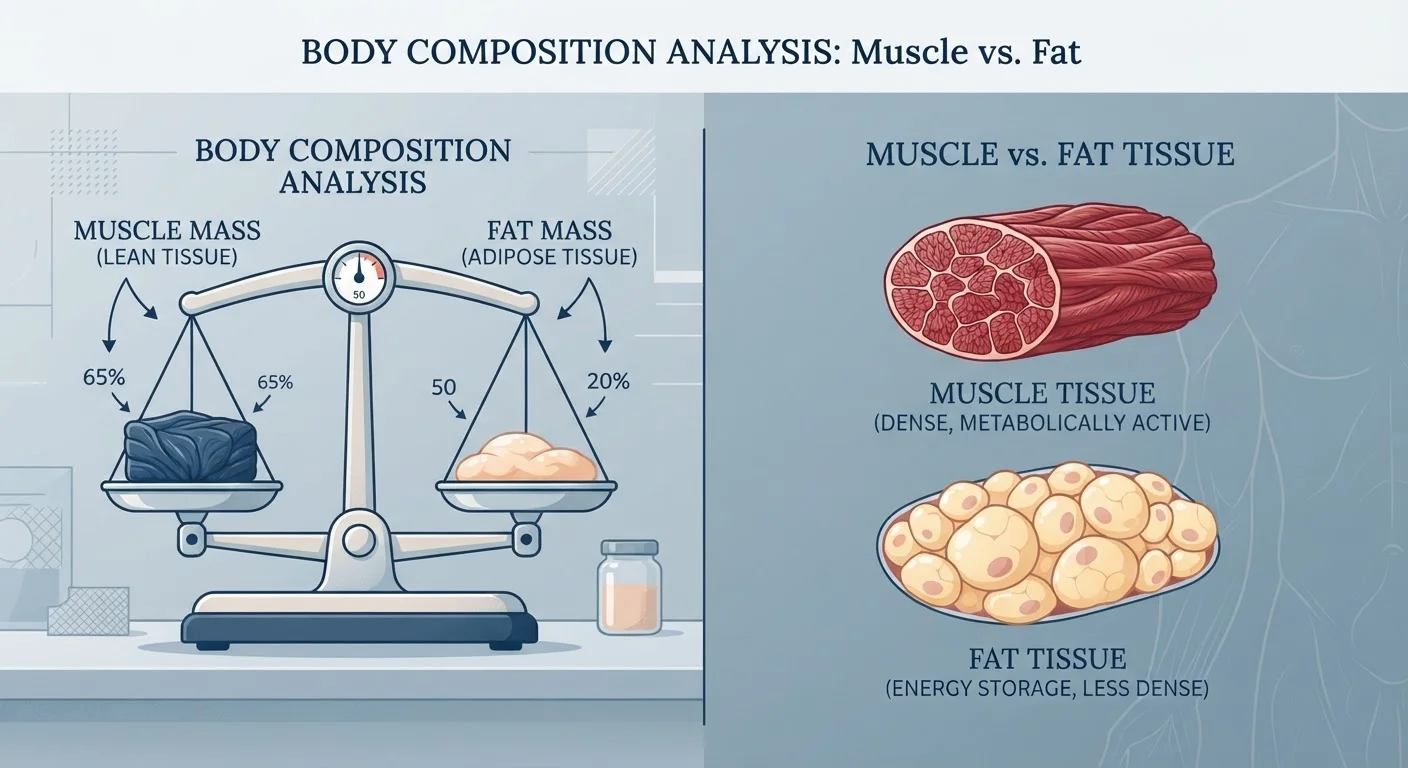
This claim conflates weight with density. A pound is a pound regardless of tissue type. What differs is volume: muscle tissue is approximately 18% denser than fat tissue, so the same weight of muscle takes up noticeably less space in the body. This is why two people can weigh identically on a scale while looking and feeling very different - a point explored in more depth in our body composition vs. body weight explainer. Early scale increases during resistance training more often reflect water retention associated with muscle repair, not muscle itself outweighing fat.
Myth
Building muscle dramatically boosts your resting metabolism, making weight management effortless.
Fact
Muscle tissue does burn more calories at rest than fat, but research suggests the difference is roughly 6-10 calories per pound of muscle per day - meaningful over time, but not transformative on its own.
The idea that adding muscle will "rev up" metabolism enough to offset most dietary intake is a significant overstatement. Estimates from exercise physiology research suggest skeletal muscle burns approximately 6 calories per pound per day at rest, compared to roughly 2 calories per pound for fat tissue. The metabolic benefit is real and accumulates with meaningful changes in lean mass - particularly relevant for long-term weight management and metabolic health - but it should not be framed as a shortcut. Muscle mass carries many other well-documented health benefits, including associations with metabolic resilience and longevity, that go beyond calorie burn.
Myth
You can target fat loss in a specific body area by doing exercises that work that region.
Fact
Spot reduction - the idea that exercising a specific muscle group burns fat in that location - is not supported by research. Fat loss occurs systemically, not locally.
Despite decades of abdominal crunches marketed for "belly fat," the evidence consistently shows that the body draws on fat stores system-wide during exercise, governed by genetics, hormones, and overall energy balance - not by which muscles are contracting. Multiple controlled studies have examined targeted training programs and found no preferential local fat loss in the trained region. Resistance training in a given area can strengthen and develop the underlying muscle, which may change how a region looks, but it does not selectively deplete fat from that site. Exercise science around fat loss is more nuanced than most popular claims suggest.
Myth
BMI is a reliable measure of whether someone is healthy or has too much body fat.
Fact
BMI (Body Mass Index) is a population-level screening tool based solely on height and weight. It does not measure body fat, muscle mass, or body composition at all.
BMI was originally developed as a statistical tool for population health studies, not as a diagnostic instrument for individuals. It cannot distinguish between a pound of fat and a pound of muscle - meaning a highly muscular person may be classified as "overweight" or "obese" while a sedentary person with low muscle and high fat could fall in the "normal" range. Research has long acknowledged BMI's limitations in predicting individual health outcomes, particularly across different body types, ages, and ethnicities. Health professionals increasingly use it alongside other measures - such as waist circumference, body fat percentage, and metabolic markers - rather than in isolation. For context on how body composition shifts with age, BMI becomes even less informative as muscle mass declines.
Myth
Once fat cells are lost, they're gone permanently, making fat loss irreversible.
Fact
Fat cells (adipocytes) can shrink when fat is lost, but research suggests the total number of fat cells in adults remains relatively stable and can increase with significant weight gain.
Studies in adipose tissue biology indicate that fat cells reduce in size during fat loss rather than disappearing. The total count of adipocytes in an adult body is thought to be relatively stable over time under normal conditions, though significant weight gain can stimulate the formation of new fat cells. This has implications for understanding weight regain after loss - the existing cells can refill - and helps explain why sustained lifestyle habits matter more than short-term interventions. It does not mean fat loss is futile; it means the cellular landscape is more dynamic than a simple "lose them forever" framing suggests.
What the Evidence Actually Shows
Several of these myths persist partly because they're directionally correct but quantitatively overstated. Muscle does have a higher metabolic rate than fat tissue - but as research on muscle mass and energy expenditure clarifies, the per-pound difference at rest is considerably smaller than most gym culture suggests. Similarly, body recomposition - simultaneous fat loss and muscle gain - is real and measurable, yet completely invisible to a bathroom scale.
~18%
Greater density of muscle vs. fat tissue
Muscle tissue is approximately 18% denser than fat tissue by volume, according to established anatomy and physiology references - which is why body composition changes are not always visible on a scale.
~6-10 kcal
Calories burned per pound of muscle per day at rest
Exercise physiology research estimates resting skeletal muscle burns approximately 6-10 calories per pound daily, compared to roughly 2 calories for fat tissue.
0
Controlled studies confirming spot fat reduction
Multiple peer-reviewed trials examining targeted resistance training have found no evidence of preferential fat loss in the exercised region compared to the rest of the body.
Body composition myths can also reinforce unrealistic expectations. When people believe spot reduction works, they may feel frustrated by results that are actually normal. When they trust BMI as a complete health picture, they may overlook other meaningful indicators. Grounding expectations in evidence - rather than popular belief - leads to more sustainable, less discouraging approaches to health. For a broader look at how weight and composition interact, see our guide on body composition vs. body weight.
This article is for general informational and educational purposes only and does not constitute medical advice. For questions about your own health, body composition, or fitness, consult a qualified healthcare professional.